
Fixing a Cracked or Foggy Window Pane in the Denver Metro
Denver metro homes see wide temperature swings between summer afternoons and winter nights, and that stress is hard on window glass. A stray hailstone, a bumped screen, or just years of expansion and contraction can crack a pane or fail the seal on an insulated glass unit. Either way, the window stops doing its job of keeping conditioned air in and the weather out.
Homeowners in Englewood, Denver, Littleton, and the surrounding towns usually want to know one thing first: does this mean a whole new window, or just new glass? The answer depends on what's actually damaged, the glass or the frame around it, and that's worth sorting out before anyone quotes a fix.
What Actually Fails Inside a Window Pane
A modern window pane is rarely a single sheet of glass. Most replacement windows use an insulated glass unit, two or three panes sealed together with a spacer and a layer of gas in between for insulation. When something goes wrong, it's either the glass itself or that seal, and each shows up differently.
Single Glass Cracks and Chips
A visible crack or chip usually comes from impact, a rock from a mower, a hard hail hit, or a window that got slammed shut on something. The damage is easy to spot and the fix is straightforward: the cracked pane comes out and a matching one goes back in.
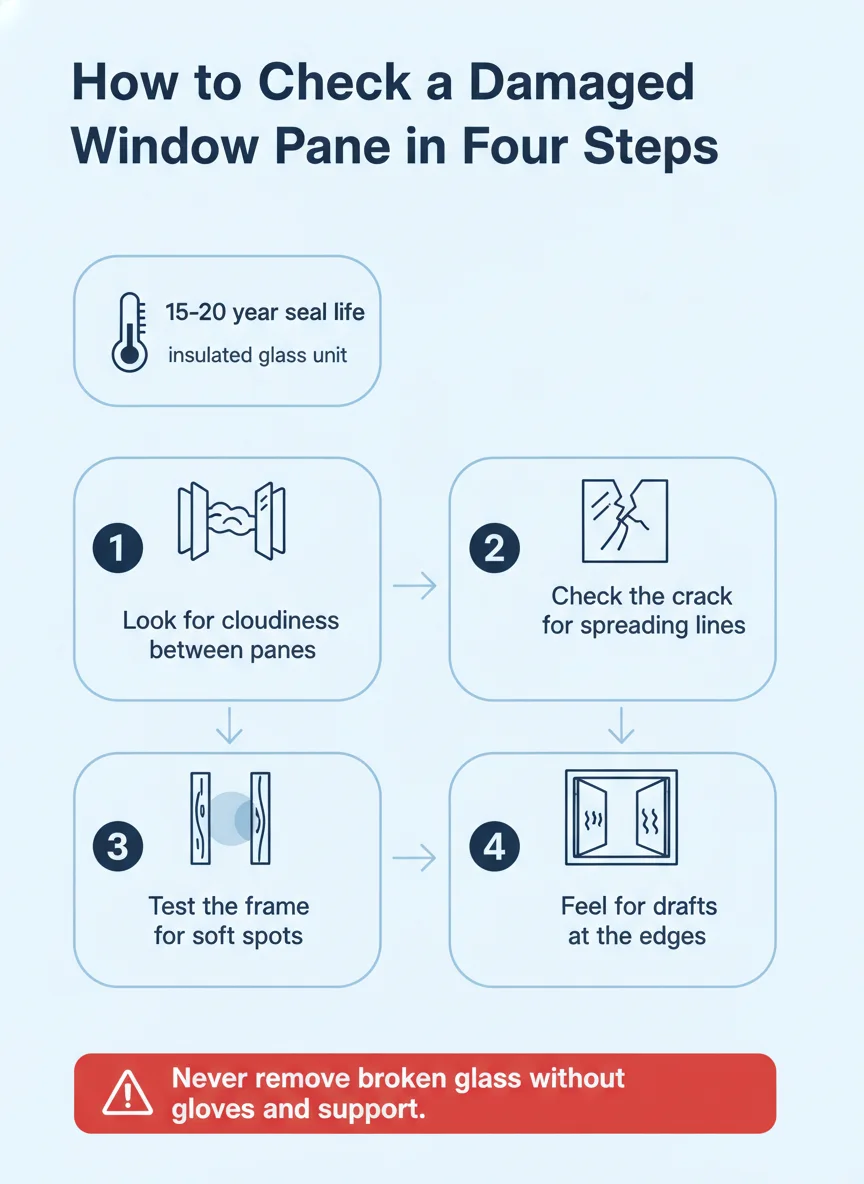
The risk with cracks is time. A hairline crack in glass tends to travel further with each freeze and thaw cycle, so a small chip left alone in October can be a spiderweb by January. Covering it with tape is a stopgap, not a fix.
Foggy or Failed Insulated Glass
Fogging between the panes means the seal around the insulated glass unit has given out and let moisture in. There's no crack to see, just a persistent haze or streaking that won't wipe away because it's trapped between two sheets of sealed glass.
Seal failure is more common in older units and tends to show up first on windows that get the most direct sun. It doesn't threaten the structure of the window the way a crack can, but it does mean the insulating gas has likely escaped, so the window is working harder than it should.
| Type of Damage | What You'll See | Typical Fix |
|---|---|---|
| Cracked or chipped glass | A visible line or missing chip in the pane | Replace the glass unit at the opening |
| Foggy insulated glass | Persistent haze or streaks between panes | Replace the sealed glass unit |
| Frame or sash damage | Soft wood, warping, or gaps around the glass | Repair or replace the frame, then reglaze |
The Parts of a Window Pane, Explained
The glass sits inside a sash, the moving part of the window, held in place with glazing and a spacer bar that keeps the panes an even distance apart. That spacer is also where the seal lives on an insulated unit, and it's the first thing to give out as a window ages.
Because the glass is a separate piece from the sash and frame, most pane replacements don't touch the rest of the window. That's good news for cost and for keeping a matching look across the house, since only the damaged glass comes out rather than the whole unit.
Step-by-Step: How Pane Replacement Works
A straightforward glass swap follows a consistent sequence once the damage has been checked out in person.
- Inspect the opening: We look at the glass, the sash, and the frame to confirm it's a glass issue and not a bigger structural one.
- Measure the unit: Exact dimensions and glass type get recorded so the replacement pane matches the original opening.
- Order matching glass: The new insulated or single-pane unit is built to the size and specification of the window it's going into.
- Remove the damaged pane: The old glass comes out of the sash carefully so the frame and hardware aren't disturbed.
- Set and seal the new glass: The replacement pane goes in and gets glazed and sealed tight against air and moisture.
- Check the seal and swing: We test that the window opens, closes, and locks the way it should before calling the job done.
What You'll Notice After a Pane Is Replaced
Clearer View, Better Insulation
The most obvious change is visual: no more crack, no more haze, just a clear view again. Less obvious but just as real is the insulation. A failed seal or a crack both let outside air pressure closer to the glass, and once that's fixed the window goes back to holding the temperature the way it's supposed to.
You may also notice less condensation on cold mornings, since a sound seal keeps the interior glass surface closer to room temperature instead of matching the outside cold. That's a sign the fix is doing what it should.
When the Frame Tells a Different Story
Sometimes an inspection turns up more than glass damage. Soft or discolored wood around the opening, gaps where the sash no longer meets the frame square, or a window that's been leaking for a while can mean the frame needs attention too.
In those cases, a straight window and glass repair visit is the right first step, and if the frame is too far gone to hold a new pane properly, replacing the whole window ends up being the more lasting answer.
DIY vs Calling a Pro for Pane Replacement
A homeowner comfortable with tools can sometimes handle a simple single-pane storm window or a basic glazing job on an older wood sash. It takes patience, the right glazing compound, and care not to crack the replacement glass while setting it.
Modern insulated glass units are a different story. They're custom-built to exact dimensions, heavy, and easy to damage if the sash isn't handled correctly during removal. Getting an accurate measurement and a proper seal on the first try is where a licensed pro earns their keep.
There's also the safety factor. Broken glass, especially larger panes, is genuinely dangerous to handle without the right gloves and support, and a botched reseal can lead to fogging again within a year or two. For anything beyond a small storm pane, it's worth having it looked at in person.
Getting a Straight Answer on Pane Replacement Cost
The honest answer to what pane replacement costs is that it depends on the glass, the size, and what shape the frame is in, and any quote worth trusting should walk you through those factors rather than throwing out a number sight unseen. If you want the bigger picture on window costs across a whole house, our guide on what drives full-house window replacement pricing breaks that down.
If you're staring at a cracked pane or a foggy window anywhere from Denver to Englewood, a free inspection is the fastest way to know whether it's a glass fix or something bigger, and Precise Windows LLC can look at it in person before you decide.
Frequently asked questions
Can you replace just the glass in a window without replacing the whole window?
Yes, in most cases the glass unit can be pulled from the sash and replaced on its own, as long as the frame and sash are still sound. If the frame has rotted, warped, or the sash no longer seals tight, replacing the whole window ends up being the more reliable fix.
Why does my window look foggy between the panes?
That cloudiness means the seal on the insulated glass unit has failed and moisture has worked its way between the panes. It's a seal problem, not a cleaning problem, and it does not resolve on its own; the glass unit needs to be replaced.
What makes window pane replacement cost more or less?
The main factors are glass type (single pane versus insulated double or triple pane), the size and shape of the opening, and whether the frame or sash needs repair along with the glass. Specialty shapes and tempered or tinted glass also add to the job.
Is a cracked window pane an emergency?
It's not usually a life-safety emergency, but a cracked pane should get covered and addressed soon, especially in cold weather, since it lets in air and moisture and the crack can spread with temperature swings. Waiting also raises the risk of the glass failing completely.
Can I fix a foggy window myself?
There's no reliable DIY fix for a failed seal; kits that claim to defog glass don't restore the seal and the fog typically returns. The insulated glass unit itself needs to be swapped out by someone who can match the size and glass type.