
Why 'best' depends on your house, not just the window
Ask ten homeowners in the Denver metro what the best replacement window is and you'll get ten different answers, and most of them aren't wrong. A south-facing window on a Highlands Ranch two-story deals with different sun exposure than a shaded north window in an older Denver bungalow, and the frame and glass that work well for one don't always make sense for the other.
Colorado's climate adds its own wrinkle. Front Range homes see wide swings between a sunny 60-degree afternoon and a hard overnight freeze, sometimes in the same week. That kind of expansion and contraction is harder on a window than steady heat or steady cold, so the materials and glass that hold up here aren't automatically the same ones that get recommended in a coastal climate guide.
What actually makes one window perform better than another
Three things drive window performance: the frame material, the glass package, and how tight the installation seals the opening. Marketing tends to focus on the frame, but all three matter, and a weak link in any one of them drags the whole window down.
Frame material
Vinyl frames are the most common replacement choice because they insulate well, don't need painting, and hold up to Colorado's freeze-thaw cycles without warping. Fiberglass frames cost more but expand and contract at closer to the same rate as the glass itself, which some homeowners feel extends the life of the seal around the glass.
Wood frames still show up in historic districts and custom builds because of how they look, but they need more upkeep in a climate with this much UV exposure and moisture swing. Composite and aluminum-clad options split the difference, pairing a low-maintenance exterior with a different interior finish.
Glass package
The glass is doing most of the energy work, not the frame. A double-pane window with a Low-E coating reflects summer heat back outside while letting in visible light, and an argon or krypton gas fill between the panes slows heat transfer further. Triple-pane glass pushes performance higher still, though the extra weight and cost aren't always worth it at every elevation.
The U-factor rating on the window's label tells you how well it resists heat flow, and a lower number means better insulation. If a salesperson can't tell you the U-factor of what they're quoting, that's worth asking about before you decide between options for your window replacement project.
| Frame Material | Maintenance | Typical Lifespan |
|---|---|---|
| Vinyl | Low, no painting needed | 20-30 years |
| Fiberglass | Low, holds paint if desired | 25-30+ years |
| Wood | High, needs periodic refinishing | 15-25 years with upkeep |
| Aluminum-clad | Low exterior, wood interior finish needed | 20-25 years |
How the opening around the window affects the window itself
Even the best frame and glass combination underperforms if the opening isn't sealed right. Gaps around the frame let air and moisture in, which shows up as drafts, condensation between panes, or a window that feels cold to the touch even when the glass itself is doing its job fine.
That's why two homes with the identical window model can report very different experiences with drafts or energy bills. The installer's attention to flashing, insulation, and sealing around the opening matters as much as which brand ended up on the order form.
Step-by-step: how to compare replacement window options
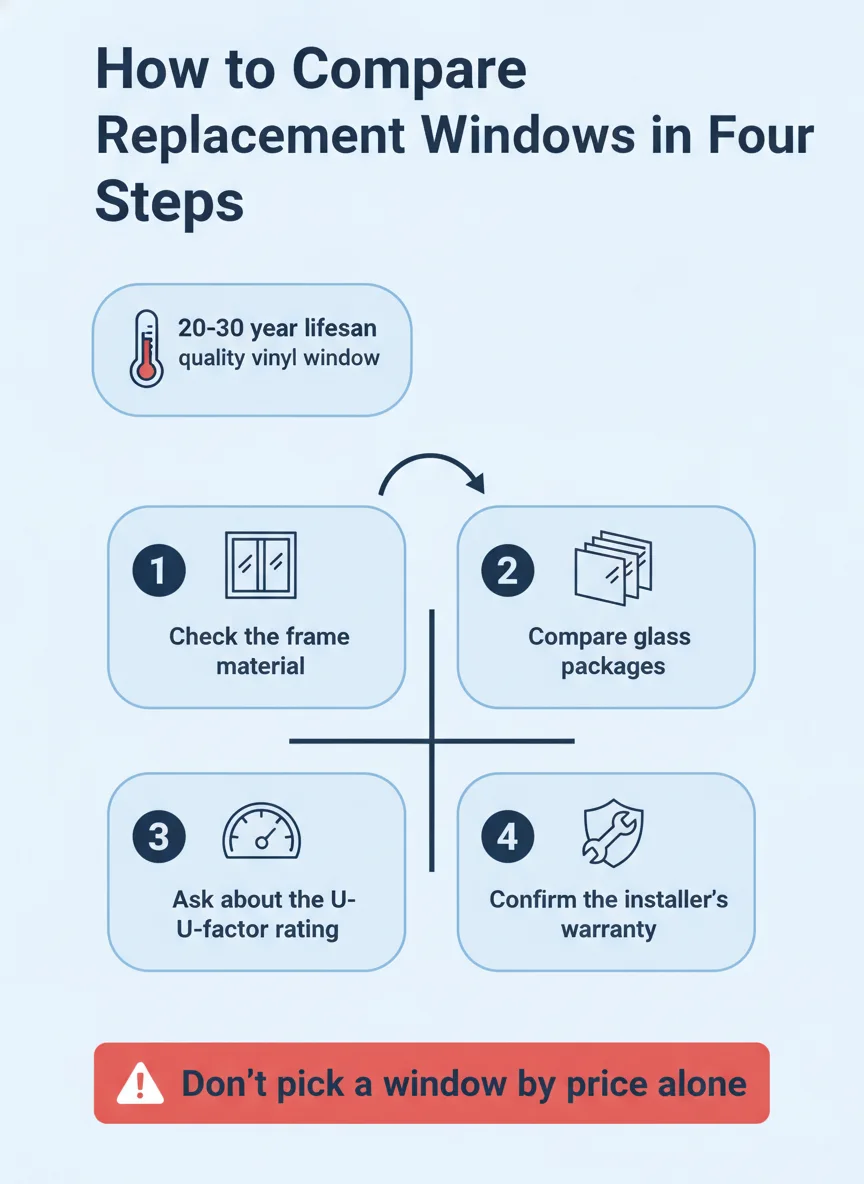
Use this order when you're comparing quotes or window lines so you're weighing the things that actually affect performance, not just the sticker on the box.
- Start with frame material: Decide between vinyl, fiberglass, wood, or composite based on your budget and how much upkeep you want to do over the next 20 years.
- Compare U-factor ratings: Ask for the U-factor on every option you're considering and compare apples to apples, since a lower number means better insulation.
- Check the glass package: Confirm whether the quote includes Low-E coating and an argon or krypton fill, both of which affect comfort and energy performance.
- Ask about the warranty: Find out what's covered on the glass, the frame, and the labor separately, since those often carry different terms.
- Review the installer's process: A careful measurement and a sealed opening matter as much as the window brand, so ask how the opening gets prepped and flashed.
- Get it in writing: Make sure the final quote lists the exact model, glass package, and warranty terms rather than a general description.
What problems show up when the wrong window goes into the wrong opening
Condensation and fogging
Fogging between the panes usually means the seal holding the gas fill has failed, not that the glass itself is defective. This can happen to any brand over time, but it shows up sooner on windows installed in openings that weren't properly sealed and sheltered from moisture.
Condensation on the inside surface of the glass, on the other hand, is usually a humidity issue inside the home rather than a window failure, and it's worth ruling that out before assuming the window itself is the problem.
Drafts and temperature swings near the window
If a room feels colder near the window than the rest of the house, the culprit is often the seal around the frame rather than the glass package. This is one of the more common issues our window repair visits turn up on older installs.
Replacing just the weatherstripping or re-sealing the opening sometimes solves it without a full window swap, which is worth checking before assuming the whole unit needs to go.
What a homeowner can evaluate alone versus what needs a pro
You can absolutely research frame materials, glass packages, and brand reputations on your own, and that homework makes you a sharper shopper when quotes start coming in. Reading reviews, comparing U-factor numbers, and deciding what look you want for your home are all things you can do without a contractor on site.
What a homeowner usually can't evaluate alone is how a given window will perform in their specific opening. Rough opening size, how square the frame is, and what's happening behind the existing trim all affect which window options are even a good fit, and that requires an in-person measurement.
A licensed installer should also be the one making the final call on flashing and sealing details, since that work is what determines whether the window's rated performance actually shows up in your energy bill. If you want a sense of what that process runs in this market, our cost guide for the Denver metro breaks down what drives the price up or down.
Bringing it back to your house
There's no single best replacement window, only the best combination of frame, glass, and installation for your specific home, budget, and how long you plan to stay in it. Homes in Denver and across the metro see enough temperature swing that it's worth paying attention to U-factor and glass package rather than brand name alone.
Bring a tape measure, a short list of questions about U-factor and warranty terms, and a willingness to ask how the installer plans to seal the opening, and you'll end up comparing quotes the right way. Precise Windows LLC can walk through those options at your home and measure the openings before you have to decide on anything.
Frequently asked questions
What type of replacement window is best for Colorado's climate?
A window with a low U-factor and a glass package built for temperature swings tends to perform best here, since Colorado sees big day-to-night and seasonal shifts in temperature. Vinyl and fiberglass frames both handle that expansion and contraction well, which matters more in this climate than in milder states.
Is vinyl or fiberglass better for replacement windows?
Both hold up fine in Colorado, and the right pick usually comes down to budget and how long you plan to stay in the home. Vinyl costs less upfront and insulates well, while fiberglass holds paint better and resists warping slightly better over decades.
Does the brand of window matter as much as the installation?
Installation matters at least as much as the brand, because even a well-built window will underperform if the opening isn't sealed and flashed correctly. A mid-tier window installed right will usually outlast a premium window installed poorly.
What glass package should I ask for in a Colorado replacement window?
Look for a double-pane window with Low-E coating and an argon or krypton gas fill, since that combination manages both summer heat gain and winter heat loss. Triple-pane adds more performance but also more weight and cost, and isn't always necessary at Denver-area elevations.
How long should a good replacement window last before I need to think about this again?
A quality vinyl or fiberglass window, installed correctly, typically lasts in the 20 to 30 year range before seals or hardware start to fail. Sun exposure and how well the opening was sealed at install both affect where in that range a given window lands.