
Why Brick Homes Need a Different Window Replacement Approach
Across the Denver metro, a lot of the housing stock from the mid-1900s through today uses brick veneer or solid masonry on at least part of the exterior, and that changes how a window replacement gets planned. In a wood-framed wall, a crew can cut the opening a little bigger or smaller if the new unit calls for it. In a brick wall, the opening is fixed. The masonry isn't moving, so the new window has to be built or trimmed to fit what's already there.
That single fact drives most of the differences in this article: how the opening gets measured, how the old window comes out, and how the new one gets sealed against the brick. None of it is exotic work, but it rewards a crew that has done it before and knows where brick openings tend to hide moisture or settle out of square over the decades.
Why Brick Construction Changes the Install
Brick does two things that wood siding doesn't. It holds its shape rigidly, and it is porous enough to absorb and release moisture with the seasons. A window set into that opening needs a seal that tolerates both. Get too casual with the flashing or the sealant bead and water finds the gap between frame and masonry, often not showing up as an obvious leak but as slow rot in the framing behind the brick.
Masonry Opening vs. Wood-Framed Opening
A wood-framed rough opening is built during construction with some slack built in on purpose, so a slightly larger or smaller replacement window usually still fits with minor trim work. A masonry opening in brick has no such slack. It was built to the dimensions of the original window and brick doesn't get cut back casually, so an accurate measurement of the existing opening, not just the old window, is the first real decision point.
This is also why pocket replacement windows, units built to slide into the existing frame rather than a full frame-out install, are common in brick homes. They preserve the exterior brick and trim exactly as it is, which keeps the job simpler and the exterior finish untouched.
Brick Mold, Flashing, and the Weather Seal
Brick mold is the trim piece that traditionally bridges the gap between a window frame and the surrounding brick, and it plays a real role in shedding water away from that seam. When a window gets replaced, that transition has to be rebuilt correctly, with flashing tucked behind the brick mold and sealant applied as a backup, not a substitute.
A sealant bead alone, without flashing underneath it, works for a while and then fails the first time the caulk cracks from sun and cold cycling. Colorado's swing between summer heat and winter freeze is hard on exterior sealants, which is one more reason the flashing detail matters more on a brick home than it might elsewhere.
| Wall Type | Opening Flexibility | Typical Install Method |
|---|---|---|
| Brick veneer over wood frame | Low, opening is fixed by the brick | Pocket replacement inside existing frame |
| Solid masonry (older homes) | Very low, opening tied to structural brick | Pocket replacement or careful frame-out |
| Wood siding or fiber cement | Higher, opening can be adjusted some | Full-frame or insert replacement, either works |
The Anatomy of a Brick Window Opening
Underneath the brick, most window openings have a structural lintel, usually steel or concrete, that carries the weight of the brick above the opening so the window frame itself isn't load-bearing. Behind that sits the rough wood framing, then the window frame, then layers of flashing and sealant tying it all together where brick meets frame.
Knowing that layering matters because problems in a brick opening tend to hide. A lintel that's rusted and sagging slightly, or wood framing that's gone soft from years of a bad seal, won't always show from inside the house until the old window comes out and the opening is fully visible.
Step-by-Step: Replacing a Window in a Brick House
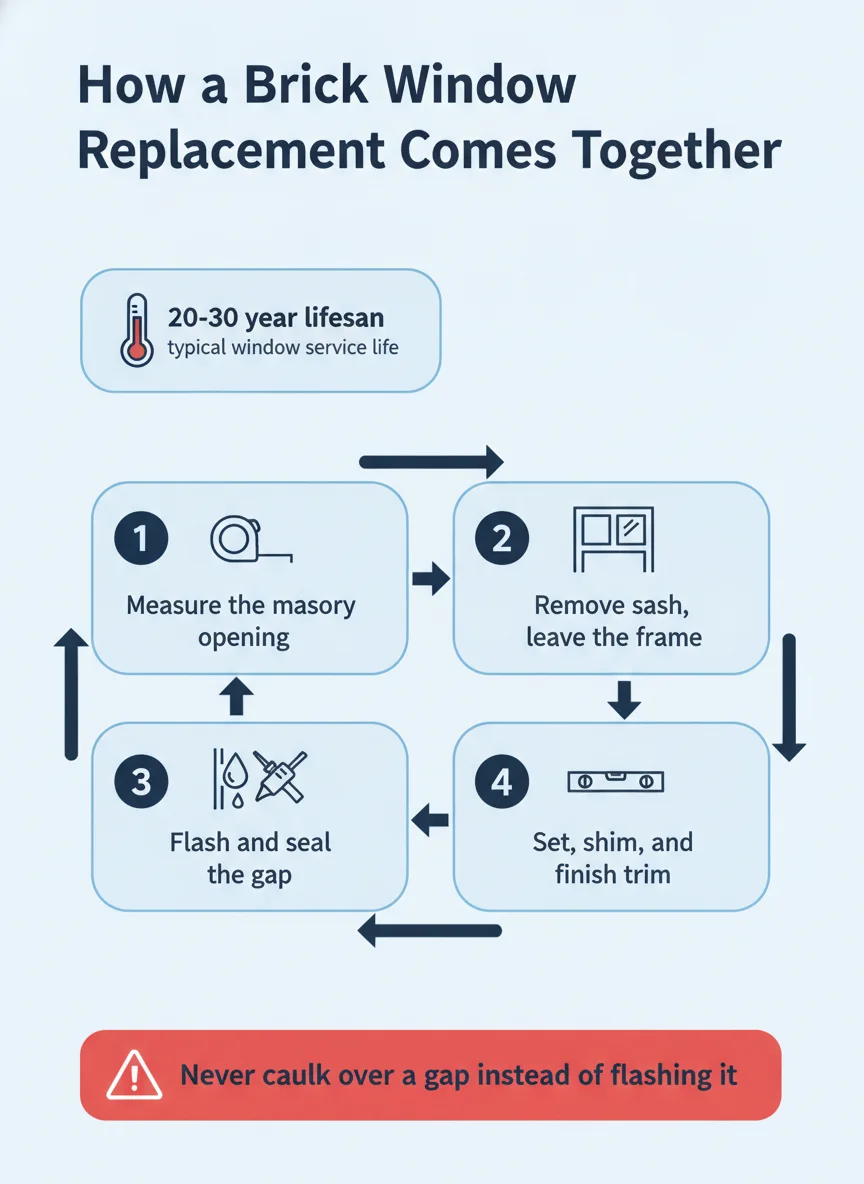
The sequence below is the general shape of a brick window replacement from first measurement to finished trim. Site conditions and the window style change some of the details, but the order holds for most jobs.
- Measure the masonry opening: The crew measures the existing opening at multiple points, since brick openings can be slightly out of square after decades of settling.
- Order the correctly sized unit: The new window is sized to the opening as measured, accounting for any irregularities rather than assuming a standard size fits.
- Remove the old sash and frame: The old window comes out carefully to avoid chipping the surrounding brick or mortar joints.
- Inspect the opening: The lintel, framing, and any existing flashing get a quick visual check before the new window goes in.
- Set and shim the new window: The window is leveled and shimmed in the opening so it operates smoothly and sits square in the brick.
- Flash and seal: Flashing is tucked behind the brick mold and sealant is applied as a backup layer, not the only line of defense.
- Finish the interior and exterior trim: Trim is reset or replaced so the brick opening looks finished inside and out, matching what was there before.
What You'll Find Once the Old Window Comes Out
Signs of Moisture Damage Behind the Brick
Soft or discolored wood framing around the opening is the most common sign a seal has been failing for a while. It usually shows up at the sill first, since that's where water that gets past a bad flashing detail collects and sits longest.
Rust staining on a steel lintel, or efflorescence, the white chalky mineral deposit that shows up when water has been moving through the brick, are both signs worth flagging. Neither one means the whole wall is in trouble, but both are worth addressing before the new window goes in rather than sealing over them.
When the Masonry Opening Needs Repair First
Cracked mortar joints, spalling brick faces, or a visibly sagging lintel are reasons to pause and address the masonry before setting a new window. Installing a window into a compromised opening just locks the problem in place behind new trim.
Most brick openings don't need this kind of work. It's the exception, not the rule, but it's one more reason a brick window job benefits from someone who inspects the full opening rather than just swapping units.
DIY vs. Calling a Pro for Brick Window Replacement
Some parts of this job are approachable for a confident homeowner. Removing interior trim, caulking small gaps, or repainting new trim to match existing woodwork don't require specialty tools or masonry experience.
The parts that call for a pro are the measurement of the masonry opening, the removal of the old frame without damaging the brick, and the flashing detail itself. Getting any of those wrong doesn't usually show up immediately, it shows up a year or two later as a soft sill or a draft that wasn't there before, and by then the fix means pulling the window back out.
A window replacement crew that regularly works on brick exteriors in the Denver metro will have a feel for how local brick homes were built and where the common trouble spots tend to show up, which is worth something on a job where the mistakes hide behind trim for a year before they surface.
Getting It Right the First Time
Brick window replacement isn't a specialty trade of its own, it's standard window work done with more respect for the opening you're not allowed to change. Measure accurately, flash properly, and the brick that's been standing for decades will keep doing its job around a window that's doing its.
If you're weighing options for a brick home in Littleton or anywhere else in the metro, it helps to also read up on how long replacement windows typically last in Colorado's climate before deciding what to install, and Precise Windows LLC can walk the opening with you before anything gets ordered.
Frequently asked questions
Can you replace a window in a brick house without removing the brick?
Yes, most brick window replacements leave the surrounding brick untouched. The crew removes the old sash and frame from inside the masonry opening and sets the new window into that same opening, so the brick itself stays in place.
Is replacing a window harder in a brick house than a wood-framed house?
It takes more care but it is not necessarily harder, just different. The masonry opening is fixed in size, so the new window has to be measured and fitted to it rather than the other way around, and any flashing work has to account for the brick instead of siding.
Why do windows in brick homes sometimes leak after replacement?
Leaks after replacement usually trace back to flashing and sealant work that didn't fully address the gap between the new frame and the masonry. Brick is porous and moves with temperature, so the seal around the opening has to handle both water and expansion, not just look tidy.
Do you need to repair the brick before replacing the window?
Only if the masonry around the opening is cracked, spalling, or has deteriorated mortar joints. A sound masonry opening doesn't need repair work first, but a damaged one should be addressed before a new window goes in or the same problems will show up again.
How long does it take to replace a window in a brick house?
Most single-opening brick window replacements are a one-day job per window once the crew is on site, though the exact pace depends on the condition of the opening and whether any masonry repair is needed first.