
Why This Question Comes Up So Often in Colorado Homes
Every homeowner in the Denver Metro area hits this question eventually: the window in the dining room fogs up every winter, or the one in the bedroom won't lock anymore, and you have to decide whether to fix it or replace it. It's a fair question because the two paths cost very different amounts of money and effort, and picking the wrong one means paying twice.
Colorado's swings between hot, dry summers and cold winters with heavy snow loads put real stress on window seals, frames, and hardware. A window that's merely annoying in a milder climate can become a genuine energy drain here once a seal fails or a frame warps, because the gap lets conditioned air out and outside air in during exactly the months your furnace is working hardest.
What Actually Fails in a Window, and Why It Matters
A window is really three separate systems: the glass unit, the frame and sash, and the hardware (locks, balances, weatherstripping). Each one fails for different reasons and on a different timeline, which is exactly why the repair-or-replace question doesn't have one universal answer. Knowing which part is actually the problem tells you which direction to go.
The Glass Unit
Modern windows use sealed, insulated glass units, usually two panes with a gas-filled gap between them. That seal is what keeps the gas in and moisture out. When it fails, you get the telltale fog or haze between the panes that no amount of window cleaner will fix because the moisture is trapped inside the sealed unit itself.
A failed seal on an otherwise sound frame is often a case for replacing just the glass unit rather than the whole window. It's a narrower repair, it keeps the existing frame and trim intact, and it solves the actual problem, which is the seal, not the window's structure.
The Frame and Sash
The frame is the part that takes the beating from sun, moisture, and temperature swings over the years. Wood frames can rot or warp, aluminum frames conduct cold straight through and can pit or corrode, and even vinyl frames can warp if they've been exposed to intense, direct sun for a long stretch.
If the frame is warped enough that the window doesn't sit square in the opening, no repair fixes that permanently. You can plane a sash or adjust hardware to compensate for a while, but a warped frame tends to keep moving, and that's usually the point where replacement makes more sense than another round of adjustments.
| Signal | Usually a repair | Usually a replacement |
|---|---|---|
| Glass is foggy between panes | Glass unit swap, if the frame is solid | |
| Window won't lock or stick-slides | Hardware adjustment or new balance | |
| Frame is warped or won't sit square | Full window replacement | |
| Wood frame shows rot or soft spots | Full window replacement | |
| Weatherstripping is worn but frame is straight | New weatherstripping | |
| Draft persists even when locked and sealed | Full window replacement |
What's Involved in a Window Repair
Repairs are targeted fixes aimed at one failed component. That might mean swapping a fogged glass unit, replacing stretched or torn weatherstripping, fixing a balance so a double-hung sash stays up on its own, or rehanging a door or window that's dragging in its track. Our Window & Glass Repair work covers exactly this kind of job, diagnosing which part failed and fixing that piece instead of pulling the whole unit.
The upside of a repair is obvious: less disruption, less cost, and the existing trim and interior finish stay untouched. The tradeoff is that a repair only solves the specific failure you addressed. If the rest of the window is the same age and built the same way, other parts of it may start showing the same wear on their own timeline.
Step-by-Step: How to Decide Which Path Fits Your Window
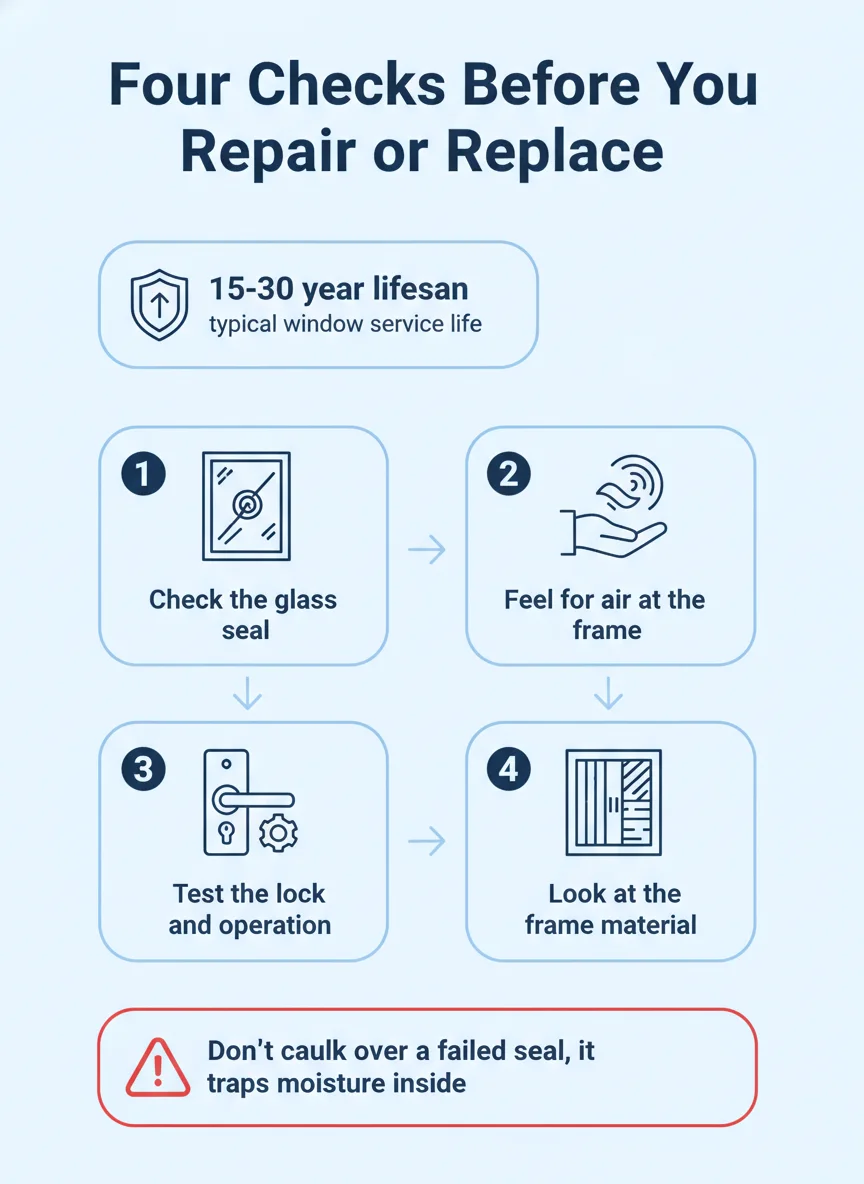
Work through these checks in order before you decide. Each one narrows down whether you're looking at a contained problem or a structural one.
- Inspect the glass first: Look for haze or fog between the panes, which points to a seal failure in the glass unit rather than a frame problem.
- Feel for air at the frame: Run a hand around the frame edge on a cold or windy day with the window locked; air movement here usually means the frame or weatherstripping, not the glass.
- Test the operation: Open, close, and lock the window fully. Sticking, dragging, or a lock that won't catch square points to hardware or a frame that's shifted.
- Check the frame material and age: Wood and aluminum frames tend to show their age sooner than vinyl or fiberglass, and rot or corrosion is a replacement signal, not a repair one.
- Look at the whole house, not just one window: If several windows of the same age and type are starting to show the same issues, it may be more efficient to plan a broader replacement than to repair one at a time.
- Get it looked at: A quick in-person look settles most of this faster than guessing, since some seal failures and frame issues look similar from a few feet away.
What You'll Find When You Actually Look Closely
Single Window, Isolated Problem
If it's one window out of a houseful, and the issue is contained to the glass or the hardware, that's the easiest case. A glass swap or a hardware fix solves it, the surrounding trim and wall don't need to be touched, and you're done in a visit or two.
This is also the scenario where doing nothing for a while is lowest-risk, since a single failed seal or sticky lock isn't a structural problem, it's a comfort and energy issue that can wait on your schedule rather than demanding immediate action.
Multiple Windows, Same Age, Same Symptoms
If you're seeing the same failure pattern across several windows, especially ones installed around the same time, that's a sign of a batch issue rather than one unlucky unit. Original builder-grade windows in older Denver Metro homes often start showing seal failures and frame wear in clusters rather than one at a time.
In that case, planning ahead for a Window Replacement project across the affected windows, rather than chasing repairs one by one as each fails, usually saves both money and hassle over a few years.
DIY vs Calling a Pro
Some of this is genuinely a weekend project. Replacing worn weatherstripping, lubricating a sticky track, or tightening loose hardware are all things a reasonably handy homeowner can do with basic tools and a trip to the hardware store.
Glass unit swaps and anything involving the frame itself are a different story. Getting a sealed glass unit to sit and seal correctly in the sash takes the right tools and a steady hand, and a frame that's out of square needs to be shimmed and set precisely or the new unit will fail the same way the old one did, just faster.
If you're also dealing with damage from a storm, documenting it properly and working with your insurance company is its own process, and that's covered separately under Storm & Hail Damage rather than a standard repair call.
Making the Call for Your Home
There's no single right answer here, only the right answer for the window in front of you. A contained glass or hardware issue on an otherwise solid frame deserves a repair. A warped, rotted, or chronically drafty frame deserves a replacement, because no repair holds up against a frame that's already moving.
If you want a second opinion on which category your window falls into, a quick inspection answers it faster than guessing, and the related guide on why Colorado homes often end up replacing windows walks through the bigger-picture signs worth watching for. Precise Windows LLC can take a look and tell you straight which way it should go.
Frequently asked questions
How do I know if my window needs to be repaired or replaced?
Start with the glass and the frame separately. If the glass is cracked, fogged between panes, or the seal has failed but the frame is solid and square, repair or a sash/glass replacement usually solves it. If the frame itself is rotted, warped, or the window won't stay open or locked no matter what you adjust, that's a sign the whole unit needs to come out.
Can a foggy window be fixed without replacing the whole window?
Sometimes, yes. A fogged double-pane window usually means the seal between the two panes of glass has failed and let in moisture, and in many cases just the glass unit (not the whole frame) can be swapped out. If the frame around it is also old, cracked, or drafty, it often makes more sense to replace the full window instead of paying for a glass-only fix now and a frame fix later.
Is it cheaper to repair a window than replace it?
A single repair, like fixing a broken lock or replacing a screen, is almost always less of a project than a full replacement. But repair costs add up fast if a window needs it every year or two, and at some point the labor on repeated small fixes starts rivaling what a new, better-sealed window would have cost.
How many years does a window usually last before it needs replacing?
Most residential windows are built to last somewhere in the range of 15 to 30 years depending on the frame material and how well they were installed, with vinyl and fiberglass generally on the longer end and older wood or aluminum frames wearing out sooner. Age alone isn't the only factor though, a 10-year-old window with a failed seal has the same problem as an older one.
Does a drafty window always mean I need to replace it?
Not always. Sometimes a draft is coming from worn weatherstripping or a loose lock that isn't pulling the sash tight, and both of those are repairable. If you feel air movement even with the window locked and the weatherstripping looks intact, that usually points to a warped frame or a gap that's opened up around the opening itself, which is a replacement problem.