
What Is a Pocket Replacement Window, Exactly?
A pocket replacement window is a new window built to slide into the frame that's already in the wall, rather than a window that requires tearing that frame out. The name comes from the "pocket" the old frame creates once the sashes are removed: the new unit sets into that space, gets shimmed and sealed, and the exterior trim and siding never get touched. It's the method most Denver Metro homes get when the existing wood or vinyl frame is still square and dry.
The appeal is speed and a lower amount of disruption. No one is cutting into your siding, repainting trim, or patching drywall around the opening afterward. For a older home in Englewood or Wheat Ridge with frames that have held up fine for decades, pocket replacement lets you upgrade the glass and the seal without touching anything else on the wall.
How Does a Pocket Replacement Window Actually Work?
It works by building the new window's frame slightly smaller than the old one, so it nests inside what's already there instead of needing its own rough opening. The old sashes come out, the crew checks the exposed frame for soundness, and the new unit gets set, shimmed level, insulated around the gaps, and sealed. The visible glass shrinks a bit because of the double frame, but the structural work underneath the wall stays untouched.
The Existing Frame Stays Put
Nothing about the exterior opening changes with a pocket install. The old wood or vinyl frame, the exterior casing, the brick mold or siding butting up against it, all of it stays exactly where it is. That's the main reason this method goes faster and costs less in labor than a full tear-out.
It's also why the frame has to be in decent shape before anyone recommends it. If that old frame is cracked, twisted, or holding moisture, sealing a new window on top of it just traps the problem instead of fixing it. A window replacement estimate should always include a look at that frame before pocket vs full-frame gets decided.
What Changes Inside the Opening
Inside the pocket, the crew is working with a tighter margin than a new-construction install. Insulation gets packed into the gap between the old frame and the new one, low-expansion foam or fiberglass depending on the gap size, and the interior stop or trim gets reset once the new sashes are square and operating smoothly.
The weight-bearing part of the wall, the studs and header, never gets disturbed. That's the tradeoff with pocket replacement: you're not resetting the whole opening, you're refinishing what's already structurally sound. For homes with frames that have taken on water over the years, that's exactly why full-frame is the safer route instead.
| Method | What Gets Removed | Best Fit |
|---|---|---|
| Pocket replacement | Old sashes and hardware only | Sound frame, no rot, wanting a faster install |
| Full-frame replacement | Entire frame down to the studs | Rotted or water-damaged frames, resizing an opening |
| New-construction window | Frame plus exterior trim and siding around it | New builds or additions, not a retrofit |
What's Inside a Pocket Replacement Window Unit?
A pocket unit is still a complete window, just built to a slightly smaller outer dimension than the opening it's going into. It has its own frame, its own sashes, its own weatherstripping and hardware, all sized to nest inside the old frame with room for insulation and sealant around the perimeter. The glass package, whether double-pane or triple-pane, and the operating style, double-hung, casement, sliding, works the same as it would in any other installation.
What's different is the interface between the new frame and the old one. That seam is where air leaks and moisture problems start if it's not insulated and caulked correctly, so it's worth asking any installer how they handle that gap before work starts. A clean pocket install should leave you with a window that operates and seals like new, just inside a slightly smaller visible opening than before.
Step-by-Step: How a Pocket Replacement Window Goes In
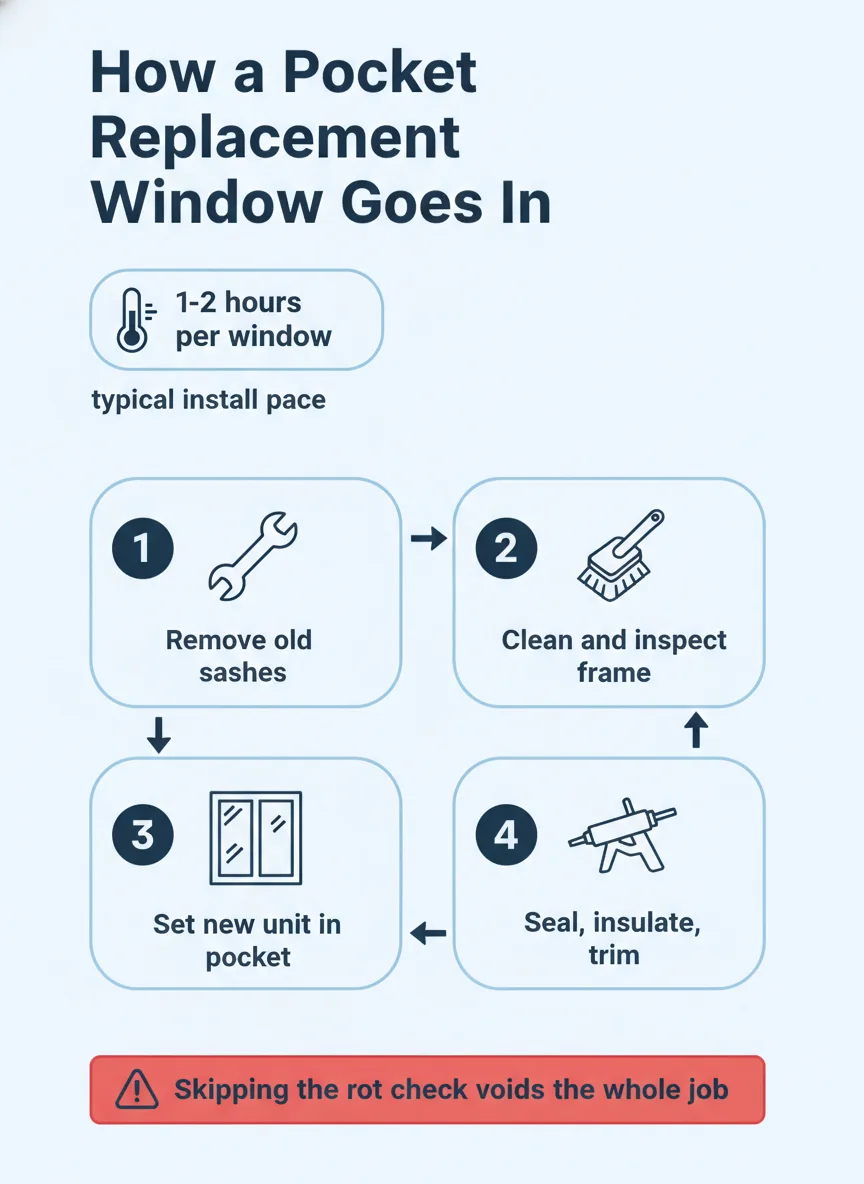
The actual install moves through a handful of steps per window, and most of the time on the job goes into getting the old frame checked and prepped rather than the new unit itself.
- Remove old sashes: The existing window sashes, balances, and locking hardware come out, leaving the bare frame exposed in the wall.
- Inspect the frame: The crew checks the exposed wood or vinyl for rot, soft spots, or water staining before anything new goes in.
- Dry-fit the new unit: The replacement window gets set into the opening without sealant first, to confirm it's square and the right size.
- Shim and level: Shims go in at the corners and midpoints so the new frame sits plumb and square inside the old one.
- Insulate the gap: Low-expansion foam or fiberglass insulation fills the space between the new frame and the old, cutting down drafts.
- Seal and trim: Exterior and interior sealant goes around the perimeter, and the interior stop or trim gets reset over the seam.
- Test operation: The sashes get opened, closed, and locked a few times to confirm smooth operation before the crew moves on.
What Will You Notice After the Install?
Smaller Glass, Same Opening
The most common thing homeowners notice is that the glass looks a touch smaller than what was there before. That's the double-frame effect, the new unit's frame sits inside the old one, so you lose some visible glass around the perimeter. On a standard-size window it's usually subtle enough that most people stop noticing within a week or two.
What you should also notice, assuming the install was done right, is a tighter seal around the sashes and smoother operation if the old window had been sticking or hard to lock. That's the main performance gain pocket replacement delivers: new glass and new hardware, without touching anything outside the opening.
Where Pocket Windows Fall Short
Pocket replacement isn't the right move everywhere. If the old frame is out of square, has rot, or if you're trying to change the window's size or shape, pocket replacement can't fix any of that, since it's built around keeping the existing frame as-is. In those cases a full-frame replacement, or in some cases new siding work around the opening, is the better path.
It's worth asking an installer directly whether your home's frames are good candidates before assuming pocket replacement is the default. A quick look at the sill and jambs during a window replacement visit usually settles it one way or the other.
Should You DIY Pocket Replacement Windows or Call a Pro?
Pocket replacement windows get marketed as a DIY-friendly option because the frame work is already done, and for a handy homeowner with the right tools, a single window swap is within reach. Measuring the opening correctly, ordering the right size, and getting the unit level and square are the parts most likely to go wrong without experience.
Where this gets tricky fast is the insulation and sealing at the seam between old and new frame. Get that wrong and you end up with drafts, condensation, or water getting behind the trim, problems that don't show up until months later. That seam is also where a licensed installer's warranty usually lives, so a DIY install can leave you without coverage if something fails.
The judgment call on pocket vs full-frame is the other reason most homeowners bring in a pro. Spotting hidden rot, knowing when a frame has shifted out of square, and knowing how much a window's glass area will shrink with a given frame depth all come from having done dozens of these installs, not from a single afternoon project.
Is a Pocket Replacement Window Right for Your Denver Metro Home?
The answer usually comes down to the condition of what's already in the wall. Sound frames with no rot and no need to resize the opening are good candidates for pocket replacement, which gets you new glass and better-sealing hardware without the labor or mess of a full tear-out. If you're not sure which category your home falls into, a look at how long window replacement takes start to finish is a useful next read before you book an estimate.
If your frames are older, showing water staining, or you're covering windows across a whole house in Denver or a nearby suburb, it's worth getting a frame-by-frame look before deciding on a method. Precise Windows LLC walks through that check on every estimate, so you know going in whether pocket replacement fits your home or a full-frame install is the better call.
Frequently asked questions
What is a pocket replacement window?
A pocket replacement window is a new window unit built to fit inside your existing window frame, so the old frame, exterior trim, and siding stay in place. Only the sashes, the glass, and the hardware get swapped out, which is why it's also called an insert window.
Is a pocket replacement window the same as a full-frame replacement?
No, a full-frame replacement removes the old frame down to the rough opening and studs, while a pocket replacement leaves that frame intact and builds the new window into it. Full-frame costs more labor but it's the only option when the existing frame is damaged.
Do pocket replacement windows reduce the glass size?
Yes, a little. Because the new frame nests inside the old one, the visible glass area shrinks slightly, usually by less than an inch on each side, which most homeowners don't notice once blinds or curtains are back up.
Can you install pocket windows if there's rot or water damage?
Not safely, no. Pocket replacement depends on the existing frame being sound, so any soft wood, water staining, or visible rot around the opening needs a full-frame replacement instead, otherwise the new window is sealed against a frame that's already failing.
How long does a pocket window installation take?
Most single pocket window installs run an hour or two per opening once the crew is set up, since there's no exterior trim or siding to remove and replace. A full house of pocket windows can often be finished in a single day depending on the count and any complications found along the way.