
Why 'Windows Replacement Program' Shows Up So Often in Colorado
If you've searched for new windows anywhere in the Denver metro, you've probably run into the phrase 'windows replacement program' attached to a utility mailer, a manufacturer ad, or a government energy page. It's not a scam term, but it's also not one single thing. It's shorthand for any structured incentive, rebate, or financing path tied to installing energy-efficient windows in an existing home.
The phrase matters now because Colorado's mix of hot summers, cold winters, and high-altitude sun puts real strain on older windows. Homeowners in Englewood, Denver, and surrounding towns are replacing single-pane or aging double-pane units not just for comfort, but because utility and state programs have made the math more attractive in recent years. Knowing what you're actually being offered saves you from signing up for the wrong thing or missing out on a real discount.
How Do These Programs Actually Work?
Most window replacement programs work the same basic way: a utility, state agency, or manufacturer offers a rebate or credit when you install windows that meet a specific energy performance standard, usually ENERGY STAR certified glass and frames. The incentive lowers your out-of-pocket cost but doesn't eliminate it, and the paperwork requirements vary by program.
Utility and State Energy Programs
Many electric and gas utilities run efficiency programs that include rebates for insulation, HVAC equipment, and windows, since reducing energy draw from homes helps the utility manage demand. Colorado's state energy office has also supported efficiency upgrade incentives at various points. These programs usually require an energy assessment or a specific product rating before you qualify, and funding levels change year to year, so what's available can shift.
The rebate amount and eligibility rules are set by the program administrator, not by any individual window contractor, so a reputable installer will tell you to verify current terms directly with the utility or state office rather than promising a number upfront. That's a sign you're dealing with someone straightforward.
Manufacturer and Retailer Promotions
Separately, window manufacturers and some retailers run their own seasonal promotions, sometimes labeled with similar 'program' language, that function more like a sale, financing offer, or extended warranty than a government incentive. These aren't tied to energy policy and usually just require buying a certain product line within a time window.
It's worth asking directly whether an offer is a third-party energy program with its own eligibility rules, or a manufacturer promotion tied to one brand. The two get marketed with nearly identical language, but they come from completely different sources and have different fine print.
| Type | Who Runs It | What It Requires |
|---|---|---|
| Utility rebate | Local electric or gas utility | Energy Star rated windows, sometimes a pre-install assessment |
| State energy incentive | State energy office or similar agency | Documentation of product rating and installed address |
| Manufacturer promotion | Window brand or retailer | Purchase of a specific product line within a sale window |
What a Qualifying Window Actually Looks Like
Across nearly every program, the baseline requirement is an ENERGY STAR label or equivalent performance rating, which measures how well a window resists heat transfer and air leakage. In a Colorado climate, that generally means double or triple-pane glass with a low-E coating and an insulated frame, whether that's vinyl, wood, fiberglass, or a composite.
It's not about the window brand so much as the measured performance numbers on the label, like U-factor and solar heat gain coefficient. A program won't care if you chose a double-hung or a casement style, as long as the unit meets the rating threshold specified for the incentive. That's why it pays to confirm the specific numbers required before you pick a product, rather than assuming any new window automatically qualifies.
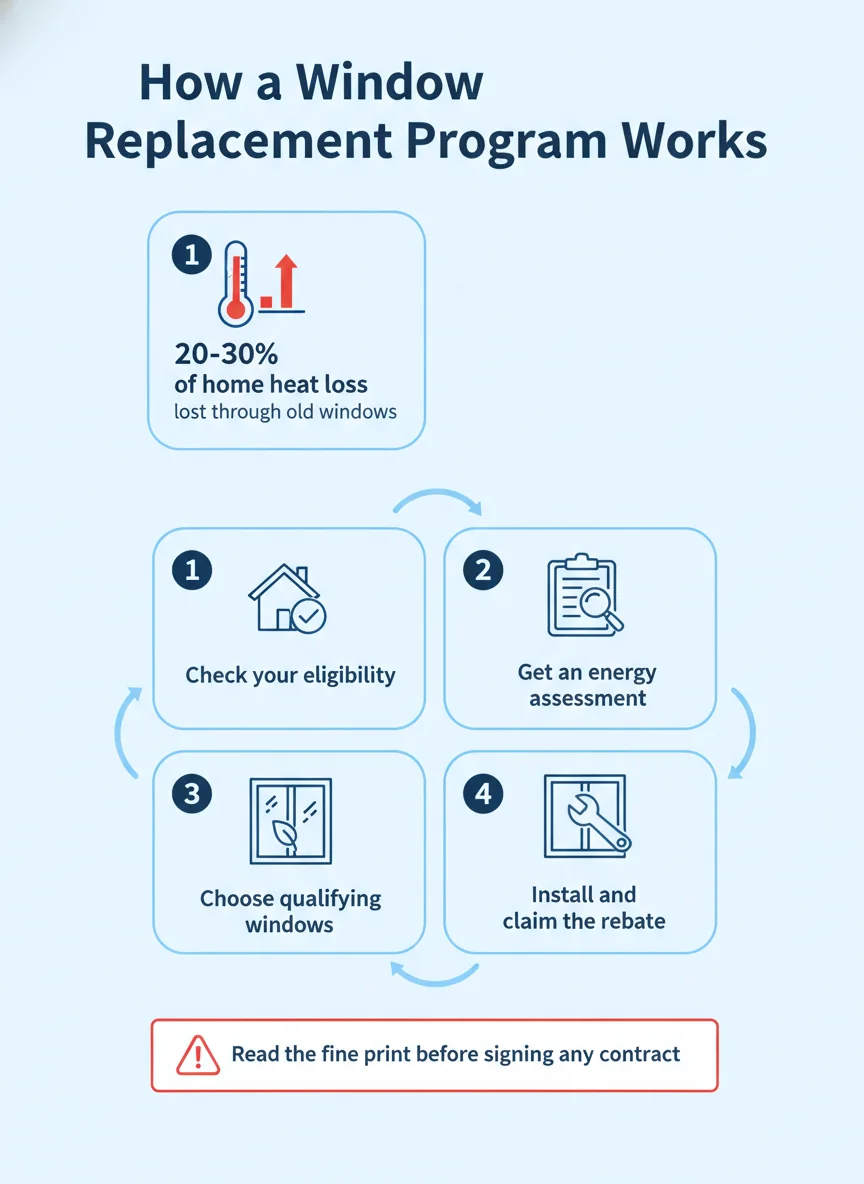
Step-by-Step: How to Use a Window Replacement Program
If you want to take advantage of a rebate or incentive instead of just paying full price, the process generally follows a predictable order. Here's the general path most homeowners follow.
- Check current offers: Look up your utility provider's efficiency page and your state energy office to see what's active right now, since programs change year to year.
- Get an energy assessment: Some programs require a home energy audit before approval, which also tells you where your house is losing the most heat.
- Confirm product requirements: Note the exact rating thresholds (U-factor, SHGC) the program requires before you choose windows.
- Get quotes from installers: Ask any contractor you're considering, including Precise Windows LLC, whether the products they carry meet the program's rating requirements.
- Submit paperwork on time: Most rebates require an application within a set window after installation, so keep your invoice and product spec sheets.
- Install and inspect: Have the windows installed and confirm the opening is sealed properly, since poor installation can undercut the energy savings the program is counting on.
- Claim the rebate: Submit your documentation and wait for processing, which can take weeks depending on the administering agency.
What You'll Find When You Dig Into the Terms
Once you start reading the actual program rules instead of the ad headline, a few things usually become clear. First, the rebate is almost always a flat amount or a percentage off, not a guarantee of free installation. Second, there's usually a cap on how many windows or how much total spend qualifies per household per year.
Common Restrictions
Programs frequently exclude new construction, limit eligibility to primary residences, or require the home to be a certain age. Some also require pre-approval before work starts, meaning you can't install first and apply for the rebate afterward. Missing that order is one of the most common reasons homeowners get denied.
If you're also dealing with storm or hail damage to windows alongside an efficiency upgrade, keep those two processes separate. An insurance claim and an energy rebate program run through completely different paperwork and approval paths, even if the work happens at the same time.
Why Documentation Matters So Much
Every program wants proof: a spec sheet showing the window's rating, a paid invoice, and sometimes a before-and-after photo of the opening. Keeping these organized from day one saves you from a denied application months later. A contractor who texts you photos of the work before and after as a standard practice makes this part much easier, since you'll have the documentation without having to ask for it separately.
It's also worth saving the manufacturer's label or sticker from the glass itself before it's removed during cleanup, since that's often the fastest way to confirm the rating number a program is asking for.
Handling the Paperwork Yourself vs. Calling a Pro
Most of the research side, comparing programs, reading eligibility rules, and gathering rebate forms, is something a homeowner can absolutely do without help. It just takes time and a willingness to read the fine print on a utility or state website.
Where it makes sense to bring in a pro is the product selection and installation side. A contractor who regularly installs energy-rated windows will know which product lines meet current rating thresholds, how the opening needs to be sealed to preserve the performance rating, and what documentation an inspector or rebate reviewer typically wants to see. That knowledge can be the difference between a smooth rebate approval and a denied application.
If you're comparing window materials as part of this decision, it's worth reading up on what to replace windows with before you commit to a product line, since frame material affects both performance rating and long-term maintenance.
Where to Go From Here
A windows replacement program is simply an umbrella term for the rebates, credits, and financing offers tied to installing energy-rated windows, not a single application you fill out once. The real work is confirming which specific program applies to your address, what it requires, and in what order.
Once you know the rules, choosing a qualifying product and getting it installed correctly is the part that actually protects the investment, and that's where Precise Windows LLC can help homeowners across the Denver metro sort out the product side while you handle the paperwork.
Frequently asked questions
What does 'windows replacement program' actually mean?
It's a general term for any rebate, incentive, or financing offer tied to installing energy-rated windows, usually run by a utility company, a state energy office, or a manufacturer. There's no single national program, so the term covers a mix of local and federal incentives that change from year to year.
Are window replacement programs free?
No, these programs reduce your cost through rebates, tax credits, or discounted financing, but you still pay for the windows and installation. The 'free' language in some ads usually refers to a free estimate or energy audit, not free windows.
Do I have to use a specific contractor for a rebate program?
It depends on the program. Utility and state programs typically require ENERGY STAR rated products and sometimes a licensed installer, but they rarely lock you into one specific company, so it pays to ask before you sign anything.
How do I know if my windows qualify for a program?
Qualification usually comes down to the energy performance rating of the new windows, not the condition of your old ones, so an ENERGY STAR label is the first thing to check. An energy assessment or your utility's program page will confirm the specifics for your address.
Is a window replacement program the same as window financing?
No, a program is an incentive that lowers your net cost, while financing is a separate way to pay for the remaining balance over time. Some homeowners use both together, applying a rebate first and financing what's left.