
Insert Windows and the Denver Metro Housing Stock
Insert replacement windows are built to fit inside the frame that's already in your wall, rather than requiring that frame to be torn out and rebuilt. For homeowners across the Denver metro, from older brick ranch homes in Englewood to newer construction in Highlands Ranch, this matters because it changes how much of the house gets opened up during a project. A lot of the housing stock in this region still has original wood window frames from decades back, and in many cases those frames are still structurally sound enough to hold a new insert.
The appeal is straightforward: less disruption to siding, trim, and interior walls, and a faster install day for each opening. That's why insert windows have become the default recommendation for a large share of window replacement jobs nationally, not just in Colorado. But insert windows aren't automatically the right call for every house, and understanding the mechanism behind them helps homeowners ask the right questions before they sign a contract.
How Does an Insert Window Actually Work?
An insert window works by building a complete new window unit, frame and all, sized to fit precisely inside the existing opening once the old sashes, balances, and hardware are removed. The old exterior brick mold or trim and the old interior casing generally stay in place, which is what keeps the surrounding wall from needing to be reopened.
The Frame-Within-a-Frame Design
Picture the existing window opening as a stable wood box built into the wall. An insert window is a smaller, complete window unit, its own frame, sashes, and glass, that gets set into that box and shimmed level and plumb. The gap between the new unit and the old frame gets insulated and sealed, and trim covers the seam on both sides.
Because the new frame nests inside the old one, the overall glass area shrinks by a small margin compared to a full-frame replacement. For most rooms this is a minor cosmetic tradeoff against a much simpler install, and it's one reason insert windows cost less in labor than tearing a frame out down to the studs.
Why Frame Condition Is the Deciding Factor
Insert windows depend entirely on the old frame doing its job as a stable, square, dry housing for the new unit. If that frame has soft wood, visible rot at the sill, or has shifted out of square over the years, an insert window set inside it will inherit those problems rather than fixing them.
This is why a proper inspection of the sill, jambs, and header happens before anyone quotes insert windows for a job. Moisture intrusion is the most common issue found during these checks, especially on older homes where the original flashing and caulking have worn down over the years of Colorado sun and snow cycles.
| Factor | Insert Replacement | Full-Frame Replacement |
|---|---|---|
| Existing frame condition | Must be solid and square | Frame is removed, so condition doesn't matter |
| Work involved | Minimal disruption to trim and siding | Trim and sometimes siding removed and replaced |
| Glass area | Slightly smaller due to double frame | Full original glass area restored |
| Best fit | Sound original wood frames | Rotted, shifted, or non-standard openings |
What's Inside an Insert Window?
Inside the new frame, an insert window uses the same glass packages, hardware, and weatherstripping found in any modern replacement window. Double-pane glass with a gas fill between the panes is standard in Colorado for its insulating value against both summer heat and winter cold, and most units come with low-E coatings to cut down on UV transfer through the glass.
The frame material itself is typically vinyl, though wood and composite options exist depending on the look a homeowner wants. Window Replacement covers double-hung, casement, sliding, and several other styles that can all be built as insert units when the existing opening calls for it.
Step-by-Step: How an Insert Window Gets Installed
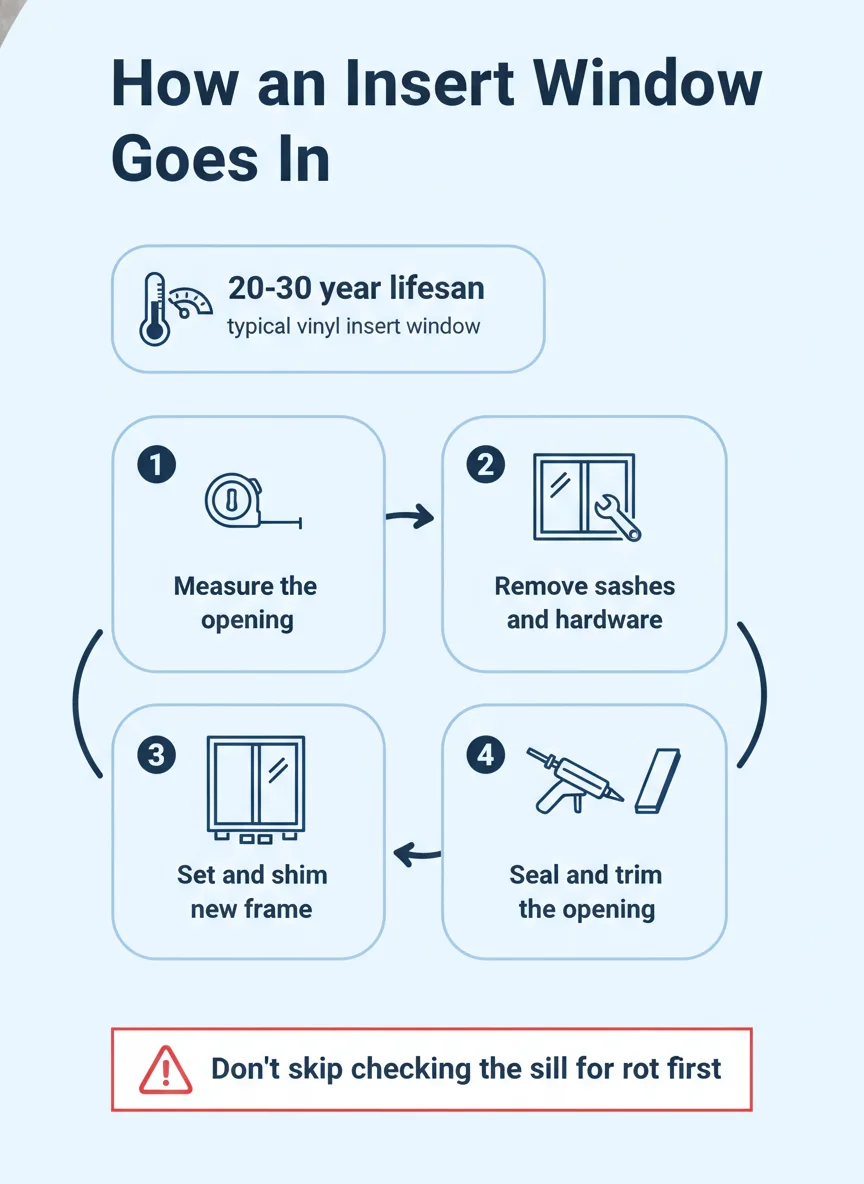
The install itself moves faster than a full-frame job because most of the structural work around the opening is already done. Here's the general sequence a crew follows on a typical insert window replacement.
- Measure the opening: The exact width, height, and depth of the existing frame get measured so the new unit is built to fit without gaps.
- Remove old sashes: The operable parts of the old window, sashes, balances, and locks, come out, leaving the frame shell in place.
- Inspect the sill: The crew checks for soft wood or moisture damage before setting the new unit, since this determines if an insert is still the right call.
- Set the new frame: The insert unit is placed into the opening and shimmed until it's level, plumb, and square.
- Insulate the gap: The small space between the new frame and old frame is filled with insulation to cut drafts.
- Seal the exterior: Exterior caulking and trim go back over the seam to keep moisture from finding its way in.
- Finish the interior: Interior trim is reset or touched up and the window is tested for smooth operation before the crew leaves.
What Problems Show Up Once the Old Sashes Come Out?
Once the old sashes are pulled, the crew gets its first real look at the condition of the frame underneath, and that's when hidden issues tend to surface. Most of the time the frame is in fine shape and the job proceeds as planned, but it's worth knowing what to watch for.
Signs the Frame Is a Good Candidate
A good candidate frame feels solid when pressed, shows no soft or spongy wood at the sill, and is still reasonably square in its opening. Minor paint wear or small cracks in old caulking are normal and don't disqualify a frame from taking an insert window.
Homes where the original windows were well-maintained, caulked regularly, and protected from direct water exposure tend to hold up best over the decades, which is common across a lot of the older neighborhoods in Denver and surrounding towns.
Signs the Opening Needs More Work
A frame that flexes under light pressure, has visible dark staining or softness near the bottom corners, or has clearly shifted out of square usually needs more than an insert window can offer. In those cases the frame itself has to be rebuilt, which moves the job into full-frame replacement territory.
Catching this before the new unit arrives matters, since an insert set into a compromised frame won't seal properly and the problem just gets covered up rather than fixed. An honest inspection before the quote is the best way to avoid that outcome.
Insert Windows: What a Homeowner Can Check vs. What Needs a Pro
A homeowner can do some of the early legwork themselves before calling anyone out. Pressing gently on the sill from inside, checking for drafts around the frame on a windy day, and noting any condensation that forms between panes are all things worth doing before a quote even happens, since they help frame the conversation.
Actually removing sashes, assessing structural frame condition, and sizing a replacement unit is where a licensed installer takes over. Getting measurements wrong by even a small margin means a window that doesn't seal right, and misjudging frame condition means a callback down the road once moisture finds its way in again.
The line between DIY and pro work with insert windows is really about liability and precision. A homeowner can spot the warning signs, but confirming them and acting on them correctly is a job for someone who installs windows for a living. If you're weighing insert windows against a bigger project, it helps to read up on what to replace windows with before deciding.
Getting an Honest Answer on Insert vs. Full-Frame
Insert windows are a solid option for a large share of homes across the Denver metro, especially where the original wood frames were built well and have been cared for over the years. They cut down on disruption, keep trim and siding intact, and use the same modern glass and hardware found in any new window.
The only way to know for sure which option fits your house is a look at the actual frame condition, not a guess from the curb. Precise Windows LLC inspects the opening before recommending insert or full-frame so the window going in is the one your house actually needs.
Frequently asked questions
What is an insert replacement window exactly?
An insert replacement window, sometimes called a pocket window, is a new window built to fit snugly inside your home's existing frame and brick mold. The old sashes come out, the new unit slides into the opening that's already there, and the exterior trim and siding around it stay untouched.
Are insert windows as good as full-frame replacements?
Insert windows perform just as well as full-frame units when the existing frame is solid and square. The glass, gas fill, and hardware inside an insert window are the same technology used in full-frame installs, so the difference is in the install method, not the window's performance.
How do I know if my house needs insert or full-frame windows?
It comes down to the condition of your existing frame and sill. If the wood is solid, dry, and not visibly warped, an insert usually works, but soft or rotted wood under the sill means the opening needs to be rebuilt first with a full-frame install.
Do insert windows let in less light than the original windows?
Insert windows do reduce the glass size slightly because the new frame sits inside the old one, adding an inch or two of frame material around the edges. Most homeowners don't notice the difference once the window is in and trimmed out.
Can insert windows be installed in older homes with wood-frame construction?
Yes, insert windows are a common fit for older wood-frame homes as long as the original frame is still structurally sound. A lot of older Denver metro homes are good candidates because the original wood openings were built square and have held up over the decades.