
Why Denver Metro Homeowners Ask About Andersen
Andersen is one of the most recognized names in the window industry, and it comes up often when Denver metro homeowners start comparing options for a replacement project. The brand has been making windows for over a century, and that history is part of why people ask about it before signing off on a quote.
In a region like the Front Range, where a window has to hold up against intense summer sun, dry winters, and big daily temperature swings, the frame material and glass package matter as much as the brand name on the box. Understanding what Andersen actually builds, rather than just the reputation, helps a homeowner make a better decision for their specific house.
What Goes Into an Andersen Window
Andersen's product line spans several frame materials and a wide range of styles, and the company is particularly known for a composite material called Fibrex, a blend of reclaimed wood fiber and polymer. The idea behind Fibrex was to combine the strength and insulating properties of wood with the low maintenance of a synthetic material.
Frame Material
Fibrex frames are denser than standard vinyl, which Andersen markets as giving the frame more structural strength without needing the reinforcement that some vinyl windows require in larger sizes. The material also takes a painted finish differently than vinyl, which is part of why Andersen windows are often chosen for homes where exterior color matching matters.
Andersen also makes a wood-interior line for homeowners who want a traditional wood look inside the home with a lower-maintenance exterior cladding. The choice between an all-composite frame and a wood-interior option usually comes down to budget and the interior finish a homeowner wants in each room.
Glass Packages
The glass package is where a lot of a window's real-world performance comes from, regardless of brand. Andersen offers multiple glass options with different coatings and gas fills, and choosing a package suited for a cold, high-UV climate like Colorado's makes a bigger difference in comfort than the frame material alone.
A good installer will walk through glass options as part of the window replacement conversation, since the right package depends on which direction a window faces and how much direct sun it gets through the day.
| Frame Material | Maintenance | Typical Use Case |
|---|---|---|
| Fibrex composite | Low, does not need repainting as often as wood | Homes wanting a wood-like feel with less upkeep |
| Vinyl | Low, no painting needed | Budget-focused replacement projects |
| Wood-interior composite | Moderate, interior wood may need refinishing over time | Homes wanting a traditional wood interior look |
The Styles Andersen Offers
Andersen's catalog covers most of the styles a homeowner would consider for a replacement project, including double-hung, casement, sliding, bay and bow, picture, and awning windows, along with specialty shapes for unusual openings. That range is part of the appeal for homeowners replacing windows across a whole house, since it lets every room get a window style suited to how it's used.
A double-hung window, where both sashes slide, tends to suit a traditional home and is easy to clean from inside. A casement window, which cranks open like a door, often gives a tighter seal against air infiltration since the sash presses into the frame when closed. Picking the right style for each opening is as much about function as it is about matching a home's existing look.
Step-by-Step: How a Window Style Gets Chosen for Your Home
Choosing the right window style and frame material isn't a one-size-fits-all decision. Here's generally how that process goes for a homeowner working with an installer.
- Measure the opening: An installer measures each window opening in person, since even small size differences affect which styles and frame options will fit without reframing.
- Review current condition: Existing frames get checked for rot, warping, or air leaks, which can affect whether a straightforward replacement window will work or if more is needed.
- Match style to room: Each room's use, like ventilation needs in a kitchen or bathroom, helps determine whether a casement, double-hung, or awning style makes the most sense.
- Select the glass package: The direction a window faces and how much direct sun it gets factors into which glass coating and gas fill option is recommended.
- Confirm exterior color and trim: Exterior finish gets chosen to match or complement the home's existing siding and trim, especially on a composite frame that holds paint differently than vinyl.
- Schedule the install: Once materials are selected, the opening gets sealed and the new window installed, with the goal of a tight seal around the whole frame.
What to Look for When Comparing Window Brands
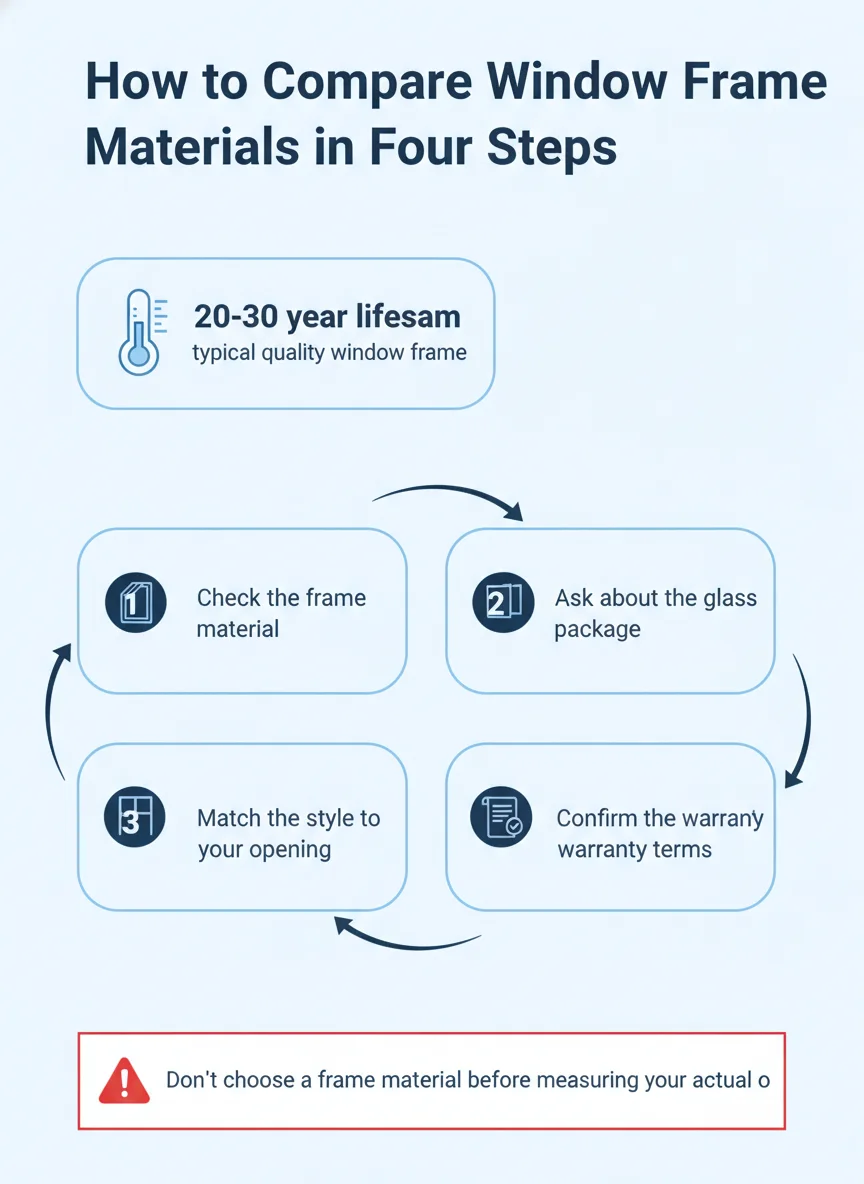
When a homeowner compares Andersen against other manufacturers, the frame material tends to get the most attention, but it isn't the only factor that determines how a window performs over time. The quality of the installation, including how well the opening is sealed, plays just as large a role in energy performance and longevity.
Warranty Terms
Manufacturers typically offer their own warranty on the window unit itself, separate from any workmanship warranty an installer provides on the labor. It's worth asking what each warranty actually covers, since some manufacturer warranties cover the glass seal and hardware differently than the frame.
A homeowner should also ask whether a warranty is transferable if the home sells, since that can matter for resale value down the line.
Fit for the Home's Age and Style
An older home with existing wood trim may call for a different frame finish than a newer build with vinyl siding. Matching the new window's exterior color and trim profile to the rest of the house keeps the finished look consistent instead of making the new windows stand out for the wrong reasons.
This is also where style selection connects to siding and exteriors work, since window trim and siding often get addressed together on an older home.
DIY vs. Calling a Pro for Window Selection
Researching frame materials and styles online is something a homeowner can absolutely do on their own, and it's a good first step before getting quotes. Reading manufacturer spec sheets and comparing glass package options helps a homeowner walk into a conversation with an installer better informed.
Where a licensed installer becomes necessary is in measuring the actual opening, assessing the condition of the existing frame and surrounding wall, and making sure the new window is sealed correctly against air and moisture. A window that looks right on paper can still underperform if it isn't installed with a tight seal around the opening.
If a window has visible fog between the panes, a broken seal, or won't lock properly, that's usually a sign of an installation or seal issue rather than a frame material problem, and it's worth having that looked at before assuming a full replacement is needed.
Deciding What's Right for Your Home
Andersen windows offer a wide range of frame materials and styles, and whether they're the right fit depends on the look a homeowner wants, the climate demands of their specific house, and how much maintenance they're willing to take on down the road. There's no universal answer, since the best choice for a 1970s ranch in Lakewood may differ from what works on a newer build. For more on how frame material choices play out across a full house, see what to replace windows with.
Precise Windows LLC measures each home's openings in person and walks through frame and glass options before recommending anything, so the final choice fits the house rather than a one-size-fits-all package.
Frequently asked questions
What makes Andersen windows different from other brands?
Andersen is best known for its Fibrex composite frame material, a blend of wood fiber and polymer that the company developed as an alternative to pure vinyl or wood. Beyond the frame, Andersen offers a wide range of styles, from double-hung to casement to specialty shapes, which gives homeowners more options to match an existing opening or architectural style.
Are Andersen windows worth the cost compared to vinyl?
Whether Andersen is worth it depends on your priorities, since composite frames generally carry a higher price than standard vinyl but offer different durability and finish options. Homeowners weighing this should look at frame material, glass package, and installation quality together rather than comparing brand names alone.
Do Andersen windows work well in Colorado's climate?
Andersen windows are available with glass packages built for cold climates, which matters in Colorado where homes see wide temperature swings and strong sun. The right glass coating and frame combination, properly installed and sealed, is what actually determines how a window performs through a Front Range winter and summer.
Can Andersen windows be installed in an existing opening, or only new construction?
Andersen makes both replacement windows designed to fit existing openings and new-construction windows for framed-in walls. A replacement window is built to install into your current frame without tearing into the surrounding siding or drywall, which is the more common path for an existing home.
How do I know which Andersen style fits my house?
The right style usually comes down to how the window opens, how much light and ventilation you want, and what matches the rest of your home's exterior. A double-hung often suits a traditional home, while casement or picture windows fit more modern layouts, and an in-person measurement is the best way to confirm fit.