
Why Vinyl Keeps Coming Up When You Shop for New Windows
If you've started pricing out new windows for a home anywhere in the Denver Metro, you've probably noticed vinyl mentioned more than any other frame material. That's not a coincidence. Vinyl has become the standard choice for replacement windows across Colorado because it holds up to temperature swings, needs almost no upkeep, and costs less to manufacture than wood or fiberglass frames of similar quality.
But "vinyl window" isn't one single product. Frame thickness, chamber design, and glass packages vary a lot between manufacturers, and those differences show up in how the window performs ten or twenty winters from now. Understanding what you're actually buying helps you compare quotes apples to apples instead of just looking at the bottom-line number.
What Makes a Window Frame "Vinyl" in the First Place
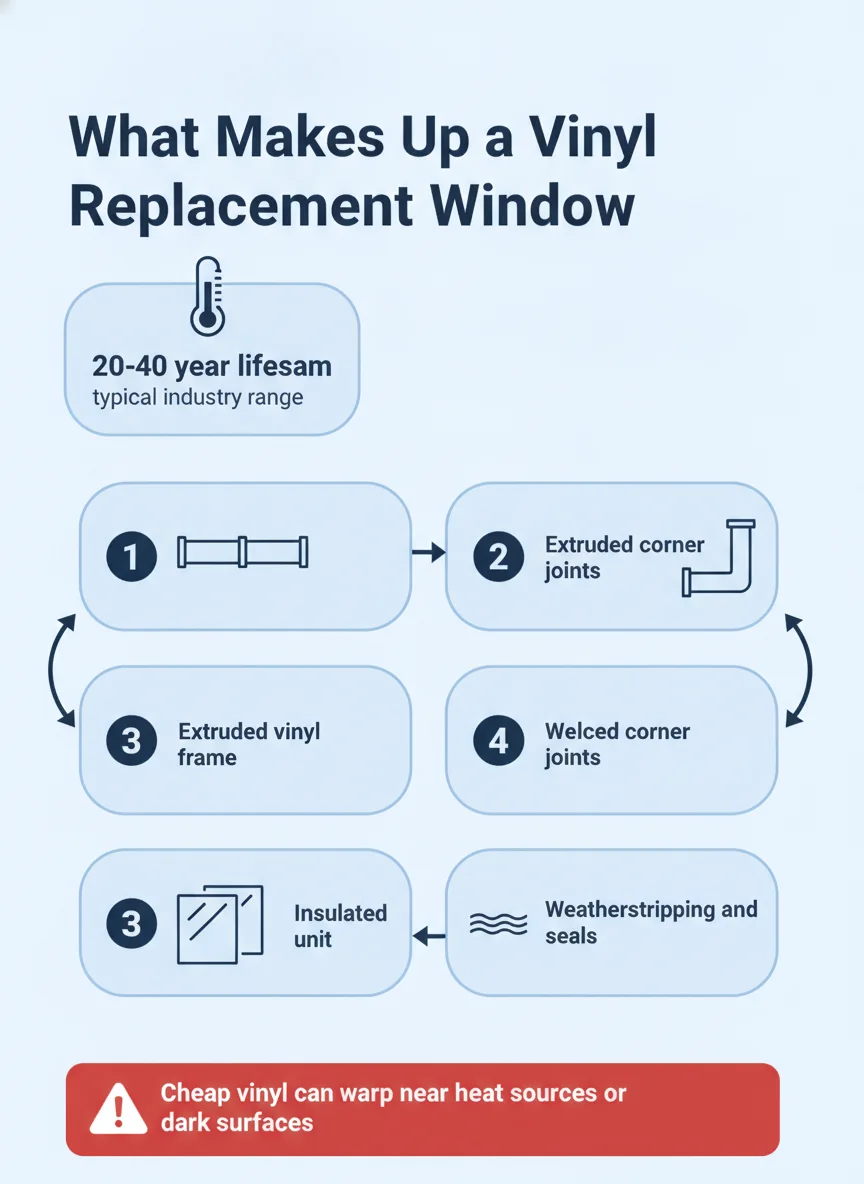
Vinyl window frames are made from extruded PVC, the same base material used in plumbing pipe and siding, but formulated differently for window use with added UV stabilizers and impact modifiers. The PVC is melted and pushed through a die to create long hollow profiles, which are then cut, welded at the corners, and fitted with hardware, glass, and weatherstripping.
How the Frame Is Built
Inside a vinyl frame you'll usually find multiple hollow chambers rather than one solid cavity. These chambers trap still air, which acts as insulation and also adds structural rigidity without adding weight. Some manufacturers fill the larger chambers with foam insulation for an extra boost in thermal performance, especially in colder regions.
The corners of a quality vinyl frame are fusion-welded, meaning the vinyl is heated and bonded into one continuous piece rather than screwed or glued together. A fusion-welded corner resists water intrusion and won't loosen over time the way a mechanically fastened corner can after years of seasonal expansion and contraction.
The Glass Package Matters As Much As the Frame
The frame only does part of the job. Most vinyl replacement windows come with an insulated glass unit, two or three panes of glass separated by a spacer and sealed gas fill, usually argon. That sealed airspace is what actually blocks most of the heat transfer, not the vinyl itself.
Low-E coatings, a microscopically thin metallic layer applied to the glass, reflect infrared heat while letting visible light through. In a high-altitude, high-UV climate like Colorado's Front Range, the right Low-E coating can make a noticeable difference in how much a room heats up on a sunny winter afternoon.
| Frame Material | Maintenance | Typical Insulation Value |
|---|---|---|
| Vinyl | Minimal, no painting or sealing needed | Good, improves with foam-filled chambers |
| Wood | Regular painting or staining required | Good, but prone to swelling and gaps over time |
| Aluminum | Low maintenance but conducts heat/cold | Lower unless thermally broken |
| Fiberglass | Minimal, holds paint well if desired | Very good, stable in temperature swings |
The Parts of a Vinyl Window You'll Actually Interact With
Beyond the frame and glass, a few components determine how a window feels day to day. The sash is the part that holds the glass and actually moves (in a double-hung or sliding window) or cranks open (in a casement). Balances or springs inside the frame help a sash stay in place when you lift or lower it instead of slamming shut.
Weatherstripping, usually a compressible rubber or foam gasket, seals the gap between the sash and frame to keep air and water out. This is one of the first parts to wear on a cheaper window, so it's worth asking a contractor what weatherstripping material a given product line uses before you commit to a window replacement order.
Step-by-Step: How a Vinyl Window Gets From Order to Your Opening
The path from picking a style to having a finished window in your wall follows a fairly consistent sequence, whether you're replacing one window or every opening in the house.
- Measure the opening: A tech measures width, height, and depth at multiple points, since older openings are rarely perfectly square.
- Choose frame and glass options: You pick the frame color, grille pattern, and glass package based on the home's style and sun exposure.
- Window is manufactured: The vinyl frame is extruded, welded at the corners, and fitted with the glass unit and hardware at the factory.
- Old window is removed: The crew pulls the existing sash and frame down to the rough opening, checking for rot or damage underneath.
- New window is set and sealed: The replacement is leveled, shimmed, fastened, and sealed around the full perimeter to stop air and water leaks.
- Interior and exterior trim finished: Trim is reinstalled or caulked out so the opening looks finished inside and out.
What You'll Notice If the Vinyl Windows Are Poor Quality
Not all vinyl is created equal, and a thin, low-grade frame will show its age faster than a well-built one. Knowing the warning signs helps you spot a bad installation or a cheap product before it costs you comfort and energy.
Visual and Physical Signs
Thin-walled vinyl frames can bow or flex when you press on them, especially on larger picture windows. Corners that were mechanically fastened instead of fusion-welded may show visible seams or small gaps after a few seasons of temperature swings, which is where water tends to find its way in.
Discoloration is another tell. Lower-grade vinyl without enough UV inhibitor can start to yellow or chalk on sun-facing walls within several years, while better formulations hold their color much longer under the same exposure.
Performance Signs
A drafty feeling near the window on a windy day, condensation forming between the panes, or a sash that's hard to lift are all signs the window isn't sealing or insulating the way it should. Fogging between the glass layers specifically means the seal on the insulated glass unit has failed and the unit needs replacing, not just the frame.
If you're noticing these issues on an older window and wondering whether it's worth replacing versus repairing, it helps to understand how long vinyl windows typically last in Colorado's climate before deciding.
What You Can Check Yourself vs. What Needs a Pro
A homeowner can do a fair amount of basic evaluation without any special tools. You can check for drafts by holding a hand near the sash on a windy day, look for visible gaps or caulk failure around the frame from outside, and watch for condensation or fogging between panes over a few weeks.
What you generally can't assess on your own is whether the rough opening underneath an old window has hidden rot or water damage, or whether a frame is structurally sound enough to support a larger replacement unit. That's where a trained eye matters, since installing a new window over a compromised opening just hides a bigger problem.
Full window replacement is also not a reasonable DIY project for most homeowners. Getting the unit level, properly shimmed, and fully sealed around the perimeter takes experience, and a poor seal is one of the most common causes of leaks and energy loss down the road. A licensed installer can also spot and address rot or framing issues as part of the same visit.
Deciding If Vinyl Is Right for Your Home
Vinyl earns its spot as the most common replacement window material because it balances performance, durability, and cost better than most alternatives for the average home. For homeowners across Littleton and the rest of the Denver Metro, it's a practical match for a climate that swings from hot, sunny afternoons to cold, dry winters within the same week.
That said, frame quality varies enough between manufacturers that it's worth asking real questions before you buy, not just comparing prices. Precise Windows LLC can walk you through frame construction, glass packages, and which options fit your home's exposure and style.
Frequently asked questions
What exactly is a vinyl replacement window made of?
A vinyl replacement window has a frame made of extruded PVC (polyvinyl chloride) instead of wood, aluminum, or fiberglass. The PVC is formulated with UV stabilizers and reinforced at the corners, then fitted with an insulated glass unit and weatherstripping to seal the opening.
Are vinyl windows good for cold climates like Colorado?
Vinyl windows generally perform well in cold, dry climates because the material doesn't conduct heat the way aluminum does and doesn't expand and contract as dramatically as wood. The multi-chambered frame design traps air pockets that help resist heat loss during Front Range winters.
Do vinyl windows fade or discolor over time?
Lower-quality vinyl can yellow or chalk after years of UV exposure, especially on south- and west-facing elevations with strong Colorado sun. Better-grade vinyl formulations include UV inhibitors that slow this process, which is why frame quality varies more than people expect between brands.
Can vinyl windows be painted?
Most vinyl windows are not designed to be painted, since paint doesn't bond well to PVC and can void the manufacturer's warranty. If you want a custom exterior color, look for a vinyl line that offers factory-applied color options instead of painting after installation.
How do vinyl windows compare to fiberglass or wood for resale value?
Vinyl windows are generally viewed by buyers and appraisers as a solid, low-maintenance upgrade, though wood and fiberglass can carry a premium look in certain markets. For most Denver Metro homes, vinyl offers the best balance of performance and cost without a resale penalty.