
Why the Replacement Choice Matters More Than the Removal
Taking out an old, drafty window is the easy part. What you put back in the opening is the decision that affects your energy bills, your upkeep routine, and how the house looks for the next couple decades. In the Denver Metro, homes see wide temperature swings between a sunny winter afternoon and a cold, clear night, and that range puts real stress on a window's frame and seal.
A lot of homeowners start the process by asking what a window replacement costs, which is a fair question, but the material and glass you choose is what actually determines whether that investment holds up. Two windows that look similar in a showroom can perform very differently once they're facing west sun in July or a hard freeze in January.
What Actually Changes Between Frame Materials?
Frame material affects three things: how much the window expands and contracts with temperature, how much maintenance it needs, and how it looks. Vinyl, fiberglass, wood, and composite are the main categories most homeowners choose between, and each handles Colorado's temperature range a little differently.
Vinyl and Fiberglass
Vinyl is the most common replacement frame material because it doesn't need painting, resists moisture, and handles temperature swings without warping when it's made well. Fiberglass costs more up front but expands and contracts at a rate closer to glass, which can mean a tighter long-term seal around the pane.
Both materials come in a range of colors now, including options that won't fade as fast under strong, high-altitude sun. If low maintenance is the priority, either one is a reasonable starting point, the choice usually comes down to budget and how long you plan to stay in the home.
Wood and Composite
Wood frames, often with a clad exterior, give a traditional look that a lot of older or historic-style homes call for, but they need more upkeep over time, including periodic refinishing. Composite frames blend wood fiber with resins to get some of that classic look with less maintenance than solid wood.
If you're matching an older home's existing trim and sightlines, wood or composite can be worth the extra cost. For a straightforward swap where appearance matters less than performance and upkeep, vinyl or fiberglass usually wins out.
| Frame Material | Maintenance | Typical Use Case |
|---|---|---|
| Vinyl | Low, no painting needed | Most residential replacements |
| Fiberglass | Low, holds paint well if desired | Homes with strong sun exposure |
| Wood/Clad | Higher, periodic refinishing | Historic or traditional-style homes |
| Composite | Moderate | Wood look with less upkeep |
Glass and Coatings: The Part You Don't See but Feel
The glass package matters as much as the frame, if not more, for comfort inside the house. Double-pane glass with a Low-E coating is the standard for most Front Range replacements, the coating reflects infrared heat while still letting visible light through, which helps keep a room cooler in summer and warmer in winter.
Triple-pane glass adds a third layer of air or gas fill for extra insulation and some sound reduction, which matters more on a home near a busy road or with a lot of direct afternoon sun. It adds weight and cost, so it's worth weighing against how much difference it will actually make in your specific rooms.
Step-by-Step: Working Through the Decision
Most homeowners can narrow down frame and glass choices by working through the same handful of questions in order, before a window replacement visit even happens.
- Set a budget range: Decide what you're comfortable spending before you start comparing materials, so the conversation stays focused on fit rather than every upgrade available.
- Check your current pain points: Drafts, condensation between panes, and street noise point toward different fixes, so identify what's actually bothering you about the old windows.
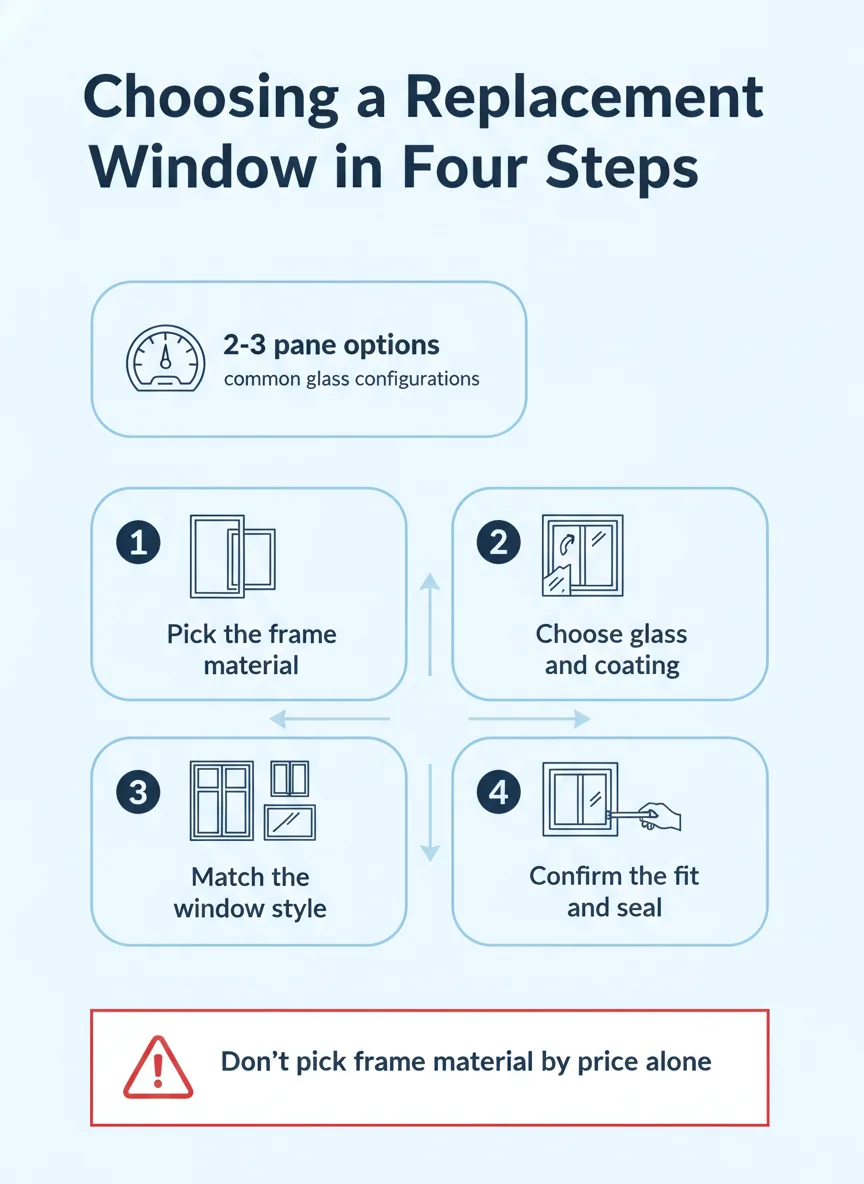
- Pick a frame material: Weigh maintenance tolerance against appearance goals to land on vinyl, fiberglass, wood, or composite.
- Choose glass and coating: Decide between standard double-pane Low-E and triple-pane based on sun exposure and noise concerns.
- Confirm the style: Decide whether to keep the existing window style, like double-hung or casement, or change it for better ventilation or a different look.
- Get it measured at the home: Have the opening measured in person, since stock sizes rarely match an older home's rough opening exactly.
How Do I Know If I Picked the Right Window?
You'll know fairly quickly after install, a correctly chosen and installed window should close and lock smoothly, show no visible gap or draft at the frame, and not fog or collect condensation between the panes. If any of those show up in the first year, it's usually a sign of a seal or installation issue rather than the glass package itself.
Signs the Material Choice Was Right
A well-matched window operates easily, holds its color and finish without chalking or warping, and doesn't transmit noticeable cold or heat near the frame on an extreme-temperature day. The house should also feel more even room to room, without the one window-heavy room running hotter or colder than the rest.
Signs Something's Off
Visible gaps, a frame that feels cold to the touch in winter, or persistent fogging between panes point to a sealing problem rather than the wrong glass choice. These issues are worth addressing through window and glass repair before they lead to moisture damage around the opening.
DIY vs Calling a Pro for the Decision
Researching frame materials and glass packages is something any homeowner can do on their own, reading spec sheets and comparing options before ever picking up the phone. Where it gets harder to DIY is matching a product to your specific openings, especially in an older home where rough openings aren't always standard sizes.
A licensed installer measures the actual opening, checks for squareness and any rot or settling around the frame, and can flag when a style change, like going from a single-hung to a casement, needs extra flashing or trim work. That's the part that determines whether the window performs the way the spec sheet promises.
If you're also dealing with exterior trim, siding, or doors that need attention at the same time, it often makes sense to plan the window project alongside those so the whole exterior gets addressed in one pass instead of piecemeal over several years.
Bringing It Together Before You Order
Picking what to replace windows with comes down to matching frame material and glass package to your home's exposure, your maintenance tolerance, and your budget, in that order. There's no universal right answer, a vinyl double-pane window is the right call for a lot of Front Range homes, while a historic property or a sun-heavy wall might call for something different.
If you want help narrowing the options down for your specific home, or you're curious what replacement windows cost once you've settled on a material, Precise Windows LLC can walk through the options with you at the house.
Frequently asked questions
What is the best material to replace windows with?
There isn't one best material for every home, it depends on budget, the look you want, and how much upkeep you're willing to do. Vinyl, fiberglass, wood, and composite frames each trade off differently on cost, maintenance, and appearance.
Is triple pane glass worth it in Colorado?
Triple pane glass adds extra insulation and sound dampening, which can help on a home that gets strong afternoon sun or sits near a busy street. For most Front Range homes, a quality double-pane window with a Low-E coating covers the climate needs without the added weight and cost of a third pane.
Should I match my new windows to the old style?
You don't have to, but it's worth deciding on purpose rather than by default. Swapping a double-hung for a casement in the same opening is possible, it just changes how the window operates and how it looks from the street.
Do vinyl windows look cheap?
Modern vinyl frames come in a range of colors and finishes and hold up well without painting or staining. Whether they look cheap has more to do with the specific product line and installation quality than the material itself.
Can I mix frame materials on the same house?
Yes, some homeowners use a different material or finish on street-facing windows versus the back of the house. It's more common to keep the frame material consistent so the house reads as one cohesive exterior.