
Why Window Pricing Feels Like a Moving Target
Ask five homeowners in the Denver Metro what they paid for new windows and you'll get five different answers, and none of them are wrong. A window job isn't one product, it's a bundle of choices: frame material, glass package, number of openings, and how hard the install is once a crew gets to your house. Colorado's mix of older brick bungalows, newer stucco builds, and everything from Englewood to Arvada means the same style of window can install very differently from one house to the next.
That's why a real quote should never be a flat per-window number pulled from a brochure. It should reflect what's actually happening at your openings, from the condition of the framing to how many windows are swapped in one visit. Understanding the factors behind the number helps you read a quote accurately and compare two bids that might look wildly different but are quoting the same scope.
What Actually Drives the Price Up or Down
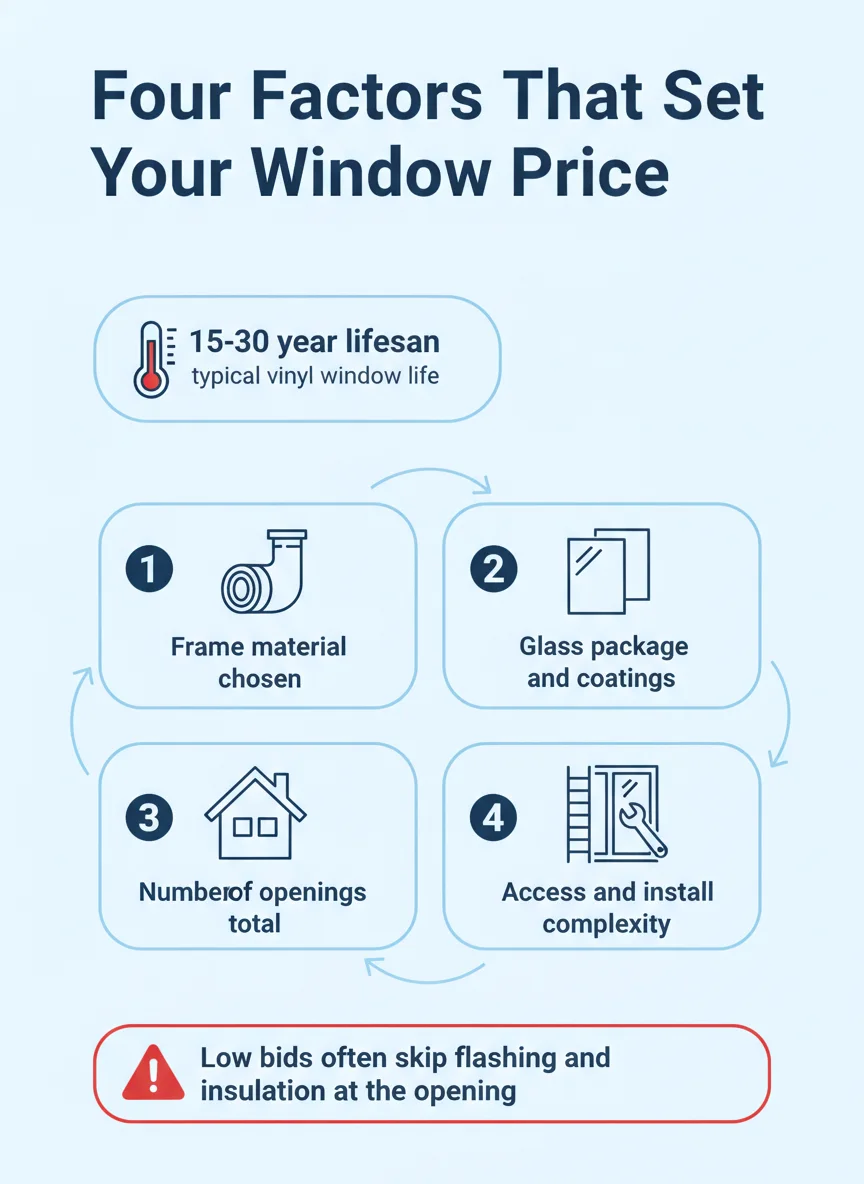
Four things move a window quote more than anything else: frame material, glass package, size and style, and the condition of the opening once the old window comes out. Get a handle on these and most of the mystery disappears.
Frame Material and Brand
Vinyl is generally the most affordable frame material and holds up well across Colorado's temperature swings, while wood and fiberglass frames tend to cost more and offer different looks and maintenance needs. Brand matters too since manufacturers like Andersen, Milgard, Pella, Prime, and Simonton each build to different price points and warranty structures. None of these is automatically the right answer for every house, it depends on your budget and the style you're going for.
A window replacement project can mix materials across a house too, vinyl on the back where nobody sees it, something higher-end on the street-facing windows. That kind of mixing is common and it's a legitimate way to control cost without compromising the finished look from the curb.
Glass Package and Coatings
Double-pane glass with a basic low-E coating is the standard baseline, but upgrades like additional gas fill or specialty coatings for sun exposure add to the price. In a state with as much direct sun and as wide a temperature range as Colorado, the glass package is worth real consideration, not just an afterthought on the order form.
West and south-facing openings tend to benefit most from upgraded coatings because they take the most direct sun through the day. If your budget only stretches to upgrade some of the house, those are the windows to prioritize first.
| Factor | Pushes Price Down | Pushes Price Up |
|---|---|---|
| Frame material | Vinyl | Wood or fiberglass |
| Window size/style | Standard double-hung or sliding | Bay, bow, or large picture windows |
| Project scope | Whole-house, single visit | One or two windows at a time |
| Opening condition | Square, sound framing | Rot, settling, or non-standard sizing |
The Part of the Job That's Easy to Miss: the Opening
A window isn't just the glass and frame that show up on the truck, it's also what happens at the opening once the old unit comes out. If the framing is square and dry, the new window goes in clean. If there's rot, settling, or an opening that's been patched over the years, the crew has to address that before the new window can be set and sealed properly.
This is the part that doesn't show up on a glossy brochure price but has the biggest effect on whether your new windows actually perform. A window installed into a bad opening will leak air and water no matter how good the glass is, so any honest quote accounts for what's found once the old window is pulled.
Step-by-Step: How a Window Quote Gets Built
Here's the general order a window company works through to arrive at a number, whether you're doing one window or an entire house.
- On-site measure: Every opening gets measured at the house since manufacturer stock sizes rarely match what's actually in the wall, especially in older homes.
- Material and style picks: You choose frame material, brand, glass package, and style for each opening, which sets the base cost per window.
- Opening inspection: The crew notes visible condition issues at each opening that might need addressing before the new window goes in.
- Scope and count: The number of windows and whether it's one visit or several affects labor efficiency and the total project cost.
- Written quote: You should receive a quote that breaks down material, labor, and scope so you can see what's driving the total.
- Install and seal: The crew sets each window and seals the opening, which is what actually keeps air and water out long term.
How Much Should a Window Job Actually Cost You?
Reading a Quote Line by Line
A detailed quote should separate the cost of the window units themselves from labor and any opening repair work. If a quote is just one lump number with no breakdown, ask for the detail, since that's the only way to compare it fairly against another bid for the same scope.
Watch for what's NOT listed too. A suspiciously low bid sometimes skips insulation at the opening or uses a thinner glass package than the competing quotes, which only shows up later as drafts or condensation.
Comparing Bids Apples to Apples
The only fair way to compare two window quotes is to confirm they're quoting the same brand tier, the same glass package, and the same scope of opening work. A lower number that skips insulation or uses a builder-grade glass package isn't actually a better deal, it's a different job.
If you're unsure whether a quote is thorough, ask what happens if the crew finds rot or damage once the old window is out. A company with a clear answer to that question has usually done this enough times to price it right the first time.
What You Can Decide Yourself vs What Needs a Pro's Input
Picking frame color, grid pattern, and general style is entirely up to you and doesn't require any special expertise, just a sense of what matches your home. These choices affect price but they're yours to make without needing a contractor to weigh in first.
Deciding on glass package and whether an opening needs structural attention is where a pro's eye matters. A trained installer can tell you whether a sticking window is just hardware wear or a sign the frame has shifted, and that distinction changes the scope and the cost.
If you're only replacing a pane of broken glass rather than the whole unit, that's a smaller job with its own pricing logic, worth asking about separately through a window and glass repair visit rather than a full replacement quote.
Getting a Number You Can Actually Trust
The fastest way to get an accurate window cost picture is to have someone measure your actual openings rather than guess from square footage. Every house is different, and the gap between a rough online estimate and a real quote usually comes down to exactly the factors covered here: material, glass, scope, and what's hiding in the wall.
If you're weighing window replacement for a house in Englewood or anywhere else across the metro, a visit with real measurements beats any online calculator, and once you've got that number nailed down it's worth reading about how long replacement windows typically last so you know what you're actually paying for over time. Precise Windows LLC can walk your openings and put a real number on paper instead of a guess.
Frequently asked questions
Why do window quotes vary so much between companies?
Quotes vary because companies price different frame materials, glass packages, and install methods, and some include full tear-out and insulation at the opening while others don't. Two bids on the same house can describe two very different jobs, so it helps to ask exactly what's included before comparing numbers.
Is it cheaper to replace all my windows at once or one at a time?
Replacing windows in one project is usually more efficient than doing them one at a time, since a crew mobilizes once and material gets ordered in a single batch. Doing it room by room spreads the cost over time but typically costs more per window overall.
Do bigger windows cost more than standard sizes?
Yes, larger openings like picture or bay and bow windows generally cost more than standard double-hung or sliding units because they use more glass, more frame material, and sometimes extra structural support. Size and shape are two of the biggest levers on price.
Does the frame material really change the price that much?
Frame material is one of the biggest cost drivers in a window project, with vinyl typically the most budget-friendly and wood or fiberglass running higher. The right material depends on your home's style and how much maintenance you want to take on, not just the upfront number.
Will I save money long-term with energy-efficient glass?
Energy-efficient glass packages cost more upfront but are built to cut heat loss in winter and heat gain in summer, which can lower utility bills over the life of the window. Whether the extra cost pays off depends on your current windows' condition and your home's exposure.