
Why Preparation Matters Before Installing Replacement Windows
Installing replacement windows in a Denver Metro home is a bigger project than it looks from the outside. Each opening gets measured, the old unit comes out, the frame gets sealed and insulated, and the new window goes in true and square. Skipping prep on the homeowner's end, like leaving furniture jammed against the sill or forgetting to take down curtain rods, slows the crew down and raises the odds of something getting bumped or scratched.
Timing matters too. Colorado's swing from summer heat to winter cold affects how caulk and foam sealant cure, and it affects how comfortable your house is with an opening exposed for even an hour. Homeowners who plan around the season, order early, and clear the work area ahead of time get a smoother install day with fewer surprises.
What Actually Happens When a Window Gets Installed
A replacement window install follows a predictable sequence: remove the old sash or full frame, inspect the rough opening for rot or settling, set the new unit, shim it level and plumb, insulate the gap, then seal and trim it out. The details shift depending on whether it's an insert replacement into an existing frame or a full-frame tear-out.
Insert vs. full-frame installs
An insert replacement keeps the existing exterior frame in place and fits a new window inside it, which is faster and less invasive. It works well when the old frame is still structurally sound and square.
A full-frame replacement pulls everything out down to the studs, which is slower but lets the crew fix rot, improve the insulation around the opening, and correct a frame that's no longer square. It's the better call on older homes where the opening itself has shifted.
Why sealing the opening matters as much as the window itself
A high-performing window installed with a gap full of air leaks or missing insulation won't perform much better than the old one it replaced. The seal around the frame, both the foam or insulation inside the gap and the exterior caulk line, does as much work keeping drafts and moisture out as the glass does.
This is also where a lot of DIY installs and lower-end crews cut corners, because the sealing step is invisible once the trim goes back on. It's worth asking any installer directly how they handle insulation and sealant around the frame before work starts.
| Factor | Insert Replacement | Full-Frame Replacement |
|---|---|---|
| Speed | Faster, often a day or less per window | Slower, more labor per opening |
| Best for | Sound frames, cosmetic or glass upgrades | Rotted frames, settled or out-of-square openings |
| Disruption | Minimal interior work | More trim and drywall touch-up |
| Energy performance | Good if frame was already tight | Best opportunity to fix drafts at the source |
What Goes Into the Window Unit Itself
A replacement window is more than a pane of glass in a frame. Frame material (vinyl, wood, fiberglass, or composite), glass package (double or triple pane, low-E coatings, gas fill), and hardware all affect how it performs through a Colorado winter and a dry summer. Window Replacement covers double-hung, casement, sliding, bay and bow, picture, awning, and specialty shapes, and the right configuration depends on the opening, the room, and how much sun that wall gets.
Weatherstripping and the locking hardware matter just as much as the glass long-term. A window with great glass but a worn-out lock or compressed weatherstripping will still let air through, which is one reason a full inspection of the existing opening before ordering saves a callback later.
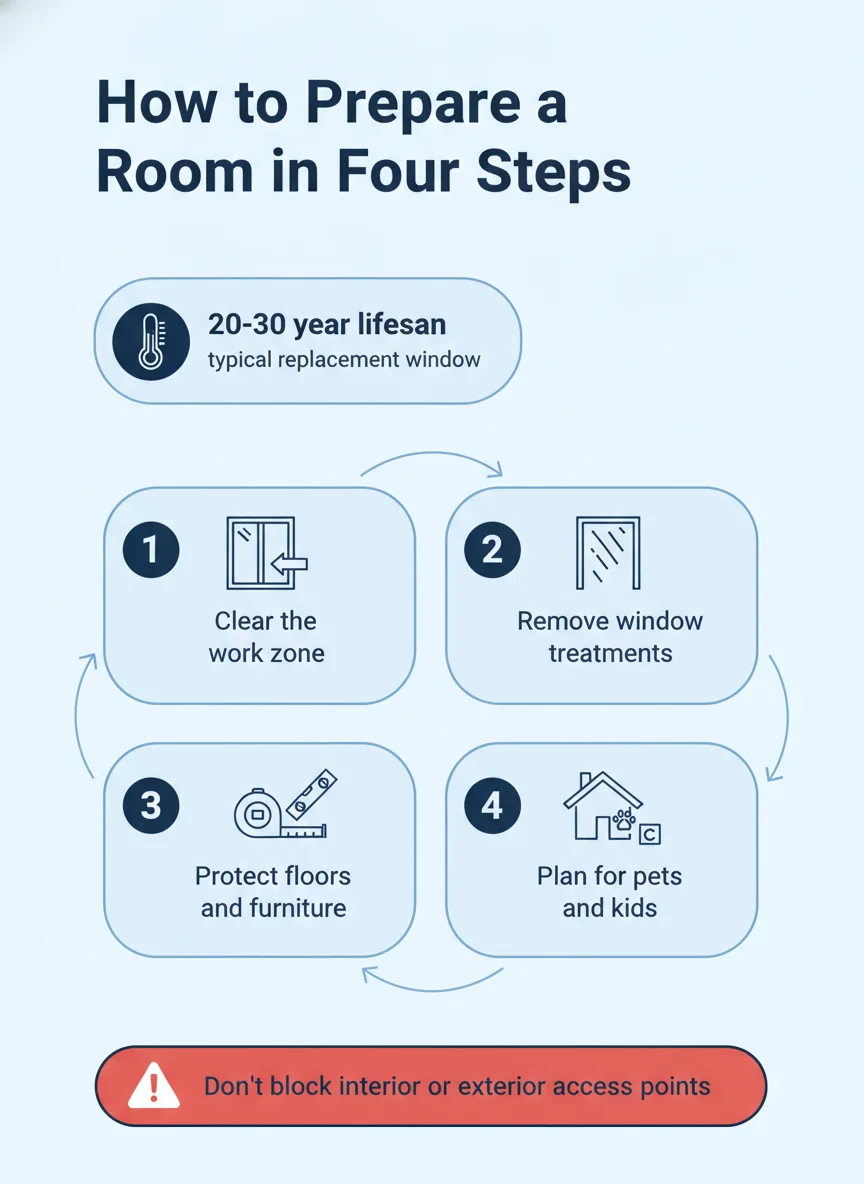
Step-by-Step: Getting Your Home Ready for Install Day
Most of the prep work falls on the homeowner's side in the days before the crew arrives. None of it is complicated, but skipping a step can slow the job down or put your belongings at risk.
- Clear the work zone: Move furniture, electronics, and decor at least a few feet back from every window on the schedule for that day.
- Remove window treatments: Take down blinds, curtains, and any hardware mounted to the frame or trim so the opening is fully accessible.
- Protect floors and belongings: Lay down a sheet or drop cloth near the work area, especially over hardwood or carpet directly under the window.
- Plan for pets and kids: Keep pets and young kids in another part of the house while the opening is exposed and tools are out.
- Check exterior access: Make sure shrubs, patio furniture, or parked cars aren't blocking the outside approach to each window being replaced.
- Confirm interior temperature control: In colder months, be ready for the room to run cooler than usual while that opening is being worked on.
What You'll Notice Once the New Windows Are In
The most obvious change is usually how the room feels, less draft near the glass, less street noise, and a tighter seal when the window is latched. Some of that is immediate, but some improvements, like a lower heating bill, show up gradually across a full season of use.
Visual and functional signs of a good install
A properly installed window opens and closes smoothly, locks without forcing, and sits flush with the trim on all sides. Caulk lines should be clean and continuous on the exterior, with no visible gaps where the frame meets the siding or stucco.
Inside, the trim should sit tight against the wall with no daylight visible around the edges. If you can feel a draft standing next to a closed window on a windy day, that's worth flagging right away rather than waiting.
What a weak install looks like down the road
Condensation between panes, a sash that drops or won't stay open, or cracking caulk within the first year or two usually points back to the install rather than the window unit itself. These issues tend to show up gradually, which is why it's worth a walkthrough with whoever did the work if something feels off.
Comparing notes with a post like Is It Better to Repair or Replace Windows? can help you figure out whether an issue is a quick fix or a sign the install itself needs attention.
DIY Prep vs. Calling a Pro for the Install
Homeowners can handle almost everything on the prep side: clearing rooms, removing treatments, protecting floors, and making sure pets and kids are out of the way. None of that requires any special tools or experience, just a bit of planning the day before.
The actual installation is a different story. Getting a window plumb, level, and properly sealed takes specific tools, an understanding of how to read a rough opening, and experience catching framing problems before they become bigger issues. A window that looks fine on the outside but was shimmed wrong will eventually show it through drafts, sticking hardware, or water finding its way in.
Full-frame replacements especially call for a licensed installer, since they often involve exposing structural framing and making judgment calls about rot or settling that a homeowner may not catch. Insert replacements are more forgiving but still benefit from someone who's done the sealing and insulation step correctly before.
Getting Ready for Your Installation
A little preparation goes a long way toward a smooth install day, and knowing what to expect from measurement through final trim-out takes most of the guesswork out of the process. Homeowners in Aurora and across the Denver Metro who plan ahead on timing and prep tend to have the easiest installs.
Precise Windows LLC measures every opening at the home and installs with the opening sealed tight, so the prep you do on your end sets up the rest of the job to go right.
Frequently asked questions
How far in advance should I schedule window installation?
Most window orders take several weeks to arrive after measurement because units are built to the exact opening size. Scheduling earlier in the season, rather than waiting until a draft or a cracked pane forces the issue, gives you more flexibility on timing.
Can windows be installed in cold weather?
Yes, window installation happens year-round in Colorado, though a crew will usually work room by room to limit how long any opening sits exposed. Sealants and caulks do need a minimum temperature to cure properly, which a good installer accounts for.
Do I need a permit to replace windows?
That depends on your municipality and whether the new opening changes size, egress, or structural framing. Check with your local building department, since rules vary by city within the Denver Metro.
What should I move out of the room before installation?
Clear furniture, electronics, and breakables at least a few feet back from every window being replaced. Take down blinds, curtains, and any hardware mounted to the frame or trim so the crew has a clean opening to work with.
Will installing new windows make a mess in my home?
There's some dust and debris from removing old trim and sealant, but a crew that tarps the work area and vacuums as they go keeps it contained. Expect a little cleanup on your end around baseboards and sills regardless.