
Why Window Lifespan Matters in the Denver Metro
A window is one of the few parts of a house that's working all day, every day, holding back weather, blocking UV, and keeping conditioned air where it belongs. When it starts failing, you don't always see it right away. You feel it first, usually as a draft near the thermostat or a utility bill that creeps up a little every winter without an obvious reason.
In the Denver Metro area, that wear shows up faster than it would in a milder climate. The altitude means more direct UV exposure, and the swing between a sunny 60-degree afternoon and a single-digit night puts real stress on seals and frame materials, especially on windows installed before double or triple-pane glass with modern seals became standard. Knowing roughly how long a window is built to last helps you plan ahead instead of reacting to a problem in the middle of January.
What Actually Determines How Long Replacement Windows Last
Lifespan isn't one fixed number. It depends on the frame material, how the window was installed, which direction it faces, and how well it's been maintained. Two windows from the same manufacturer, installed the same week, can age very differently if one sits on a shaded north wall and the other bakes in west sun all afternoon.
Frame Material and Construction
Vinyl frames are the most common replacement option and, with decent installation, typically hold up for somewhere in the range of fifteen to twenty-five years before the seals or hardware start failing. Fiberglass and some composite frames tend to resist warping and fading a bit longer, while wood frames, even with a vinyl or aluminum clad exterior, need more upkeep to hit a comparable lifespan since the wood underneath is still exposed to moisture cycles over time.
The glass package matters just as much as the frame. A sealed double or triple-pane unit relies on that seal to keep the gas fill in place and moisture out. Once the seal lets go, the insulating performance drops fast, even if the frame around it still looks fine. That's why you'll sometimes see a window with a perfectly solid frame but glass that's fogged over between the panes.
Installation Quality and Sealing
A window is only as good as the opening it's sealed into. If the flashing and insulation around the frame weren't done right, water and air can work their way in around the edges long before the window itself would have failed on its own. That kind of early failure usually shows up as a draft near the frame rather than a problem with the glass or sash.
This is also where a lot of the difference between manufacturers' stated lifespans and what homeowners actually experience comes from. A window rated for twenty-plus years of service can underperform that if it wasn't measured and installed correctly at the opening, which is part of why we measure every job on-site rather than going off a generic template.
| Frame Material | Typical Lifespan | What Shortens It |
|---|---|---|
| Vinyl | 15-25 years | Prolonged west-facing sun exposure, poor installation seal |
| Fiberglass or composite | 20-30 years | Still vulnerable to seal failure in the glass unit over time |
| Wood, clad exterior | 20-30 years with upkeep | Moisture intrusion if the cladding or finish is neglected |
| Aluminum | 15-20 years | Poor insulation performance accelerates condensation damage |
The Parts of a Window That Wear Out First
Most windows don't fail all at once. The seal around the glass unit is usually the first thing to go, since it's a thin bead of material doing a constant job against temperature swings and sun. Once that seal breaks down, moisture gets trapped between the panes and you get the fogging or haze that no amount of cleaning will fix from the outside.
Hardware is next. Locks, balances, and rollers on sliding windows take mechanical wear every time the window opens and closes, and they're cheaper to replace than the whole unit if that's the only issue. The frame and weatherstripping go last in most cases, though a frame that's warped or cracked from years of UV exposure can let in drafts even if the glass and hardware are still working fine.
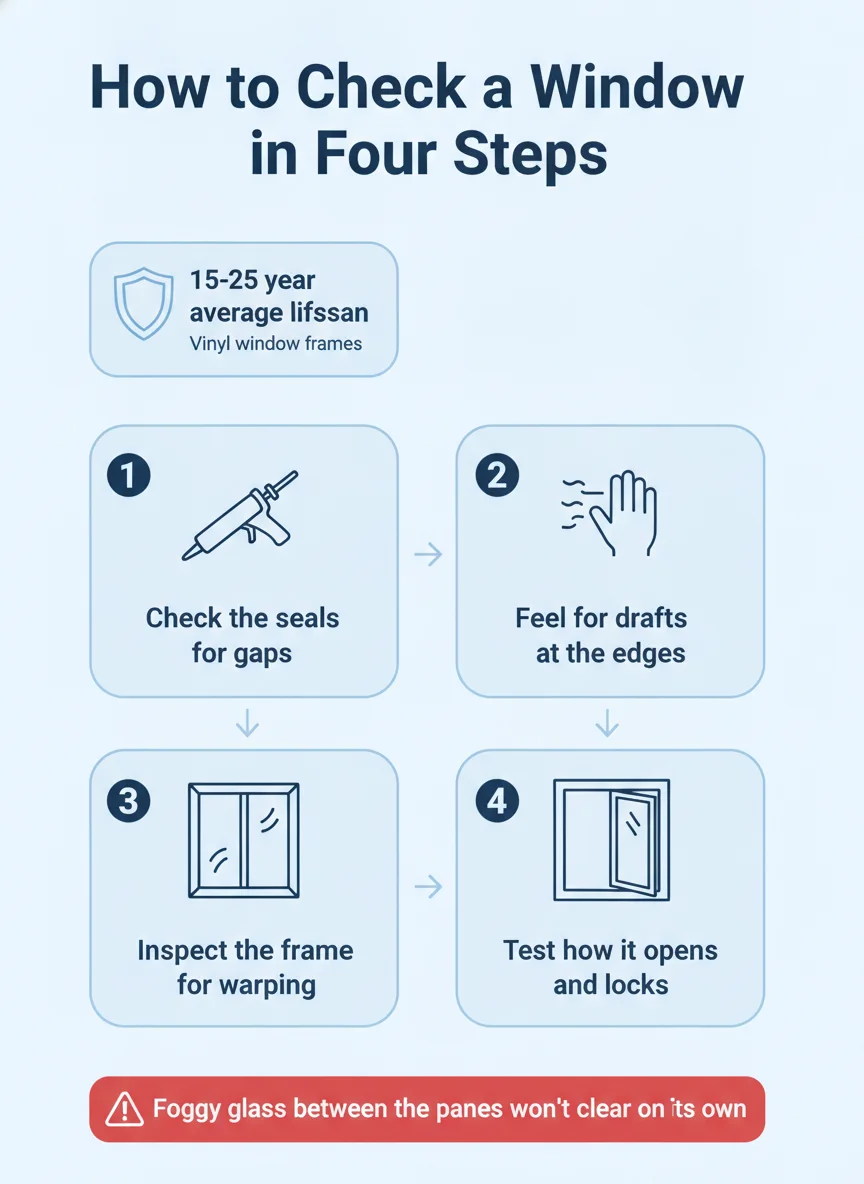
Step-by-step: How to Check Whether Your Windows Are Nearing the End
You don't need any special tools for a basic check, just a few minutes at each window and some attention to what you feel and see.
- Look at the glass: Check for any fog, haze, or moisture trapped between the panes, especially on windows that get direct afternoon sun.
- Feel for drafts: Run your hand along the edge of the frame on a cold or windy day and note any spots where you feel air moving.
- Test the operation: Open and close each window fully to see if it sticks, drops on its own, or won't stay up without a prop.
- Check the lock: Make sure the lock engages fully and pulls the sash tight against the frame rather than leaving a gap.
- Inspect the frame: Look for cracking, warping, or discoloration, particularly on south and west-facing sides of the house.
- Note the age: If you know roughly when the windows were installed, compare that against the typical lifespan for the frame material.
What You'll Find When a Window Has Reached the End of Its Life
Visible Signs
Fogged or hazy glass between the panes is the most obvious tell, and it means the seal has failed and the insulating gas fill is gone. Visible warping, cracking, or paint peeling on the frame is another sign, especially on wood-framed windows that have gone a few years without maintenance on the exterior finish.
Condensation building up on the inside of the glass during cold weather, even when the rest of the house isn't especially humid, often points to a window that's no longer insulating the way it used to. It's worth noting which windows show this first, since it usually tracks with sun exposure and age.
Hidden Signs
Not every sign is visible from across the room. A higher energy bill without a clear reason, a room that's noticeably colder or hotter than the rest of the house, or more outside noise coming through than you remember can all point to windows that are underperforming even if they look fine at a glance.
Hardware issues are easy to miss too until they get worse. A lock that takes extra effort to turn or a sash that's starting to drop slowly on its own is often an early sign of wear that's cheap to address now and expensive to ignore for another few years.
DIY vs Calling a Pro for Window Lifespan Issues
Basic maintenance is well within reach for most homeowners. Cleaning the tracks, lubricating hardware, and re-caulking exterior trim where the old caulk has cracked are all things you can do yourself with tools from the hardware store, and doing them regularly genuinely extends the life of a window.
Where it gets trickier is anything involving the seal between the glass and frame, or the seal between the frame and the house itself. A failed glass unit needs to be measured and ordered to match the exact opening, and getting that wrong means a window that doesn't sit right or seal properly even after the new glass goes in.
That's the point where it makes sense to bring in a licensed installer rather than trying to force a DIY fix. Our window and glass repair team does a free inspection first to tell you honestly whether the opening needs a glass swap, a full replacement, or just some hardware work, so you're not paying for more than the problem actually calls for.
Getting the Most Years Out of Your Windows
The windows that last longest in Colorado homes tend to be the ones that were measured and installed correctly the first time, kept up with basic maintenance, and replaced before a failed seal or a rotting frame turns into a bigger repair elsewhere in the house. If you're not sure where your windows stand, a quick inspection is usually enough to tell you whether you're looking at years of life left or a replacement that'll pay for itself in comfort and lower bills.
Homeowners in Englewood and across the metro deal with the same sun and temperature swings, so the signs to watch for don't change much from one neighborhood to the next. When you're ready for a second opinion on a window that's showing its age, Precise Windows LLC can take a look and tell you straight what it needs.
Frequently asked questions
How do I know if my windows need to be replaced?
The clearest signs are fog or moisture trapped between the panes, drafts you can feel along the frame, and sashes that stick, won't stay open, or won't lock tight anymore. If you're seeing more than one of these at once, the window is likely past the point where repair makes sense.
Do all windows in a house wear out at the same time?
Not usually, since sun exposure varies a lot from one side of a house to another. South and west-facing windows in the Denver Metro area tend to show seal failure and frame fading years before north-facing windows in the same house.
Can a window with a failed seal be fixed instead of replaced?
Sometimes the glass unit alone can be swapped out if the frame and hardware are still solid, which is worth asking about before paying for a full replacement. Our [window and glass repair](/services/window-glass-repair) team can tell you which option actually makes sense after a look at the opening.
Does the weather in Colorado shorten window lifespan?
Yes, intense UV exposure at altitude along with big daily temperature swings puts more stress on seals, seals' adhesives, and frame materials than milder climates do. That's part of why some manufacturers' stated lifespans run optimistic for homes along the Front Range.
Is it better to replace all my windows at once or one at a time?
That depends on your budget and how uniform the wear is across the house, and there's no single right answer for every home. We've written a full breakdown on [whether it's worth replacing all the windows in a house at once](/blog/is-it-worth-replacing-all-the-windows-in-a-house) if you want to weigh it out.