
Why Window Condition Comes Up at Every Sale in the Denver Metro
Across Englewood, Denver, Littleton, and the rest of the metro, window condition is one of the first things a buyer's agent or inspector notices, because it's visible from the curb and obvious the moment a window sticks or won't latch. Homes built decades ago still carry their original single-pane or early double-pane windows in a lot of cases, and those windows show their age differently than a roof or a furnace does.
Sellers in this market often ask whether it's worth the cost and hassle of replacing windows before listing, or whether buyers just discount the price and move on. The honest answer is that it depends on how bad the windows actually are and how that condition compares to similar homes currently on the market in the same neighborhood.
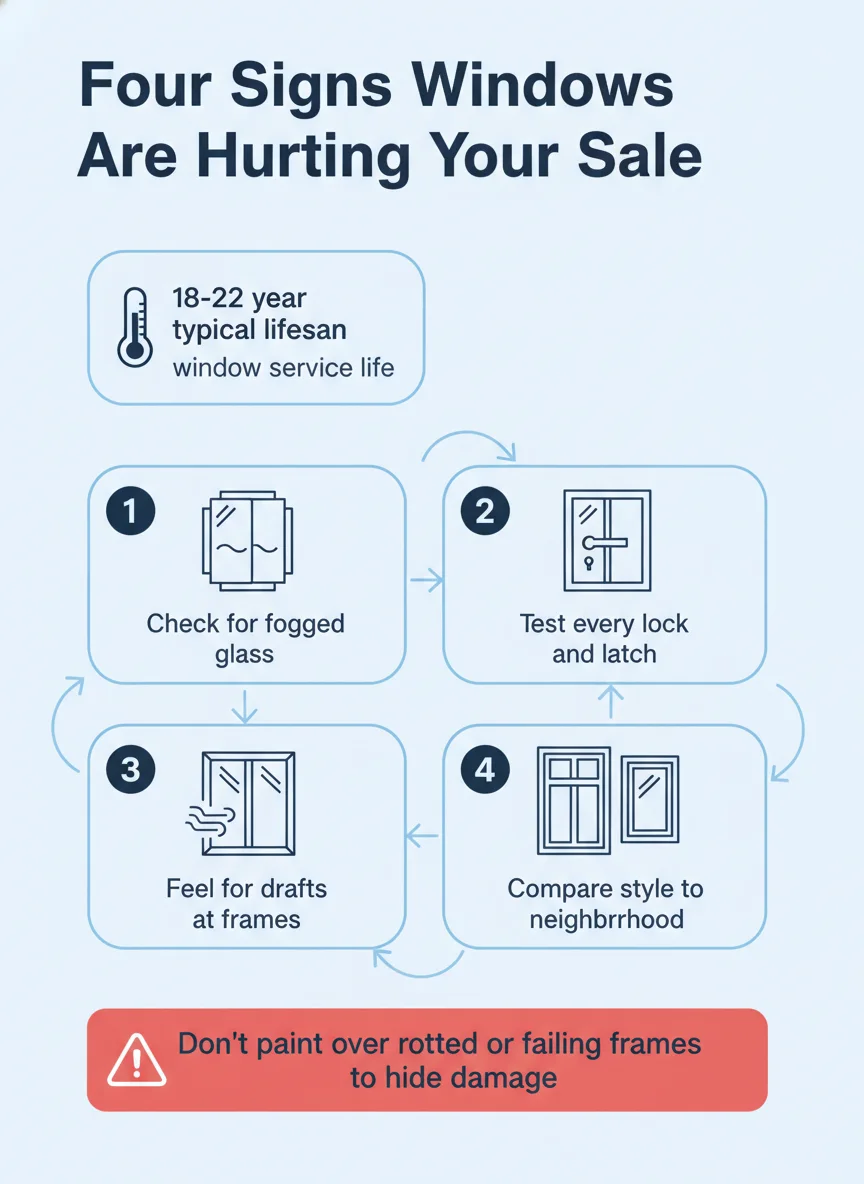
Why Window Condition Affects a Sale More Than Most Sellers Expect
Windows sit at the intersection of looks, comfort, and function, which is why they carry more weight in a buyer's impression than a lot of other home systems. A buyer walking through a house notices drafts, fogged glass, and stiff locks within the first few minutes, and those small signals shape how they feel about the rest of the house before they've even reached the kitchen.
The Visual First Impression
Buyers form an opinion about a house before they read a single disclosure, and windows are part of that first look both outside and in. Cloudy or yellowed frames, visible condensation between panes, and mismatched styles from room to room all read as neglect, even when the rest of the home has been well maintained.
That first impression matters because it anchors how a buyer evaluates everything else in the showing. A house that looks cared for at the windows tends to get the benefit of the doubt on other, less visible systems, while a house with obvious window wear invites closer scrutiny everywhere else.
The Functional Test During Showings
Agents and buyers routinely open and close a few windows during a showing, and a window that sticks, won't stay up, or has a broken lock sends an immediate signal. It's a small test that takes five seconds but tells a buyer a lot about how the rest of the house has been maintained.
Functional problems also show up on the home inspection report, which gives a buyer's agent concrete language to negotiate with. A few sentences about non-functioning hardware or failed seals can turn into a credit request or a repair demand that costs more in negotiation than a planned upgrade would have cost upfront.
| Situation | Replace Before Listing | Leave As-Is |
|---|---|---|
| Windows are foggy, drafty, or won't lock | Strong case to replace, especially in main living areas | Risk of inspection flags and buyer pushback |
| Windows are older but fully functional | Optional, consider cosmetic touch-ups instead | Reasonable if priced and disclosed accordingly |
| Only one or two windows have issues | Spot repair usually makes more sense | Full replacement may be more than the sale needs |
| House is priced at the top of the neighborhood | Replacement helps justify the price | Buyers may expect a discount instead |
What a Buyer's Inspector Actually Looks For
A home inspector isn't grading window style or brand, they're checking function and condition. That means testing whether each window opens, closes, and locks properly, looking for visible condensation or fog between panes on insulated glass, and checking frames and sills for rot, cracking, or gaps that let in air and water.
Seals that have failed show up as a cloudy or foggy appearance between the panes that no amount of cleaning will fix, since the moisture is trapped inside the glass unit itself. Inspectors note this as a sign the window has reached the end of its effective life, which buyers often treat as a maintenance item they'll want addressed or credited at closing.
Step-by-Step: Deciding Whether to Replace Before You List
Walking the house room by room before you call anyone gives you a clear, honest picture of where you actually stand, instead of guessing based on the age of the windows alone.
- Test every window: Open, close, and lock each window in the house, noting any that stick, won't stay open, or have broken hardware.
- Check for fog or condensation: Look between the panes of insulated glass on a sunny day for cloudiness that signals a failed seal.
- Feel for drafts: Run a hand along the frame edges on a cold or windy day to find gaps that let air through.
- Compare to comparable listings: Look at recently sold homes nearby to see how window condition is described or photographed.
- Get a professional opinion: Have a window specialist walk the house to separate cosmetic wear from functional problems worth fixing.
- Decide: replace, repair, or disclose: Based on what you find, choose a targeted fix, a full replacement, or honest disclosure in the listing.
What Homeowners Typically Find Once They Look Closely
Most sellers expect their windows to be either fine or a total loss, but the reality usually falls somewhere in between. A handful of windows, often on the sunniest or most weather-exposed side of the house, show real failure while the rest are simply dated in style but still functioning correctly.
When the Problem Is Isolated
If only a few windows show fogging, cracked glass, or hardware failure, a targeted Window & Glass Repair visit can resolve the issue at the opening without the cost of replacing windows that are working fine. This is often the more efficient move before a sale, since it fixes the exact items an inspector would flag.
Spot repairs also let you address the worst offenders, often the windows a buyer would test first in the main living areas, without a full-house renovation timeline eating into your listing schedule.
When the Problem Is House-Wide
If most of the windows are original, drafty, and visibly dated across the house, a full Window Replacement project can reset the home's first impression and remove window condition as a negotiating point entirely. This is a bigger investment, but it can make sense for homes competing at the top of their price range.
It also tends to pay off in faster showings and fewer repeat visits, since buyers spend less time mentally subtracting repair costs from their offer when the windows are clearly new.
DIY vs. Calling a Pro Before You List
There's a real DIY lane here: cleaning tracks, lubricating stiff hardware, caulking small gaps, and replacing a torn screen are all projects a reasonably handy homeowner can tackle over a weekend without special tools. These small fixes can meaningfully improve how a window looks and operates during a showing.
Where it stops being a DIY job is anything involving the glass unit itself, frame rot, or structural gaps around the opening. Replacing a failed seal, swapping a whole window, or repairing rotted framing all involve specialized tools and sealing techniques that, done wrong, can create leaks or drafts that are worse than the original problem and can resurface during the buyer's own inspection.
A licensed window contractor can also tell you, in one visit, which windows are worth repairing, which need full replacement, and which are fine to leave alone, which takes the guesswork out of a decision you're making under a listing deadline.
Making the Call Before You List
The question isn't really whether new windows add value in the abstract, it's whether your specific windows are creating a problem that will cost you more in negotiation than it would cost to fix now. Walk the house, test every window, and get an honest read on whether you're dealing with a cosmetic issue or a functional one before you commit to a full project.
If you're weighing a spot repair against a bigger upgrade, it can also help to read up on when it makes sense to replace windows versus repair them before you talk to a contractor. Homeowners across Centennial, Lakewood, and the rest of the metro can get a straight answer on their specific windows from Precise Windows LLC before putting the house on the market.
Frequently asked questions
Do new windows increase home value?
New windows typically return a meaningful share of their cost in added home value, and they often matter more for how fast a house sells than for the exact appraisal number. Buyers read old, foggy, or drafty windows as a sign of deferred maintenance, which can make them negotiate harder on price even if the rest of the house shows well.
Will a home inspector flag old windows?
A home inspector will typically note broken seals, cracked glass, non-functioning locks, or rotted frames as items for repair or negotiation. Cosmetic wear alone usually isn't a red flag, but functional problems almost always end up on the inspection report and back on the negotiating table.
Should I replace all the windows or just the worst ones?
It depends on how uniform the damage is and how visible the mismatch would be from the street or inside the main living areas. If only one or two windows are failing, a targeted repair or replacement at [Window & Glass Repair](/services/window-glass-repair) often makes more sense than a whole-house job before a sale.
Do buyers notice window brand or just condition?
Most buyers notice condition long before they notice brand. A home with clean, properly sealed, easy-to-operate windows reads as well cared for, regardless of which manufacturer made them, while a home with sticking sashes or visible fog reads as neglected no matter how good the original windows were.
Is it better to replace windows or offer a credit to the buyer?
That depends on how motivated you are to close quickly versus how much cash you want to put into the house before selling. A credit lets the buyer choose their own windows and timeline, while replacing them upfront removes a negotiating point and can make the listing photos and showings noticeably stronger.