
Why Andersen Window Lifespan Matters in the Denver Metro
If you've got Andersen windows in a home anywhere from Englewood to Arvada, you're probably wondering how many more winters they've got in them. Andersen is one of the more established window makers on the market, and it shows up often in homes across the region, both in original construction and in past replacement jobs. Knowing roughly where your windows sit in their lifespan helps you plan ahead instead of getting surprised by a drafty bedroom in January.
Colorado's climate is harder on windows than people expect. The Front Range sees over 300 days of sun a year, intense UV at altitude, and temperature swings that can run 40 degrees or more between a January afternoon and the night that follows. All of that stresses the seals, the weatherstripping and the exterior finish on every window in the house, Andersen included. Understanding what wears first helps you catch problems while they're still a repair instead of a full replacement.
What Actually Wears Out First on a Window
A window is really three systems stacked together: the frame, the glass unit, and the hardware. Each one fails on its own timeline, and they rarely all go at once. Understanding which part is struggling tells you whether you're looking at a quick fix or a bigger project.
The Insulated Glass Seal
Modern Andersen windows use insulated glass units, two or more panes sealed together with gas or air trapped between them. That seal is the first thing to go in most cases, often well before the frame shows any wear at all. Once it fails, moisture gets between the panes and you see permanent fogging or a cloudy ring around the edge of the glass that never wipes away.
Seal failure tends to show up sooner on windows that take direct afternoon sun, since the heat cycling stresses the seal material faster than it does on a shaded, north-facing window. The good news is that a fogged seal is a glass problem, not necessarily a frame problem, and it's often addressed with window and glass repair at the existing opening rather than a full window swap.
The Frame and Weatherstripping
The frame itself, whether wood, vinyl-clad wood, or composite, generally outlasts the glass seal if it was installed with a tight, properly flashed opening. Weatherstripping is the soft part that wears fastest, since it compresses and loses its spring every time the window opens, closes, or just sits through a hot summer and cold winter. Worn weatherstripping shows up as a draft you can feel with your hand near the frame on a windy day.
Frame failure, as opposed to just worn weatherstripping, usually means water got into the wood or the composite at some point and it started to soften or delaminate. That's a bigger problem, and it's usually the point where window replacement makes more sense than another round of repairs.
| Part | Typical First Sign of Wear | Usual Fix |
|---|---|---|
| Insulated glass seal | Permanent fog or cloudiness between panes | Glass replacement at the opening |
| Weatherstripping | Draft felt by hand near the frame | Weatherstrip or hardware replacement |
| Frame material | Soft spots, visible warping, water staining | Full window replacement |
| Lock and hardware | Window won't latch tight or stay locked | Hardware repair or replacement |
What's Inside an Andersen Window Assembly
An Andersen replacement window is built around a frame, an insulated glass unit, weatherstripping that seals the sash to the frame, and the hardware that locks and operates it. The frame material varies by product line, with some built in wood clad in a protective exterior layer and others built from composite materials designed to resist rot and warping better than bare wood. The glass unit itself is where most of the window's insulating performance comes from.
Around the whole assembly sits the installation itself, the flashing, the sealant, and the fit between the window and the rough opening in the wall. A well-sealed opening keeps water and air out no matter how good the window itself is, and a poor install can shorten the useful life of even a well-made window by letting moisture into the wall framing around it.
Step-by-Step: Checking Your Windows for Wear
A homeowner can run through most of this in twenty minutes with no tools beyond a flashlight. It won't replace a professional inspection, but it tells you whether you're dealing with something minor or something worth a call.
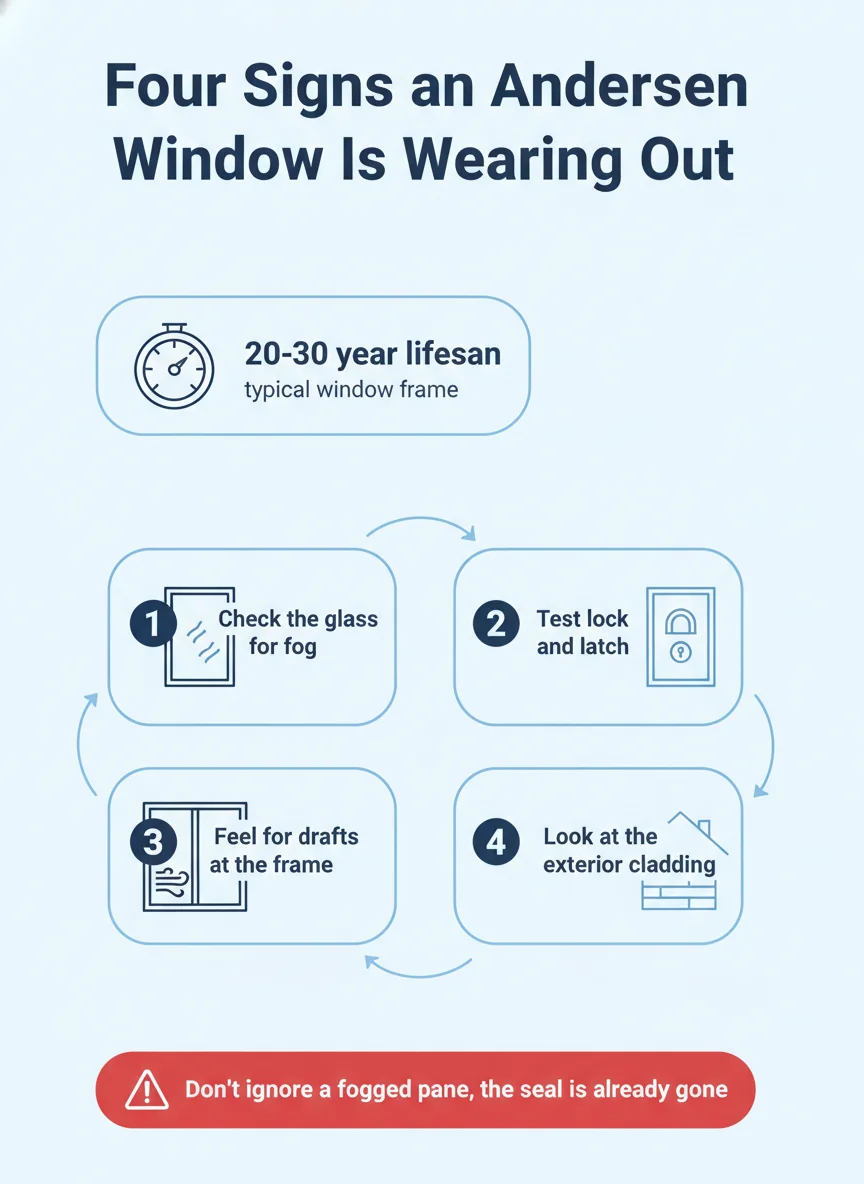
- Look at the glass: Check each pane in good daylight for fog, cloudiness, or a visible ring near the edge that doesn't wipe off, a sign the seal has failed.
- Test the operation: Open and close each window fully, checking whether it moves smoothly or sticks and binds partway through.
- Check the lock: Latch each lock and see whether it pulls the sash tight against the frame or leaves a visible gap.
- Feel for drafts: Run a hand slowly around the frame edge on a breezy day, feeling for air movement where the sash meets the frame.
- Inspect the exterior: Walk the outside of the house and look at the cladding and trim around each window for cracking, staining, or soft wood.
- Note the age: If you know roughly when the windows went in, weigh what you're seeing against the typical 20 to 30 year range for the frame.
What the Signs Usually Mean
Isolated Problems on One or Two Windows
If only one or two windows in the house show fogging or a stuck sash while the rest operate fine, that's usually a localized seal or hardware failure rather than a sign the whole set is aging out. South and west-facing windows often show wear first simply because they take the most direct sun over the years, so it's common to see one side of a house need attention before the other.
In this situation, repair at the existing opening is almost always the more efficient path. It addresses the specific window that's failing without disturbing the trim, siding, or interior finish around windows that are still performing fine.
Wear Across Most or All of the House
When most of the windows in a home show similar fogging, stiff operation, or drafts around the same time, that's usually a sign the whole set is simply reaching the end of its service life together, which makes sense since they were all installed at once and have weathered the same years of Colorado sun and cold. In that case, replacing the full set at once tends to be more cost-effective than repairing them one at a time as each fails.
This is also the point where it's worth thinking about the exterior finish around the windows too, since trim, fascia and siding installed at the same time as the original windows are often showing their own age by then.
DIY vs. Calling a Pro
A homeowner can handle a fair amount of basic maintenance without any special tools. Cleaning the weep holes at the bottom of the frame, lubricating a stiff lock, vacuuming debris out of the track, and re-caulking small gaps in interior trim are all reasonable DIY tasks that help a window perform better without any risk to the window itself.
Glass replacement, frame repair, and anything touching the seal between the window and the wall opening is where it's worth bringing in a licensed professional. Removing and resetting glass without disturbing the surrounding frame takes the right tools and some practice, and a poor seal around the opening can let water into the wall even if the window itself looks fine from the inside.
Full window replacement is squarely a professional job, both for the physical work of removing the old unit without damaging the rough opening and for making sure the new window is flashed and sealed correctly the first time. A poor seal on a replacement window undoes most of the benefit of putting in a new one in the first place.
Getting the Most Out of the Windows You Have
Whether your Andersen windows are five years in or twenty-five, the same habits extend their life: keep the weep holes clear, address a stuck sash before it gets worse, and catch a fogged pane early rather than waiting for it to spread. A quick seasonal walk around the house, checking glass, hardware and exterior trim, catches most problems while they're still small. For more on how long different window materials hold up in this climate, see our post on vinyl window lifespan in Colorado.
If you're seeing fog, drafts, or stiff operation on windows anywhere in the Englewood or Denver area, Precise Windows LLC can take a look and tell you honestly whether you're looking at a repair or a replacement.
Frequently asked questions
How long do Andersen windows actually last?
Most Andersen window frames hold up for 20 to 30 years when they're installed correctly, with the insulated glass seal often being the first thing to fail, sometimes well before the frame does. Climate, sun exposure and how tight the original install was all affect where a given window falls in that range.
Why do Andersen windows fog up between the panes?
Fogging between the panes means the insulated glass seal has failed and the gas or air between the layers has been compromised. It's a glass problem, not always a frame problem, and the glass can often be replaced at the existing opening instead of pulling the whole window.
Does Colorado's climate shorten window life?
Intense UV exposure at altitude and the swing between hot summer days and freezing nights put extra stress on seals, weatherstripping and exterior finishes. Windows facing south and west typically show wear sooner than north-facing windows on the same house.
Can I repair an Andersen window instead of replacing it?
Often yes, especially when the issue is a fogged pane, a torn screen, a broken lock or a window that won't stay latched. A full replacement usually only becomes the right call when the frame itself has rotted, warped or let water into the wall.
How do I know if it's time to replace rather than repair?
If the frame is sound and only the glass or hardware has failed, repair is usually the cheaper and faster path. If you're seeing soft wood, visible warping, or drafts that persist even after new weatherstripping, the frame has likely reached the end of its useful life.