
Why Window Lifespan Questions Come Up in the Denver Metro
Homeowners across the Denver Metro tend to start asking about window lifespan for one of two reasons: a draft that won't go away no matter how many times the furnace runs, or a pane that's gone foggy on a cold morning. Both are fair signals that it's time to figure out where a window actually stands in its life, rather than guessing based on the age of the house alone.
Colorado's swings between hot, dry summers and sharp overnight freezes put real stress on window seals and frames. A window that would coast along fine in a milder climate can show its age faster here, which is part of why the range homeowners hear quoted for window lifespan is so wide. The honest answer is that it depends on the window, not the calendar.
What Actually Wears a Window Out Over Time
Every window is really a system of parts working together: the frame, the glass unit, the seal between them, and the hardware that lets it open and lock. Each part ages at its own pace, and the window's overall lifespan is set by whichever part fails first, not by an average of all of them.
Frame Material and Weathering
Frame material drives a lot of the lifespan conversation. Vinyl frames resist rot and don't need painting, but cheaper vinyl can become brittle under years of UV exposure. Fiberglass and composite frames generally hold their shape well through temperature swings. Wood frames look great and can last a long time, but only with consistent upkeep, since moisture and sun exposure will eventually take a toll on the finish and the wood underneath.
Aluminum frames conduct heat and cold more directly than other materials, which means they expand and contract more with the daily temperature swings common along the Front Range. That movement, repeated over thousands of cycles, is one of the things that stresses the seal between the frame and the glass over time.
Installation Quality and the Seal
A window is only as good as the opening it's set into. If the gap around the frame isn't sealed properly during install, water and air find their way in no matter how good the window itself is. That's why two identical windows installed by different crews can age at very different rates, and it's also why the install itself matters as much as the brand stamped on the frame.
A tight seal at install also protects the insulated glass unit, the sealed space between the panes that holds the gas fill and keeps moisture out. Once that seal is compromised, fog between the panes is permanent. No amount of cleaning will clear it, because the problem is inside the glass unit itself.
| Frame Material | Typical Lifespan Range | What Shortens It |
|---|---|---|
| Vinyl | 20-25 years | Lower-grade vinyl going brittle under UV exposure |
| Fiberglass / Composite | 25-30 years | Rare without poor installation or a failed seal |
| Wood | 20-30 years with upkeep | Skipped repainting and moisture exposure |
| Aluminum | 15-20 years | Temperature swings stressing the seal faster |
The Parts of a Window That Age Differently
The glass, the frame, and the hardware don't wear out on the same timeline, which is why a window can still look fine from the curb while one part underneath is already failing. The insulated glass seal is usually the first to go. Once it fails, fog shows up between the panes and there's no fixing that pane without replacing the glass unit.
Weatherstripping and hardware, the parts that let a window open, close, and lock, tend to wear out next, especially on windows that get opened and closed often. The frame itself is usually the last part to actually fail structurally, unless water has been getting behind it for years without anyone noticing.
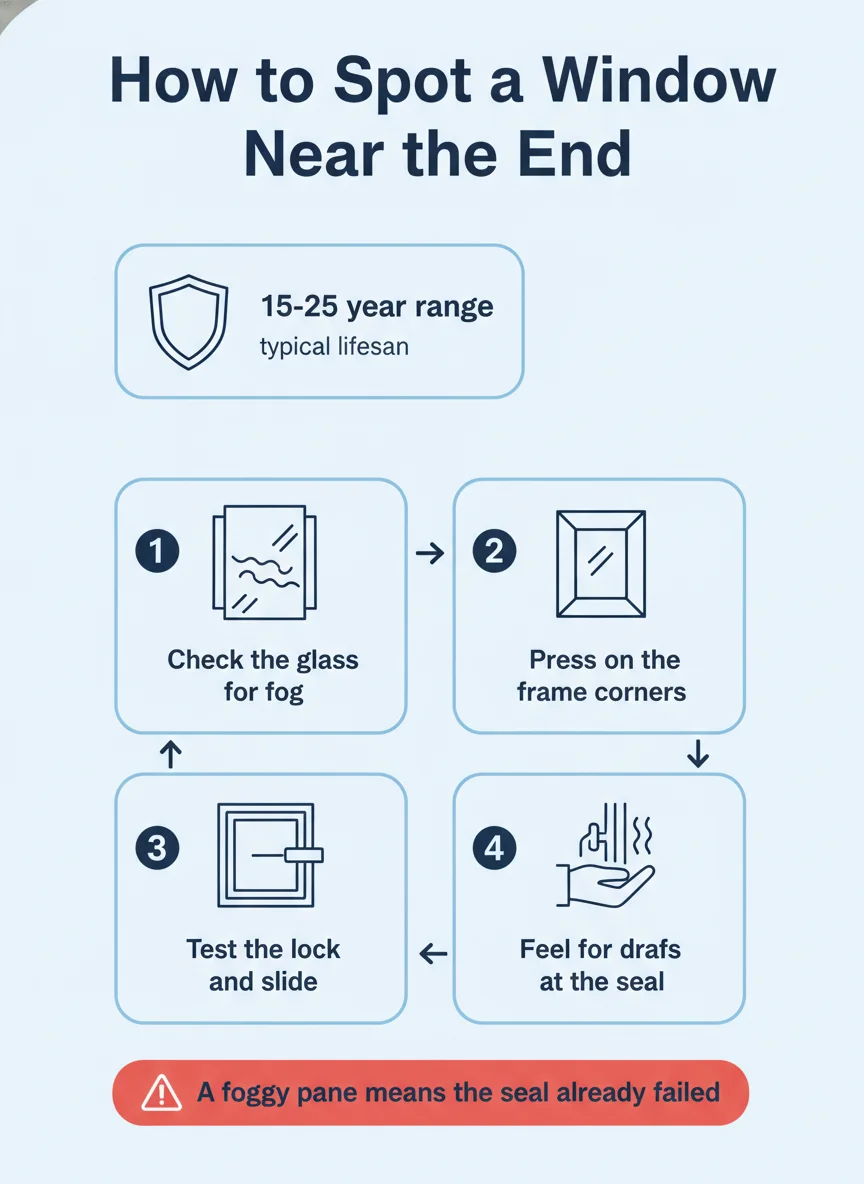
Step-by-step: How to Tell Where a Window Is in Its Life
You don't need special tools to get a rough read on a window's condition. Walk through these checks on a few windows around the house and you'll have a good sense of whether you're dealing with normal wear or a window that's genuinely done.
- Check the glass for fog: Look between the panes on a cool morning. Permanent haze or trapped moisture means the seal has already failed.
- Press on the frame corners: Soft spots or visible gaps at the corners often point to water getting behind the frame over time.
- Test the lock and slide: A lock that won't catch or a sash that sticks usually means worn hardware, which is repairable on its own.
- Feel for drafts at the seal: Run a hand along the frame edge on a windy day. A steady draft points to a failed exterior seal.
- Look at the exterior caulk: Cracked or missing caulk around the frame lets water in and speeds up every other problem on this list.
- Note the age if known: Windows installed more than 15-20 years ago are worth a closer look even if they seem fine from inside.
What You'll Find When a Window Is Reaching the End
Signs in the Glass
Fog or a visible film between the panes is the clearest sign a glass unit is done. You might also notice condensation that forms between the panes specifically, not just on the inside surface of the glass, which is a different and much more fixable problem. Once the seal between the panes fails, that's a glass replacement, not a cleaning job.
Discoloration or a yellowing tint across the glass can also show up as the seal breaks down and lets in air over years. It's gradual enough that homeowners often don't notice until they compare an older window to a newer one side by side.
Signs in the Frame and Operation
A window that's hard to open, won't stay up on its own, or doesn't lock flush anymore is usually telling you the hardware or the frame has shifted slightly over time. That's often repairable without a full replacement, especially if the glass itself is still in good shape.
Visible warping, cracking, or soft wood around the frame is a different story. That points to water intrusion that's been going on for a while, and it's worth getting looked at before it spreads to the surrounding wall framing.
DIY vs Calling a Pro
Some of this is genuinely a homeowner job. Cleaning out tracks and weep holes, lubricating hardware, and recaulking small gaps in exterior trim are all reasonable weekend projects that extend a window's working life without any special training.
Anything involving the glass unit itself, a full seal failure, or signs of water behind the frame is worth having a professional look at. A glass unit has to be matched to the existing frame correctly, and a frame with water damage behind it needs to be opened up and assessed properly rather than patched from the outside.
If you're not sure which category your situation falls into, that's exactly what a free inspection is for. It's a quick way to find out whether you're looking at a simple repair or something that calls for a full window replacement, without guessing based on how the window looks from across the room.
Getting the Most Years Out of Your Next Set of Windows
The windows that go the longest tend to share two things: a frame material that holds up to the local climate, and an install that sealed the opening correctly the first time. Homeowners in Englewood and across the metro who are weighing their options can find more detail on specific frame materials in our guide to vinyl replacement window lifespan.
Whether you're troubleshooting a single foggy pane or thinking ahead to a full house replacement, getting an honest read on where your windows actually stand is the first step. Precise Windows LLC can walk through that assessment with you before you decide what comes next.
Frequently asked questions
How long do replacement windows usually last before they need to be replaced again?
Most replacement windows last somewhere between 15 and 25 years, though that range swings widely based on frame material, glass package, and how well the unit was installed. A well-built vinyl or fiberglass window installed with a proper seal can run toward the higher end of that range, while a poorly sealed opening can show problems within a decade.
Do all window frame materials last the same amount of time?
No, frame material is one of the biggest factors in how long a window holds up. Vinyl and fiberglass tend to resist warping and fading well, wood needs more upkeep to avoid rot, and aluminum conducts temperature swings that can stress the seal faster in a climate with big day to night temperature changes.
What usually fails first on an aging window, the glass or the frame?
The insulated glass seal is usually the first thing to go, showing up as fog or condensation trapped between the panes. The frame and hardware, like locks, rollers, and weatherstripping, tend to fail later, but a frame that was installed with a poor seal can let in drafts well before the glass itself shows any trouble.
Can you extend the life of windows with maintenance?
Yes, regular cleaning of the tracks and weep holes, resealing exterior caulk when it cracks, and keeping hardware lubricated all add years to a window's working life. None of that fixes a failed glass seal, but it does slow down the frame and hardware wear that eventually forces a replacement.
Is it worth replacing just one or two windows instead of the whole house?
It can be, especially if only a few units are showing fog or draft problems while the rest of the house is performing fine. A [window and glass repair](/services/window-glass-repair) inspection can tell you whether the issue is isolated to the glass unit or points to a broader installation problem across the house.