
Why 'Best' Depends on Your House, Not a List
Search for the best replacement windows and you'll find a dozen rankings, each one crowning a different brand or style. None of those lists know what your house looks like, which direction your worst wall faces, or what you're trying to fix. A 1970s brick ranch in Lakewood and a newer build in Highlands Ranch don't need the same window, even if they're a mile apart.
In the Denver Metro, the bigger question isn't which brand wins a magazine test. It's which frame material, glass package and style actually solve the problem you have, whether that's a drafty bedroom, a foggy pane, or just windows that look tired next to a home you've otherwise updated. Narrowing those three things down gets you much closer to the right window than any top-ten list will.
What Actually Separates a Good Window From a Great One
Three things drive how a window performs over the life of the install: the frame material, the glass package, and how tight the installer seals the opening when it goes in. A premium frame with a sloppy install will still leak air. A basic frame installed correctly can outperform it. That's worth remembering before you fixate on brand names.
Frame material
Vinyl is the most common choice for good reason: it resists moisture, doesn't need painting, and handles Colorado's freeze-thaw cycles without warping. Fiberglass costs more but holds its shape better over decades and takes paint if you want a custom color. Wood and wood-clad frames give a traditional look, especially on older or historic-style homes, but need more upkeep on the exterior side.
There's no wrong answer here as much as a trade-off between upfront cost, maintenance and look. A family planning to stay in a home for decades might lean toward fiberglass for its durability. Someone updating a rental or a starter home often gets the most value out of vinyl.
Glass package
Double-pane glass with a low-E coating is the baseline for any modern window and makes a real difference over old single-pane glass. Triple-pane adds another layer of insulating gas and glass, which shows up most on north-facing rooms, upper floors that catch wind, and homes near busy roads where the extra pane also cuts noise.
Gas fill (usually argon) between the panes and the low-E coating itself matter more day to day than the pane count alone. A well-built double-pane window with a good coating can outperform a cheap triple-pane unit, so ask what's actually inside the glass, not just how many layers it has.
| Factor | Vinyl Frame | Fiberglass/Wood-Clad Frame |
|---|---|---|
| Upfront cost | Lower | Higher |
| Maintenance | Minimal, no painting needed | Occasional exterior upkeep on wood-clad |
| Best fit | Most homes, budget-conscious projects | Long-term owners, custom color or historic look |
| Lifespan expectation | Strong with Colorado's temperature swings | Very strong, holds shape over decades |
Matching the Window Style to the House
Style is where a lot of homeowners get stuck, because the options multiply fast: double-hung, casement, sliding, bay and bow, picture, awning and a handful of specialty shapes for odd openings. The short version is that style should follow function first and look second. A casement window seals tighter and opens wider for airflow, which makes it a strong pick for a kitchen over a sink. A double-hung window is the easiest to clean from inside and fits the classic look most Colorado homes already have.
Bay and bow windows add floor space and natural light to a living room or dining nook but cost more to install correctly since they change the wall opening. Picture windows are fixed, meaning no screen and no airflow, but they let in the most light and work well paired with operable windows on either side. Matching the opening size and the home's existing architecture usually narrows the style choice down fast once you walk the house room by room.
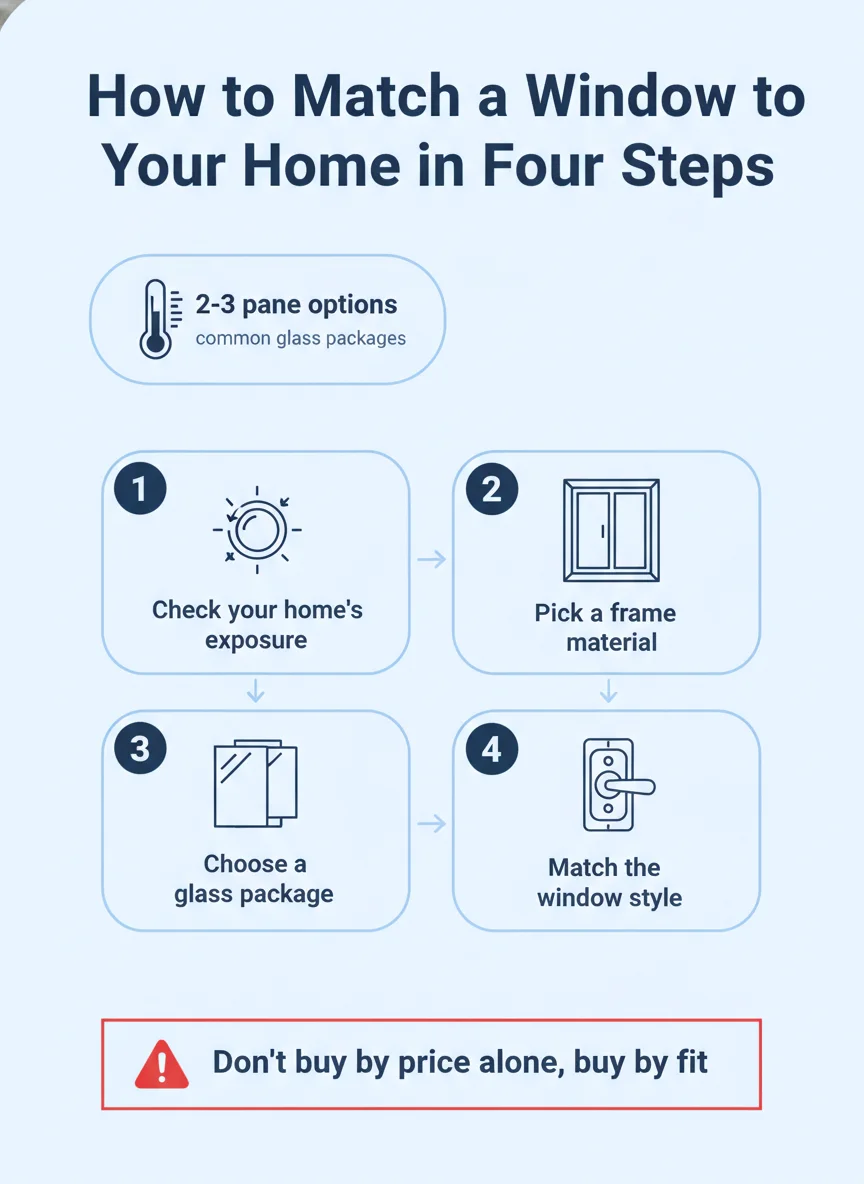
Step-by-Step: Narrowing Down Your Window Choice
You don't need to become a window expert to make a good decision, you just need to work through these in order before anyone measures your openings.
- List the problem rooms: Walk the house and note which windows draft, fog, stick or just look dated. This tells you where to prioritize if you're not replacing every window at once.
- Check each wall's exposure: North and west-facing rooms in Colorado take the hardest wind and cold, so they're where upgraded glass pays off fastest.
- Pick a frame material: Decide between vinyl, fiberglass or wood-clad based on your budget and how long you plan to stay in the home.
- Choose your glass package: Settle on double or triple-pane with a low-E coating based on exposure and noise concerns, not just pane count.
- Match style to function: Pick casement, double-hung, sliding or a specialty shape based on how the room is used, not just the look.
- Get the opening measured: Have the actual window measured at the home rather than relying on rough estimates, since even small gaps affect the seal.
- Compare the full quote: Look at frame, glass, install method and warranty together rather than comparing window prices alone.
What You'll Find Once You Start Comparing Quotes
Once homeowners start getting quotes, two things usually surprise them. First, that the same brand can be quoted very differently depending on the glass package and install method. Second, that a cheaper window with a careless install can end up performing worse than a mid-range window installed correctly, with the opening properly sealed and flashed.
Why the install matters as much as the window
A window is only as good as the gap it sits in. If the opening isn't sealed tight around the new frame, air finds its way around the window no matter how good the glass is. That's part of why Window Replacement work should include sealing the opening as a standard step, not an upsell.
This is also why it's worth asking any installer how they document the work. Photos of the opening before and after the install, for example, give you a record of what was actually done, which matters if a question comes up later about how the window was sealed.
When replacement isn't the answer yet
Not every problem window needs full replacement. A foggy pane, a torn screen, or a window that won't latch can sometimes be fixed at the opening without tearing out the whole frame. It's worth getting a straight answer on repair versus replacement before committing to a full project on every window in the house.
If you're weighing that decision on a specific window, Is It Better to Repair or Replace Windows? walks through how to tell which situation you're in.
What a Homeowner Can Decide vs. What a Pro Should Measure
You can absolutely handle the research phase yourself: walking the house, noting problem rooms, deciding on a general frame material and style preference. That homework makes any quote conversation faster and keeps you from getting talked into options you don't need.
Where it's worth bringing in a pro is the measuring and the install itself. Window openings in older homes are rarely perfectly square, and a window ordered off a rough measurement can end up with gaps that no amount of caulk fixes properly. A licensed installer measures the actual opening, accounts for settling or slight shifts in the frame, and orders a window built to fit that specific hole, not a standard size.
The install itself, including sealing, flashing and making sure the window operates correctly once it's set, is also not a DIY-friendly step if you want the window to perform the way it's rated to. A window that's a great fit on paper can still underperform if it's set crooked or sealed poorly.
Bringing It Back to Your House
The best replacement window for your home is the one that matches your worst-performing walls, fits your budget for frame material, and gets installed by someone who seals the opening correctly the first time. Everything else, the brand names, the marketing claims, the top-ten lists, is secondary to those three decisions.
Walk your own house room by room, note what's actually bothering you about your current windows, and use that list to guide the conversation when you're ready to get quotes. Precise Windows LLC works through exactly that process with homeowners across the Denver Metro before a single window gets ordered.
Frequently asked questions
What is the best type of replacement window for a Colorado home?
There isn't one answer that fits every house. Vinyl frames handle Colorado's temperature swings well and cost less, while fiberglass and wood-clad options add strength and a different look for homes where that matters more than price.
Are triple-pane windows worth it in Colorado?
Triple-pane glass adds insulation value and cuts outside noise, which matters most on north-facing walls and busy streets. On a south-facing wall that already gets good sun exposure, a well-rated double-pane window can perform close to it for less.
What brand of replacement window is best?
The honest answer is that several major manufacturers, including Andersen, Milgard, Pella, Prime and Simonton, all build solid window lines, and the right one depends on the style, price point and warranty terms you want. A good installer will walk you through what each line actually offers rather than pushing one name.
Do new windows actually lower energy bills?
Yes, in most cases, because old single-pane or worn double-pane windows leak conditioned air around the frame and through the glass. The size of the savings depends on how many windows you replace, their current condition and how airtight the new install seals the opening.
How many windows should I replace at once?
That depends on your budget and which windows are performing worst right now. Some homeowners replace the whole house in one project for consistent style and one warranty, while others do it in phases starting with the worst offenders, usually older windows facing west or north.