
Why Value Matters More Than the Sticker Price
Homeowners across the Denver Metro, from Englewood to Aurora, are replacing windows that were installed decades ago, and most of them start the search with one question: which window gives the most for the money. That question gets harder to answer because window pricing varies by frame material, glass package, number of panes, hardware, and the installer doing the work, all before you even compare brands against each other.
Colorado adds its own wrinkle. Homes here deal with intense high-altitude sun, dry winters, and wide swings between a 70 degree afternoon and a 20 degree night. A window that performs well in a milder climate might not hold up the same way here, so value in this market means durability and glass performance as much as it means a good price per unit.
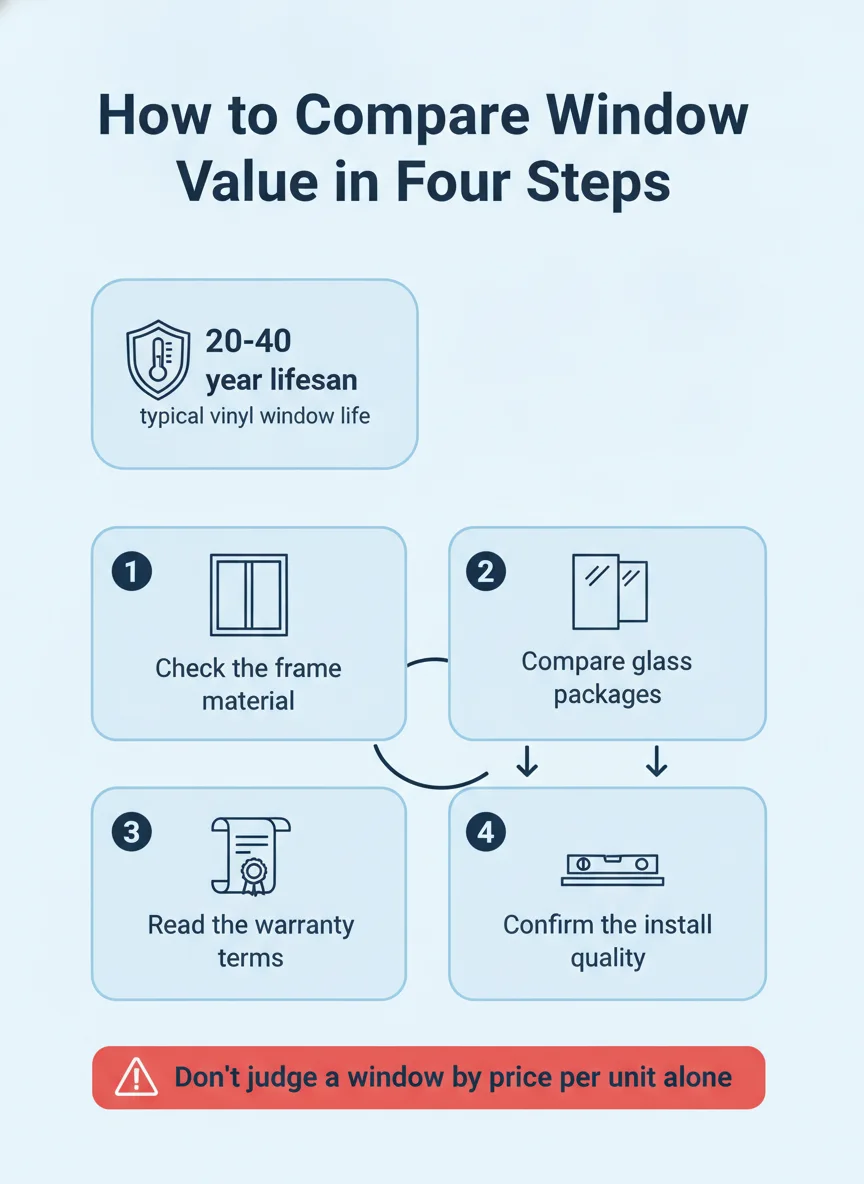
What Actually Drives a Window's Price and Performance
Three things set a window's price and how well it performs once installed: the frame material, the glass package, and the quality of the install at the opening. Understanding each one lets you see past brand names and marketing claims to what you are actually paying for.
Frame Material
Vinyl frames dominate the replacement market because they resist moisture, don't need repainting, and hold up well across temperature swings, which makes them a strong value pick for most homes. Fiberglass costs more but expands and contracts less than vinyl, so it can hold tighter seals over a longer life, which matters in a climate with big daily temperature shifts.
Wood frames still appeal to homeowners who want a traditional look or are matching an older home's style, but they need more upkeep over the years. Composite frames split the difference, often pairing a wood-like interior finish with a more weather-resistant exterior shell.
Glass Package
The glass does more work than most buyers expect. A low-E coating reflects heat while still letting light through, which helps in both winter and summer. Double-pane glass with a quality low-E coating and gas fill between the panes covers most Colorado homes well, while triple-pane adds another layer of insulation for homeowners who want to push efficiency further.
Spacer bars, the strips that separate the panes, also affect long-term performance. A better spacer resists heat transfer at the edge of the glass, which is often where a window first starts to fog or underperform.
| Frame Material | Upfront Cost | Long-Term Value |
|---|---|---|
| Vinyl | Lower | Strong value, low upkeep, resists moisture well |
| Fiberglass | Higher | Holds shape and seal longest, best for long ownership |
| Wood | Higher | Best look, needs regular upkeep to protect value |
| Composite | Mid-range | Balances appearance with weather resistance |
The Parts of a Window That Decide Its Real Value
A window is a system, not a single product. The sash (the part that holds the glass and moves), the frame it sits in, the weatherstripping that seals the gap, and the hardware that locks it all work together. A weak link anywhere in that chain, like cheap weatherstripping on an otherwise solid frame, can undercut the whole window's performance.
Hardware quality is an easy thing to overlook on a spec sheet but it shows up fast in daily use. Locks that align correctly and cranks or sashes that move smoothly year after year usually point to a window built with tighter tolerances throughout, which is often a better sign of overall quality than the brand name on the box.
Step-by-step: How to Compare Window Options for Value
Comparing windows gets easier once you break it into a short checklist instead of trying to weigh every spec at once. Work through these steps with each quote you get.
- Identify your priority: Decide if you care most about energy performance, upkeep, appearance, or resale value, since no single window wins on all four.
- Compare frame materials: Line up vinyl, fiberglass, wood, and composite options for the specific openings you are replacing, not just a generic price list.
- Check the glass package: Confirm the coating, pane count, and gas fill rather than assuming all double-pane glass performs the same.
- Read warranty terms closely: Look at what is actually covered, for how long, and whether labor is included, not just the length printed in bold.
- Ask about the install plan: A window is only as good as the seal around the opening, so ask how the frame will be sealed and flashed.
- Get it measured in person: Have the Window Replacement team measure your actual openings before you lock in a final choice.
What You'll Find Once You Start Comparing Real Quotes
Price Gaps That Don't Match Quality Gaps
It's common to see two quotes with a noticeable price difference where the cheaper option actually has a comparable glass package and frame material. Sometimes the gap comes from brand overhead or extra features you don't need, not from a real difference in how the window will perform in your home.
Other times the cheaper quote is cutting corners somewhere you can't see on paper, like thinner vinyl walls in the frame or a weaker warranty. That's why it helps to ask direct questions about frame thickness and glass specs rather than comparing bottom-line totals alone.
Where Older Windows Are Already Costing You
If your current windows are decades old, you may notice drafts near the frame, condensation between panes, or windows that are hard to open and close. These are signs the seals and hardware have worn out, and they're a good reminder that an older window's low original price has already been paid back many times over in lost comfort.
A window and glass repair inspection can tell you whether a specific window is worth repairing or whether replacement is the better value at this point.
What You Can Judge Yourself vs. What Needs a Pro's Eye
You can absolutely compare glass packages, frame materials, and warranty terms on your own by reading spec sheets and asking questions. You can also walk your home and note which windows feel drafty, foggy, or hard to operate, which gives you a real sense of where replacement will matter most.
What's harder to judge from a spec sheet is how a given window will actually perform once it's installed in your specific opening. Framing shifts, old caulking, and uneven openings all affect the final seal, and those details only show up once someone measures the opening in person.
That's the piece worth having a professional handle. A measurement and inspection at your home will catch issues a showroom comparison never will, and it keeps you from paying for performance specs your installed window won't actually hit.
Getting the Most Window for Your Money
The best replacement window for the money isn't the cheapest one or the most expensive one, it's the one whose frame material, glass package, and warranty match how long you plan to stay in the house and what you want it to do. For a deeper look at frame choices, What to Replace Windows With breaks down material options in more detail.
Homeowners in Englewood and across the Denver Metro get the most out of their window budget by comparing real specs side by side and having the openings measured before committing to a final quote. Precise Windows LLC works through that comparison with homeowners at the home, so the window you choose is the one that actually performs once it's installed.
Frequently asked questions
What is the best replacement window material for the money?
Vinyl generally delivers the strongest value for most Colorado homes, since it resists moisture and temperature swings without the upkeep wood needs. Fiberglass costs more up front but holds paint and shape better over decades, which can be worth it on a home you plan to keep long-term.
Are more expensive windows always better quality?
Not necessarily. Price often reflects brand marketing and extra features like grille patterns or hardware finishes as much as it reflects actual glass performance or frame durability, so two windows at very different price points can perform almost the same.
Do triple-pane windows pay for themselves in Colorado?
Triple-pane glass adds real insulation value in a climate with cold winters and intense sun, but the payoff depends on how long you keep the house and your current window's condition. A double-pane window with a quality low-E coating is often enough for most Denver Metro homes.
How do I know if a window quote is a good deal?
Compare the frame material, glass package, and warranty side by side rather than just the bottom-line number, since a lower price sometimes means thinner frames or a weaker warranty. Ask what is included in the installation, not just the window unit itself.
Does the installer matter as much as the window brand?
Yes, a well-built window installed with a poor seal will underperform a mid-range window installed correctly. Air and water find any gap at the opening, so the install quality often decides whether you actually get the energy performance printed on the label.