
Replacing Windows in an Older Denver Metro Home
Houses built before the 1980s across Englewood, Denver, and the rest of the metro were framed differently than new construction is today. Openings were often cut by hand, trim was built in place rather than ordered as a kit, and the wall cavity behind the frame doesn't always match what a modern window expects. None of that makes an old house a bad candidate for new windows, it just means the job calls for more judgment than picking a product off a list.
The right windows for an old house are the ones that fit the opening that's actually there, keep the lines of the house looking the way they're supposed to, and get installed by someone willing to slow down and check the frame before cutting anything. That's the difference between a window that performs for decades and one that starts leaking air within a year or two.
Why Old Houses Need a Different Approach
New-construction window openings are built to standard rough-opening sizes, square and plumb, with modern house wrap and flashing already in place. Old houses weren't built to that standard, so an installer measuring an older home has to account for settling, original trim that may be worth saving, and sometimes lead paint on surfaces that need careful handling rather than just prying things off.
Settling and Out-of-Square Openings
Decades of freeze-thaw cycles and foundation movement shift a house, even a little. An opening that was square when the house was built can be slightly off today, and a window ordered to the wrong dimensions for that reality won't seal right no matter how good the product is. This is why an in-person measurement at the house matters more on an older home than almost anything else in the process.
A good installer checks for square, level, and plumb at every opening before ordering, and adjusts the install plan if the numbers don't line up. Skipping that step is one of the most common reasons replacement windows in old houses end up with gaps, drafts, or sashes that bind.
Original Trim and Architectural Character
A lot of what gives an old house its character is the window trim, the proportions of the sash, and the way the glass is divided. Replacing the window itself doesn't have to mean losing that look. Many manufacturers offer grille patterns and frame profiles that can echo a historic look while still using modern glass and weatherstripping behind it.
Where the original wood trim and casing are still solid, it's often worth keeping and working the new window into that existing frame rather than tearing everything out. Where the trim has failed, matching the replacement to what's already on the house keeps the exterior consistent instead of creating a patchwork look from one window to the next.
| Approach | Best For | Trade-offs |
|---|---|---|
| Insert replacement | Solid, square existing frames with no rot | Keeps existing trim and casing, slightly smaller glass area |
| Full-frame replacement | Rotted, out-of-square, or water-damaged openings | Corrects the opening fully, more work and more disruption to trim |
| Full-frame with custom shapes | Bay, bow, or specialty openings original to the house | Matches unusual geometry but takes more precise measuring and lead time |
Frame Materials That Work Well in Older Homes
Vinyl, fiberglass, and wood-clad frames each have a place in an old house, and the right pick usually comes down to the look you want on the exterior and how much upkeep you're willing to take on. Vinyl holds up with little maintenance and comes in profiles narrow enough to mimic older wood sash lines. Fiberglass is stiffer and handles Colorado's temperature swings well, which matters on a house that already has some settling in its bones.
Wood-clad frames give the closest match to an original wood window's look and are common on historic-style homes where exterior appearance carries the most weight. Brands like Andersen, Milgard, Pella, Prime, and Simonton all offer options across these materials, and Window Replacement gets measured at the house so the frame choice fits both the opening and the style of the home.
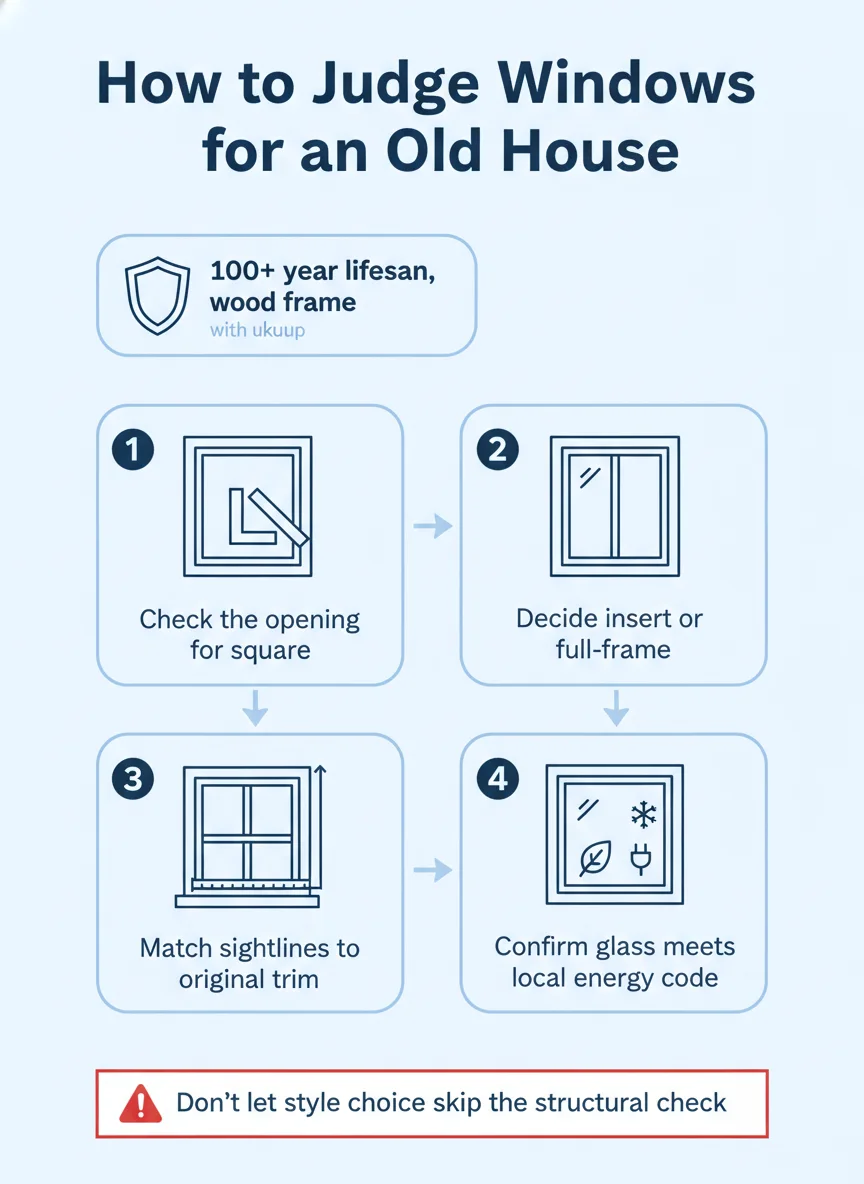
Step-by-Step: Choosing Windows for an Older Home
Getting this right is less about picking a brand and more about following a process that respects how the house was actually built. Here's the order that keeps an old-house window project from going sideways.
- Inspect the opening: Check for rot, water staining, and how far the frame has shifted out of square before deciding anything about materials.
- Decide insert or full-frame: A solid, square opening usually works with an insert window; a damaged or shifted opening needs a full-frame replacement to correct it.
- Match the sightlines: Pick a frame profile and grille pattern that echoes the original trim so the exterior still reads as the same house.
- Choose the frame material: Vinyl, fiberglass, or wood-clad, based on how much upkeep you want and how closely you need to match the original look.
- Confirm the glass package: Modern glass coatings and gas fills handle Colorado's sun and cold better than original single-pane glass ever did.
- Schedule the measure: An in-person measurement at the house catches the out-of-square issues a catalog size never will.
- Review the install plan: Make sure flashing and sealing around the opening is part of the quote, not just the window itself.
Signs Your Old House's Windows Need Replacing
An old house doesn't always announce that its windows have failed. Sometimes it's a draft you only notice on a windy day, or a bill that creeps up every winter without an obvious reason.
Drafts, Moisture, and Fogging
If you can feel air moving near a closed window, or see fog or condensation building up between panes, the seal has likely failed. On an old house, this is sometimes a sign of the original glazing putty drying out rather than the glass itself, which is why a free inspection can tell you whether it's a repair or a full replacement situation.
Moisture trapped between panes almost always means the seal is gone and isn't something that can be fixed without replacing the glass unit. Left alone, that moisture can start to affect the wood frame around it, especially on older sashes where the wood wasn't treated the way modern frames are.
Sashes That Stick, Won't Stay Open, or Won't Latch
Old wood windows swell and stick as humidity changes through the year, but if a sash won't stay up without a prop, or the lock won't catch, the frame has likely warped or the hardware has worn out past adjustment. That's a security issue as much as a comfort one.
Painted-shut sashes are common in old houses too, and while that can sometimes be freed up, repeated paint layers over decades often mean the frame geometry has shifted enough that a repair won't hold for long. At that point replacement is usually the more lasting fix.
DIY vs. Calling a Pro for an Old-House Window Project
There's a short list of things a homeowner can reasonably handle on an old house: cleaning out old glazing putty on a single pane, re-caulking visible gaps around trim that's otherwise sound, and doing routine upkeep like repainting exterior wood trim. These are maintenance tasks, not structural fixes, and they're a fine place to start if the window is otherwise in decent shape.
Anything involving the frame itself, especially on a house old enough to have lead-based paint or settled framing, is worth handing to a licensed installer. Removing old sashes without knowing what's behind the trim can turn a simple job into a bigger repair, and lead paint disturbed the wrong way is a health hazard rather than just a mess.
A full-frame replacement on an older home is almost always a pro job. It involves cutting back to the rough opening, checking and sometimes correcting the framing underneath, and flashing the new window so water doesn't find its way behind the siding. That's not a weekend project, and getting it wrong costs more to fix later than it would have to hire it out the first time.
Getting It Right the First Time
An old house deserves windows chosen for how it was actually built, not just for what's on sale this month. That means checking the opening before picking a product, matching the frame style to the trim already on the house, and making sure whoever installs them understands that older construction plays by different rules than new builds. If you're also weighing what to replace the windows with material-wise, that decision pairs with everything above.
Homeowners across the Denver metro with older houses have different needs than a new subdivision, from settled openings to original trim worth preserving, and getting someone out to measure in person is the one step that protects the rest of the investment. Precise Windows LLC works through that process at the house itself rather than guessing from a catalog size.
Frequently asked questions
What are the best replacement windows for an old house?
The best option is usually whichever frame material and install method matches how the original opening was built, not necessarily the newest product on the shelf. Vinyl, fiberglass, and wood-clad frames from brands like Andersen, Milgard, Pella, Prime, and Simonton can all work well in an older home as long as the opening is measured and installed correctly for that house's construction.
Should an old house get insert windows or full-frame replacement?
That depends on the condition of the existing frame. If the wood around the opening is solid and square, an insert window that fits inside the old frame is often the simpler route; if there's rot, water damage, or the opening has shifted out of square, a full-frame replacement lets the installer correct that and seal the opening properly.
Will new windows change the look of an old house?
They can, if the sightlines and grille pattern don't match what's there now. Matching trim depth, glass divisions, and frame width to the home's original style keeps the character of the house intact while still getting modern glass and weatherstripping.
Do old houses need special windows for energy efficiency?
Not special windows exactly, but the install matters as much as the product. An old opening that isn't sealed and insulated correctly around the new frame will still leak air no matter how good the glass package is, so the installation details often matter more than the window brand.
How do I know if my old house's windows need replacing at all?
Look for drafts you can feel near the frame, glass that fogs between panes, wood that's soft or splitting at the sill, and sashes that won't stay open or won't latch. Any one of those is a sign worth getting a free inspection for before deciding whether to repair or replace.