
What Actually Happens on Window Install Day
By the time a crew shows up to install windows at a house in the Denver metro, the custom units have already been measured, ordered, and built to fit each specific opening. Install day is where that preparation turns into finished, working windows, and it moves at a different pace than the weeks of lead time that came before it.
Homeowners understandably want to know how long the crew will actually be there, especially if it means being home from work or coordinating around the house. The honest answer depends on how many windows are going in, but the process for each individual window follows a pretty consistent rhythm.
Why Install Time Varies by Window and by House
Two things drive how long install day takes: the number of windows being replaced and how straightforward each opening is to work with. A standard double-hung window in good condition goes in faster than a specialty bay window or one where the surrounding frame needs repair before the new unit can be set.
Standard Windows Move Quickly
Common window types like double-hung, sliding, and casement units in typical sizes are the fastest to install, since the crew has done the same sequence many times and the opening usually just needs the old window removed and the new one set and sealed.
A house full of standard-sized windows in good repair is the best-case scenario for install day, letting the crew move steadily from one opening to the next without unexpected stops.
Specialty Shapes and Frame Repairs Slow Things Down
Bay and bow windows, picture windows, and other specialty shapes take more time to set correctly because of their size and the way they're supported in the wall. These aren't harder in a bad way, they just require more careful handling to get right.
Frame issues found once the old window comes out, soft wood, gaps, or a warped opening, also add time, since that needs to be addressed before the new window can be sealed in properly. This is exactly why an in-person inspection ahead of the order matters, it catches most of these issues early.
| Window Type | Relative Install Time | Why |
|---|---|---|
| Standard double-hung or sliding | Fastest | Common size, familiar sequence, few surprises |
| Casement or awning | Moderate | Hardware and seal alignment take a bit more care |
| Bay, bow, or picture windows | Longer | Larger size and structural support needs |
| Any opening needing frame repair | Longest | Repair work happens before the new window can go in |
What the Crew Is Actually Doing at Each Window
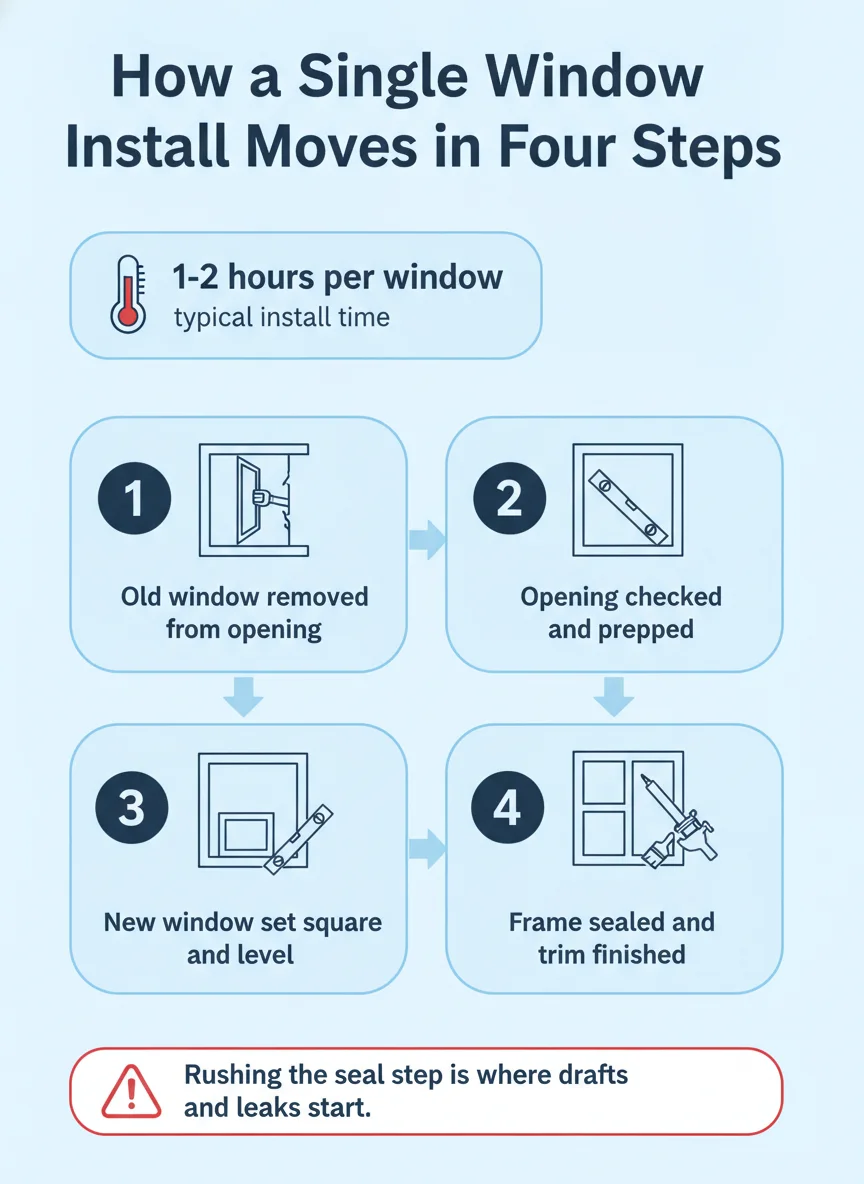
The work at each opening breaks down into a few distinct stages: removing the old window without damaging the surrounding wall, checking the opening for any issues, setting the new window so it's square and level, and sealing the gap around the frame so air and moisture can't get through.
That sealing step matters more than it might seem. A window that's set correctly but rushed on the seal will draft and can let moisture into the wall over time, which is exactly the kind of problem that shortens a window's lifespan long before it should be an issue.
Step-by-Step: What Happens at Each Window on Install Day
Here's the sequence a crew typically follows for every opening in the house.
- Protect the work area: Flooring and nearby furniture get covered to keep dust and debris off the rest of the room.
- Remove the old window: The existing window comes out carefully to avoid damaging the trim or the surrounding wall.
- Check the opening: The frame gets inspected for any rot, gaps, or square issues before the new window goes in.
- Set the new window: The custom unit is placed square and level in the opening and secured in place.
- Seal the frame: Insulation and sealant fill the gap around the window to block air and moisture.
- Finish the trim: Interior and exterior trim is reset or replaced so the window looks finished inside and out.
- Test operation: Every window gets opened, closed, and locked to confirm it works smoothly before moving on.
What a Finished Install Should Look Like
Inside the House
From the inside, a properly finished install leaves clean trim lines, a window that opens and closes without sticking, and no visible gaps around the frame. There shouldn't be any draft when you run a hand along the edge on a cold day.
If you notice debris left behind, trim that's uneven, or a window that feels stiff, that's worth flagging before the crew leaves for the day rather than after, since it's much easier to address on the spot.
Outside the House
Outside, the exterior trim and any siding disturbed during the removal should be reset cleanly, with caulking applied where the frame meets the siding to keep water out. If siding around the opening was damaged during the old window's removal, that's something worth addressing as part of the same visit.
A good install leaves the exterior looking like the window was always meant to be there, not like something was patched around it after the fact.
DIY vs Calling a Pro for the Install
Setting a window correctly, square, level, and sealed against air and moisture, takes more precision than it looks like from the outside. A window that's slightly out of square can still close, but it won't seal properly, and that shows up later as a draft or premature seal failure.
This is squarely licensed installer territory, especially once you're dealing with custom insulated glass units that are heavy and easy to damage if the opening isn't handled correctly during the swap. There's also real risk in working with old, sometimes rotted framing that a DIY approach can miss until it's too late.
The one place a homeowner has real input on install day is in walking through expectations upfront, which rooms to prioritize, where furniture needs to move, and confirming the plan before the crew starts. That conversation up front makes the actual work go smoother.
Planning Around Install Day
Knowing that each window generally takes an hour or two, and that a full house runs a day or more depending on how many openings are involved, makes it easier to plan the rest of your day around the crew rather than guessing. The bigger wait, as always, was the weeks of custom manufacturing before the crew ever arrived.
If you're getting ready for an install anywhere from Lakewood to Arvada and want to know what to expect on the day itself, and for more on how the overall project timeline builds up to that day, see how long it takes to replace all the windows in a house. Precise Windows LLC can walk you through the schedule before the crew ever shows up.
Frequently asked questions
How long does it take to install one window?
A single window install typically takes somewhere around one to two hours once the crew is on site and the opening is ready to go. That covers removing the old window, prepping the opening, setting the new one, and sealing it properly.
How long does it take to install windows in a whole house?
For a full house, install day usually runs a full day or spans a couple of days depending on how many windows are involved. Larger houses with more openings naturally take longer than a home with just a handful of windows.
Will I be without windows during the install?
No, crews work one opening at a time, so the house is never left with multiple open walls at once. Each window is removed and the new one set and sealed before moving to the next.
Does bad weather stop a window install?
Certain weather conditions can affect the plan for the day, since each opening is briefly exposed while the old window comes out and the new one goes in. A good crew plans around the forecast to keep that exposure time short.
What happens after the windows are installed?
The crew does a final check on every window, testing that it opens, closes, and locks properly and that the seal around the frame is solid. Cleanup and a walkthrough with the homeowner typically wrap up the visit.