
Why the window replacement timeline matters in the Denver metro
Homeowners across the Denver metro usually ask one of two questions before a project starts: what will it cost, and how long will it take. The cost question gets a lot of attention, but the timeline question is just as important if you're planning around a season, a move-in date, or just want your house buttoned up before winter. Window replacement isn't a single visit. It's a sequence of steps that starts well before anyone shows up with a pry bar.
Understanding the full timeline helps you plan the rest of your life around the project instead of the other way around. If you know ordering takes several weeks before install day even gets scheduled, you won't be caught off guard waiting on windows that haven't shipped yet, and you can plan painting, blinds, or other exterior work around the real schedule rather than a guess.
What actually determines how long window replacement takes
The timeline comes down to two separate clocks running one after another: the manufacturing clock and the installation clock. The manufacturing clock starts the day you approve a final order and ends when the windows arrive at the installer's shop or your home. The installation clock starts on the day crews show up and ends when the last window is sealed, trimmed, and cleaned up.
The manufacturing clock
Replacement windows are generally built to the precise dimensions of each opening in your home, which means they go into a production queue rather than coming off a shelf. Standard sizes and simple styles like double-hung or sliding windows typically move through that queue faster than specialty shapes, bay and bow configurations, or unusual grille patterns.
This is the part of the project with the least flexibility. Once an order is placed, the manufacturing timeline is set by the factory, not the installer, so the most useful thing you can do is finalize your window style, glass package, and color decisions quickly during the quoting stage so the order can go in without back-and-forth delays.
The installation clock
Install day itself moves much faster than most people expect. A window replacement crew works opening by opening: removing the old unit, prepping the frame, setting the new window, and sealing it tight before moving to the next one. A handful of windows can often be finished in a single day, while a whole-house project usually spans more than one.
Weather plays a bigger role here than in the manufacturing stage. Installers in Colorado plan around snow, high wind, and hard freezes, since an opening left exposed too long in bad weather works against the whole point of the project. A short reschedule for weather is normal and worth it for a tight seal.
| Stage | What happens | Typical duration |
|---|---|---|
| Measure | A technician confirms exact opening sizes at your home | One visit, same day |
| Order | Windows are built to spec and enter the manufacturing queue | Several weeks |
| Schedule | Install date is set once windows arrive | Coordinated around weather and crew availability |
| Install | Old windows come out, new ones go in and get sealed | One to several days depending on window count |
The parts of the window system that affect your timeline
A window opening isn't just glass and a frame. It includes the rough opening in the wall, the flashing and sealant that keep water out, the trim around the inside and outside, and in some cases the siding immediately around the unit. Any of these can add time if they turn out to need attention once the old window comes out.
This is why a thorough measuring visit up front matters so much. A technician who checks the condition of the framing and flashing before the order goes in can flag problems early, instead of discovering rot or a settled opening on install day when the schedule has already been locked in.
Step-by-step: how a window replacement project typically moves
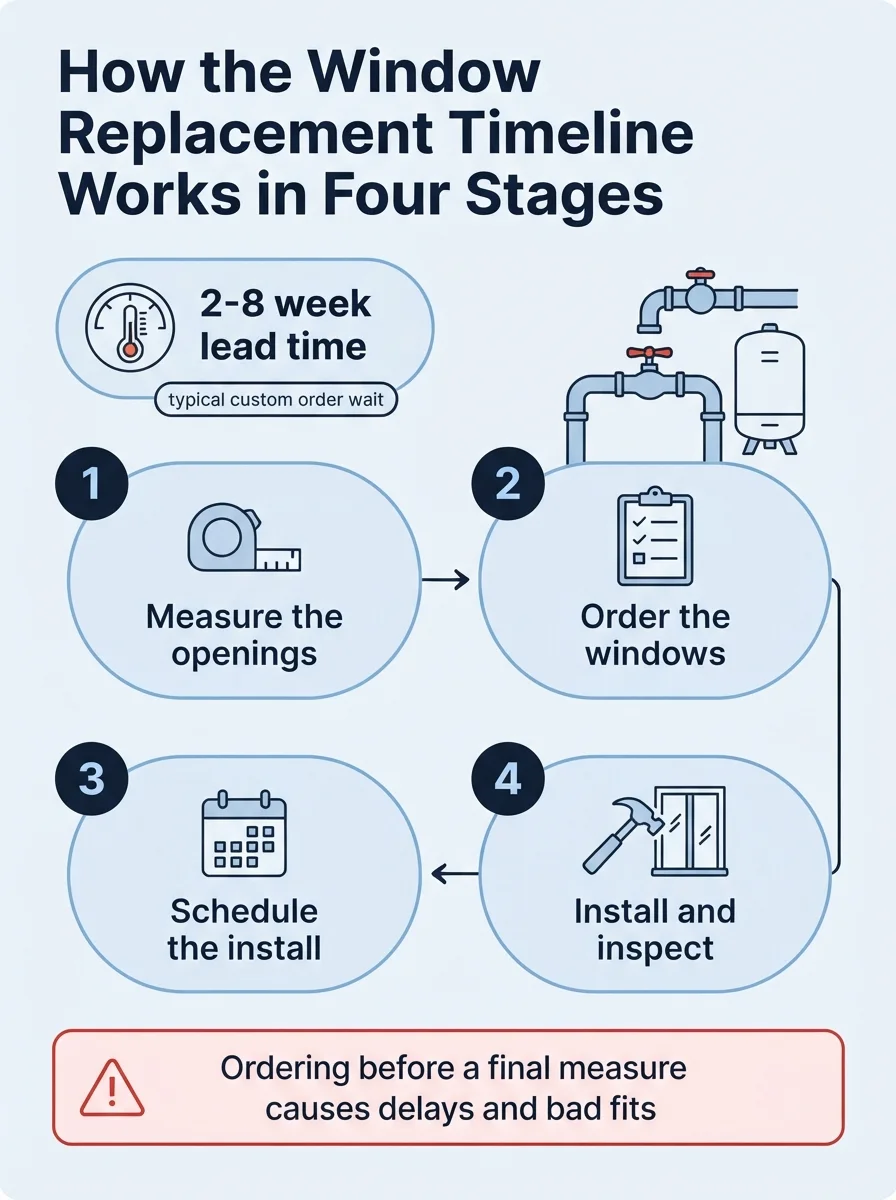
Here's the sequence most window replacement projects follow, from the first phone call to the final walkthrough.
- Initial quote visit: A technician looks at your existing windows, discusses styles and options, and gives you a sense of what the project involves.
- Final measure: Exact openings are measured so the order matches your home precisely, not just a rough estimate.
- Order placed: Windows go into production once you approve the final specs, styles, and glass package.
- Manufacturing wait: The order moves through the factory queue. This is usually the longest single stretch in the whole timeline.
- Install scheduled: Once windows arrive, an install date is set around your availability and the weather forecast.
- Install day(s): Crews remove old windows, prep each opening, and set and seal the new units one at a time.
- Final walkthrough: Everything is checked for a clean seal, proper operation, and finished trim before the job is called done.
What slows a window replacement project down
The two biggest delays homeowners run into both happen before install day ever gets scheduled. The first is indecision during the quoting stage, since every round of changing styles, glass, or colors can push an order back before it's even placed. The second is discovering during the final measure that an opening isn't standard, which can mean a custom size that takes longer to manufacture.
Decisions made early
Settling on window style, frame material, and glass options before the final measure keeps the order moving without interruption. Walking through a few options at the quote stage, rather than changing your mind after the order is in process, is the single biggest thing a homeowner controls in the whole timeline.
It also helps to think about doors at the same time if you're planning that work anyway. Bundling a door replacement into the same visit and order can simplify scheduling compared to running two separate projects months apart.
Opening condition
Older homes in neighborhoods across Denver, Littleton, and Aurora sometimes have openings that have shifted slightly over the decades, which can mean a custom-sized order instead of a stock size. That's not a problem, but it is worth knowing about going in, since custom sizes typically take a bit longer in manufacturing than standard ones.
If a window is cracked, fogged, or won't lock right now and you can't wait out a full replacement order, a window and glass repair visit can get the opening functional again in the meantime while a full replacement order is in process.
What you can handle yourself versus what needs a pro
Homeowners can absolutely handle the decision-making parts of this process on their own: researching styles, comparing frame materials, and deciding on glass options ahead of a quote visit. Having a clear idea of what you want going in shortens the quoting conversation and keeps the order moving faster.
The measuring, ordering, and installation itself is where a licensed installer matters. Getting exact opening dimensions, accounting for square and level issues in older framing, and sealing a new unit so it performs the way it's supposed to all take tools and experience most homeowners don't have on hand. A window that's slightly out of square or sealed poorly can let in drafts and moisture no matter how good the window itself is.
If hail or wind has damaged windows or the siding around them, that's its own category. A storm and hail damage visit documents the damage properly from the start, which matters if you end up working with an insurance company on the repair or replacement.
Planning your project around a realistic timeline
The honest answer to how long window replacement takes is that most of the wait happens before install day, not during it. Knowing that up front lets you plan the rest of your home projects, whether that's exterior painting or new siding, around a realistic schedule instead of guessing.
If you're weighing whether to replace all your windows at once or in phases, it's worth reading what drives the cost to replace all the windows in a house alongside this timeline, since the two questions usually get decided together. Precise Windows LLC walks homeowners through the full schedule at the quote visit so there are no surprises about what happens between the measure and the install.
Frequently asked questions
How long does the whole window replacement process take from start to finish?
Most projects run several weeks total once you count the measuring visit, the manufacturing lead time, and the install itself. The install day or two is usually the shortest part of the whole timeline, with ordering and manufacturing taking up most of the wait.
Why do replacement windows take weeks to arrive after I order them?
Replacement windows are typically built to the exact size of your openings rather than pulled off a shelf, so each order goes into a manufacturing queue. Custom shapes, grille patterns, and specific glass packages can add time to that queue.
Can I speed up my window replacement timeline?
Booking your measuring appointment early and finalizing your window styles and options quickly are the two biggest levers you control. Once an order is placed, the manufacturing schedule is largely out of anyone's hands, so decisions made early in the process matter most.
Does weather affect how long window replacement takes in Colorado?
Weather mostly affects scheduling rather than the manufacturing wait, since installers plan around snow, high wind, and freezing temperatures to keep your home sealed properly during the swap. A reputable installer will reschedule around a bad weather day rather than rush an install that won't seal right.
Is it faster to replace all my windows at once or one room at a time?
Replacing windows in one project is almost always faster overall than doing it room by room, because you only go through the measuring and ordering lead time once. Doing it in phases means repeating that waiting period for each phase.