
Why Window Replacement Costs Vary So Much Across the Denver Metro
Homeowners across Englewood, Denver, Littleton, and the rest of the metro ask the same question before they call anyone: what's this actually going to cost. There isn't one clean answer, because a window job is really a bundle of separate decisions, frame material, glass package, number of openings, and how much of the old frame has to come out. Two houses on the same street can land in very different places depending on those choices.
What makes the Denver Metro market a little different from other regions is the climate swing. Summers push into the 90s with intense high-altitude UV, winters drop hard, and the freeze-thaw cycle stresses seals and frames more than a milder climate would. That's part of why glass package and installation quality carry real weight here, not just the sticker price of the window itself.
What Actually Drives the Price of a Window Replacement
Before you can compare quotes fairly, it helps to know which line items are doing the heavy lifting. Two categories account for most of the spread between a modest bid and an expensive one: what the window itself is made of, and how it gets installed.
Frame Material and Glass Package
Vinyl is the most common frame material in this region because it resists warping through temperature swings and needs almost no maintenance. Wood and wood-clad frames cost more up front and ask for more upkeep, but some homeowners want the look for a specific style of house. Beyond the frame, the glass package, whether it's double-pane or triple-pane, with or without a low-E coating and gas fill between panes, changes both the price and how the window performs in a Colorado winter.
Shape and size matter too. A standard double-hung or casement window prices differently than a bay, bow, or picture window, which often need custom sizing and more labor to frame in correctly. Specialty shapes cost more not because the glass is fancier but because there's more work getting the opening square and sealed.
Install Type: Retrofit vs Full-Frame Replacement
A retrofit, or pocket, installation slides a new window into the existing frame and is usually faster and less invasive when the old frame is still sound. A full-frame replacement pulls everything out down to the rough opening, which costs more in labor but is the right call when there's rot, water damage, or the opening needs to change size.
Contractors should tell you plainly which type they're quoting and why. If a bid seems unusually low, it's worth asking whether it's a retrofit install on a frame that actually needs full replacement, because that's a common way pricing gets shaved without the homeowner realizing what they gave up.
| Install Type | Best For | Typical Trade-off |
|---|---|---|
| Retrofit / pocket install | Sound existing frame, faster turnaround | Keeps the old frame, slightly smaller glass area |
| Full-frame replacement | Rot, water damage, or resizing the opening | More labor, but a completely fresh seal at the opening |
| Double-pane glass | Standard performance for most homes | Lower upfront cost than triple-pane |
| Triple-pane glass | Homes wanting maximum insulation | Higher upfront cost, heavier sash |
The Parts of a Replacement Window You're Paying For
A window quote isn't just glass and a frame, it's a system. The sash holds the glass and moves or tilts depending on the style. The frame anchors into the rough opening and carries the weatherstripping that keeps air and water out. The glazing, whether double or triple pane, is sealed as an insulated glass unit that typically holds its seal for 20 to 30 years before it starts to fog.
Around all of that, the installer seals the opening itself with flashing and insulation so the wall assembly stays dry behind the new window. This is the part homeowners see the least and pay the most attention to when something goes wrong later, a window that leaks air or water almost never fails because the glass was bad, it fails because the opening wasn't sealed tight.
Step-by-step: What Happens When You Get a Window Replacement Quote
A straightforward quote process looks similar no matter who you call. Here's the general shape of it, from first measurement to install day.
- Home visit and measurement: A contractor measures every opening you want replaced and notes the current frame material and condition.
- Style and material selection: You choose frame material, glass package, and window style for each opening, which can vary room to room.
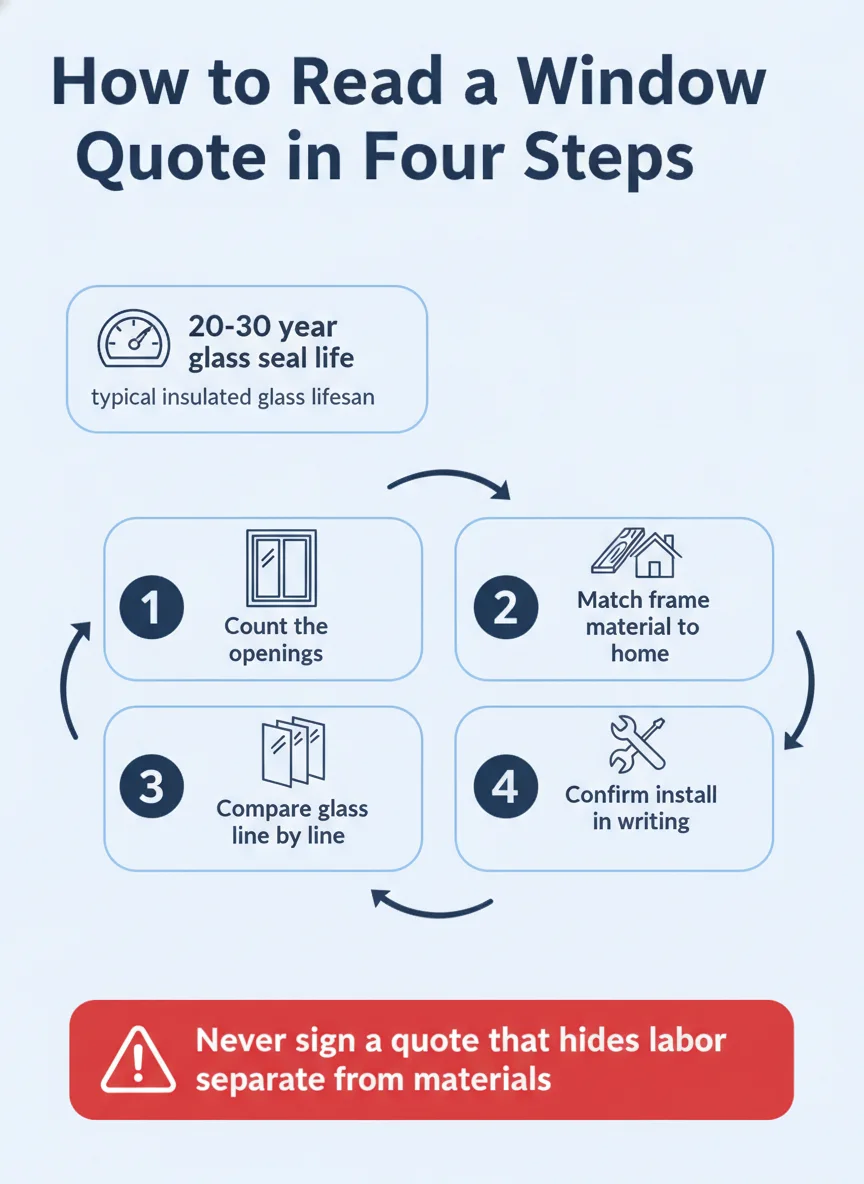
- Written quote: A good quote breaks out frame, glass, and labor separately so you can compare it against other bids line by line.
- Scheduling: Once you approve the quote, the job gets scheduled and materials are ordered to the exact sizes measured.
- Installation: Old windows come out, openings get sealed, and new windows go in, one opening at a time or in batches depending on the size of the job.
- Final walkthrough: You check that every window opens, closes, and locks properly before the crew leaves.
What You'll Find When You Compare Quotes
Wide Swings Between Bids
It's normal to see a noticeable spread between the lowest and highest quote for the same house. Most of that spread traces back to frame material, glass package, and whether the bid assumes retrofit or full-frame installation, not to one contractor simply being greedy or another being a bargain.
The safest way to compare is to ask every contractor to quote the same scope, same frame material, same glass package, same install type, and then compare the labor and warranty terms on top of that. Otherwise you're comparing apples to a completely different fruit.
Line Items Worth Asking About
Ask what's included in the labor line, does it cover disposal of the old windows, interior trim repair, and cleanup, or are those extra. Ask whether the quote assumes standard sizes or custom sizing for any oversized or specialty-shaped openings, since that changes both cost and lead time.
It also helps to ask what happens if rot or damage is found once the old window comes out. A contractor who explains that possibility up front, rather than surprising you with it mid-install, is giving you a more honest picture of what the job might actually cost.
DIY vs Calling a Pro
Window replacement sits firmly in licensed-pro territory for almost every homeowner. Getting a rough opening square, sealed, and flashed correctly takes tools and experience most people don't have lying around, and a poor seal at the opening causes problems, air leaks, water intrusion, that show up months or years later, not on install day.
Where a homeowner can reasonably step in is the planning stage, measuring rooms, deciding which openings matter most if budget forces a phased approach, and researching frame material and glass options before the first quote appointment. Walking into that first visit already knowing what you want narrows the conversation fast.
Small fixes, like tightening a loose lock or replacing weatherstripping, are reasonable DIY territory. Anything involving pulling a frame, resizing an opening, or diagnosing why a window leaks belongs with a window replacement crew that does this daily.
Getting a Number You Can Actually Trust
The honest answer to how much replacement windows cost is that it depends on decisions you get to make, not a fixed rate that applies to every house in the Denver Metro. Frame material, glass package, install type, and how many openings you're doing at once all move the number, and a good contractor should walk you through each one instead of handing you a single figure with no explanation.
If you're weighing whether to do the whole house at once or a few windows at a time, our guide to replacing every window in a house breaks down how contractors usually price a full-house project. Precise Windows LLC measures every opening in your home and walks you through frame and glass options before anything gets ordered.
Frequently asked questions
What makes replacement windows expensive in one house and cheap in another?
The number of openings, the frame material, and the glass package are the three biggest factors. A home with a dozen standard double-hungs in vinyl costs differently than one with a few oversized picture windows or bay windows that need custom framing.
Is vinyl or wood better for Colorado's climate?
Vinyl handles Denver Metro's big temperature swings and intense UV with less maintenance, while wood offers a classic look but needs more upkeep against sun and moisture. Both perform well when installed with a properly sealed opening.
Does the glass package matter as much as the frame?
Yes, the glass package often matters more for comfort and energy bills than the frame material alone. Double-pane versus triple-pane, low-E coatings, and gas fills between panes all change how the window performs through a Colorado winter and summer.
How many windows do most homeowners replace at once?
It depends on budget and condition, some homeowners do the whole house in one project while others tackle a room or the worst-performing openings first. A full-house project usually gets a better per-window price than doing them one at a time over several years.
Should I get more than one quote?
Yes, comparing quotes side by side is the best way to see whether a bid is pricing full-frame replacement, retrofit inserts, or something in between. Ask each contractor to break out frame, glass, and labor so you're comparing the same scope.