
What a Realistic Window Lifespan Looks Like in Colorado
Windows in the Denver metro area deal with more temperature swing in a single week than a lot of climates see in a season. A window can face a 70-degree afternoon and a hard freeze overnight, and that back-and-forth expansion and contraction is exactly the kind of stress that wears down seals and hardware over time.
Homeowners often ask how long a new window should realistically last before it's time to think about replacement again. It's a fair question, because windows are one of the bigger investments in a house and knowing what to expect helps with budgeting years down the line rather than getting surprised by a failing seal.
Why Some Windows Last Decades and Others Don't
Lifespan comes down to three things working together: the material the window is made from, how well it was installed, and how much sun and weather exposure it faces. A great window installed poorly will fail early, and a modest window installed correctly can outperform expectations.
Material Matters More Than Most People Think
Vinyl windows are the most common replacement choice and typically hold up for 20 to 30 years without major issues, since vinyl doesn't rot and resists moisture well. Wood windows can last just as long or longer with regular painting and upkeep, but they need that maintenance to keep water out of the frame.
Fiberglass and composite frames tend to expand and contract less with temperature swings than vinyl, which can mean less stress on the seals over time. None of these materials are maintenance-free, but they age differently, and that's worth factoring in when choosing what goes into the openings.
Installation Is Where a Lot of Early Failures Start
A window that's shimmed correctly, squared in the opening, and sealed properly around the frame will hold up close to its full material lifespan. One that's installed slightly out of square, or where the gap around the frame wasn't sealed right, can start showing drafts and moisture problems years before it should.
This is why the install itself matters as much as the window brand. A quality window with a rushed or careless install can fail at the frame long before the glass or hardware would have given out on their own.
| Window Age | What's Typically Fine | What to Watch For |
|---|---|---|
| 0-10 years | Glass, hardware, seals all performing as expected | Occasional adjustment to locks or balances |
| 10-20 years | Frame and glass generally sound with upkeep | Early seal fog, stiffer sash operation |
| 20-30 years | Frame may still be structurally sound | Seal failure more common, hardware wear, drafts |
The Parts of a Window That Age at Different Rates
A window isn't one part aging uniformly, it's several components with their own lifespans. The glass seal, the weatherstripping, the balance hardware that helps a sash glide, and the frame itself all wear at different rates depending on use and exposure.
That's actually good news for homeowners, because it means a window showing its age doesn't always need full replacement. A worn balance or a torn piece of weatherstripping can often be addressed on its own, while a fogged seal usually calls for a glass swap rather than a whole new frame.
Step-by-Step: Checking Your Windows for Age-Related Wear
A quick walk-through of the house can tell you a lot about where your windows stand.
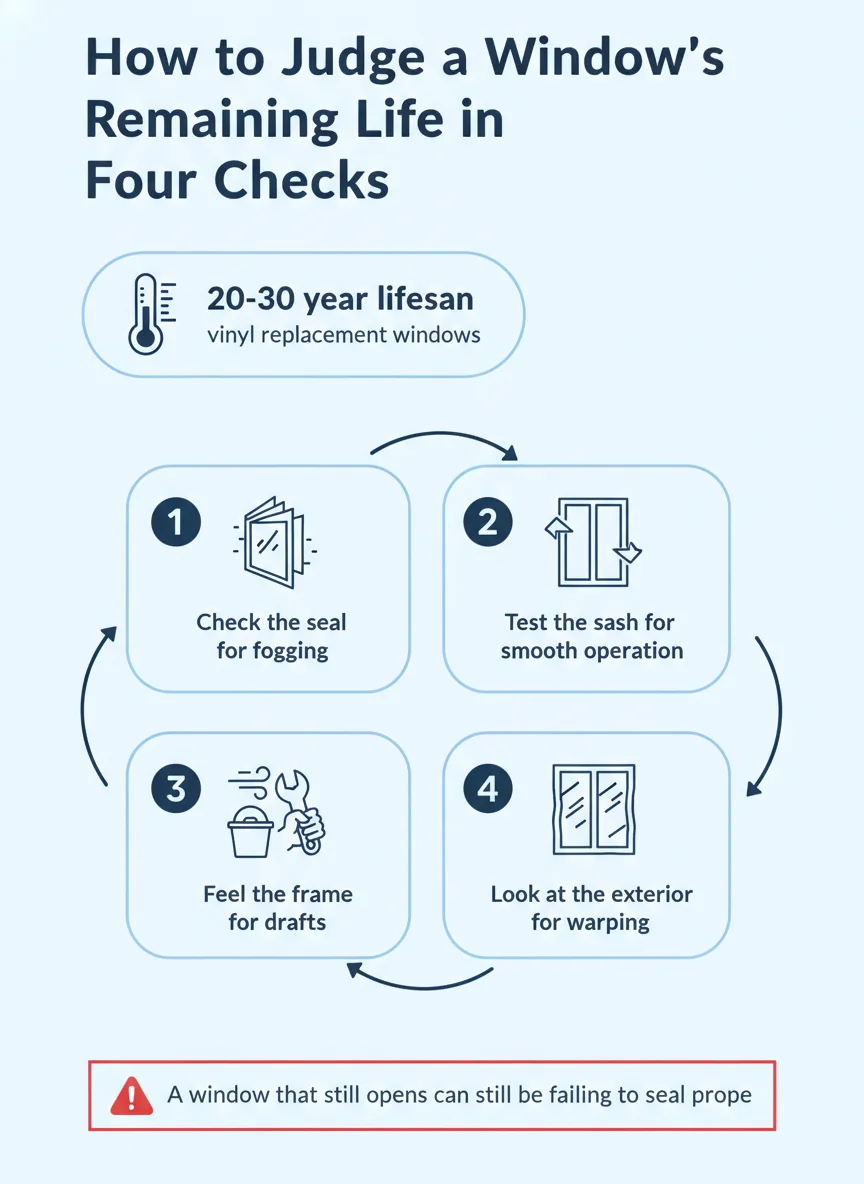
- Look at the glass in bright light: Fog, haze, or streaking that won't wipe off signals a failed seal on the insulated glass unit.
- Open and close each sash: Sticking, dragging, or a sash that won't stay up on its own points to worn balance hardware.
- Run your hand along the frame edge: A draft on a calm day usually means the seal between the frame and the wall has broken down.
- Check the exterior trim and sill: Soft wood, peeling paint, or visible gaps mean moisture has been getting into the frame.
- Test the locks: A lock that won't fully engage is both a wear sign and a security concern worth fixing soon.
- Note the window's age: Windows past the 20-year mark deserve a closer look even if nothing seems obviously wrong yet.
What Age-Related Wear Actually Looks Like Up Close
Seal Failure and Foggy Glass
This is the most common sign of a window reaching the later part of its lifespan. The gas between the panes has escaped and moisture has taken its place, showing up as a permanent haze that no amount of cleaning removes.
It doesn't always mean the whole window is done. If the frame is still sound, a window and glass repair visit to replace the glass unit can add years of life without the cost of a full replacement.
Frame and Sill Damage
Softened wood, warping, or visible gaps at the sill are a different story. Once moisture has gotten into the frame itself, the structure holding the glass and hardware in place is compromised, and that's usually when full window replacement is the more lasting answer.
This kind of damage tends to show up on windows that get the most direct sun and rain exposure, and it's worth an inspection sooner rather than later since frame damage tends to spread.
Repair vs. Replace: When Each Makes Sense
A single fogged pane, a stiff sash, or worn weatherstripping on a window with a sound frame are all good candidates for a targeted repair rather than full replacement. These fixes are quicker and keep the existing window doing its job for years longer.
Replacement makes more sense when the frame itself has warped, rotted, or is letting in drafts you can feel by hand, or when several windows in the house are hitting the same age-related issues at once. At that point, window replacement across multiple openings often makes more sense than repairing each one separately.
Cost, energy performance, and how many other windows in the house are the same age all factor into that decision, and it's worth having someone look at the whole picture rather than deciding room by room.
Getting the Most Years Out of Your Windows
The windows that last longest in the Denver metro area tend to be the ones installed correctly the first time and kept up with basic maintenance, cleaned tracks, sealed trim, and small repairs handled before they spread. Material choice matters, but installation quality is usually the bigger factor in whether a window hits 20 years or 30.
If you're seeing early signs of wear on windows anywhere from Aurora to Littleton and want a straight read on whether it's a repair or a replacement situation, and for a closer look at what a full-house project costs, see our breakdown of Denver metro replacement window costs. Precise Windows LLC can take a look and tell you where your windows actually stand.
Frequently asked questions
How many years should new windows last before they need replacing again?
Most quality vinyl replacement windows last somewhere in the range of 20 to 30 years, and wood or fiberglass units can last longer with upkeep. The real number depends on the material, the quality of the install, and how much direct sun and weather the window faces.
Do windows in Colorado wear out faster than other climates?
Colorado's intense UV exposure and big swings between hot afternoons and cold nights put more stress on seals and frames than a milder climate does. That doesn't cut lifespan dramatically for quality windows, but it does mean seal failure and hardware wear can show up a bit earlier than in a low-sun climate.
What's the first part of a window to fail?
The seal on the insulated glass unit is usually the first thing to go, showing up as fog or haze between the panes. Hardware like locks and balances tends to wear next, followed eventually by the frame itself if moisture gets in.
Can I extend the life of my windows with maintenance?
Yes, cleaning the tracks, keeping weatherstripping intact, and repainting or resealing exterior wood trim regularly all add years to a window's working life. Catching a failed seal or a small frame issue early also prevents it from turning into a bigger repair.
How do I know if it's time to replace my windows instead of repairing them?
If the frame is warped, rotted, or letting in drafts you can feel with your hand, replacement usually makes more sense than another repair. A window that's just fogged or has a cracked pane, with a sound frame otherwise, is often still a candidate for a targeted repair instead.