
Two Clocks Are Running When You Replace Windows
When a homeowner in the Denver Metro asks how long it takes to get windows replaced, they're usually picturing one clock, the day the crew shows up. In reality there are two clocks running, and the first one starts well before anyone touches a drill. The first clock is manufacturing, the weeks it takes a factory to build windows to the exact size of your openings. The second clock is install day itself, which for most homes moves a lot faster than people expect.
Understanding both clocks matters because it changes how you plan. If you're trying to get new windows in before a certain season or before guests arrive for a holiday, you need to count backward from that date using the manufacturing wait, not just the install day. A homeowner in Aurora who orders in August and expects windows by Labor Day is often surprised to learn the order alone can eat most of that time.
Why Does Building Custom Windows Take Weeks Instead of Days?
Replacement windows aren't stock items pulled off a warehouse shelf, they're built to the precise measurements of your existing openings, so every order enters a production queue at the manufacturer. That queue moves at a pace set by the factory's capacity, the complexity of what's being built, and how many other orders are ahead of yours.
Standard sizes and styles
Double-hung and sliding windows in common sizes tend to move through production fastest, since manufacturers build a high volume of these shapes and can batch similar orders together. If your home has fairly standard window openings, you're generally looking at the shorter end of the typical lead time range.
This is one reason it pays to get a Window Replacement quote early in your planning rather than waiting until the week you want the work done. A measured quote tells you exactly what you're ordering and gives the manufacturer a firm spec to build against, which avoids delays caused by changes later.
Bay, bow, and specialty shapes
Bay and bow windows, arched tops, and other specialty shapes take longer to manufacture because they involve more components and more precise fabrication. If your project includes even one or two specialty units alongside standard windows, the whole order typically ships together, so the specialty pieces can set the pace for the entire job.
Homeowners doing a full-house replacement in Highlands Ranch or Littleton with a mix of shapes should expect their timeline to lean toward the longer end of the range, simply because the order includes more complex builds.
| Order type | Typical manufacturing wait | What affects it |
|---|---|---|
| Standard sizes, common style | Shorter end of the range | Order volume at the factory |
| Mixed order with some specialty shapes | Middle of the range | Specialty units set the pace |
| Full custom shapes or sizes | Longer end of the range | Fabrication complexity |
| Peak season (late spring through fall) | Adds time to any order | Manufacturer and installer demand |
What's Actually Happening During the Wait
Once your order is placed, it moves through several stages before it ever reaches your house. The manufacturer confirms the measurements and specs, schedules production, builds the windows, and runs quality checks before packing them for shipment. None of this is visible to you as the homeowner, which is part of why the wait can feel longer than it is.
After production, the windows ship to the installer, who typically inspects every unit for shipping damage or manufacturing defects before scheduling your install date. This inspection step protects you, since catching a damaged window before install day is far better than discovering it mid-job. It can add a few days to the back end of the timeline, but it's time well spent.
Step-by-Step: What Happens From Quote to Install Day
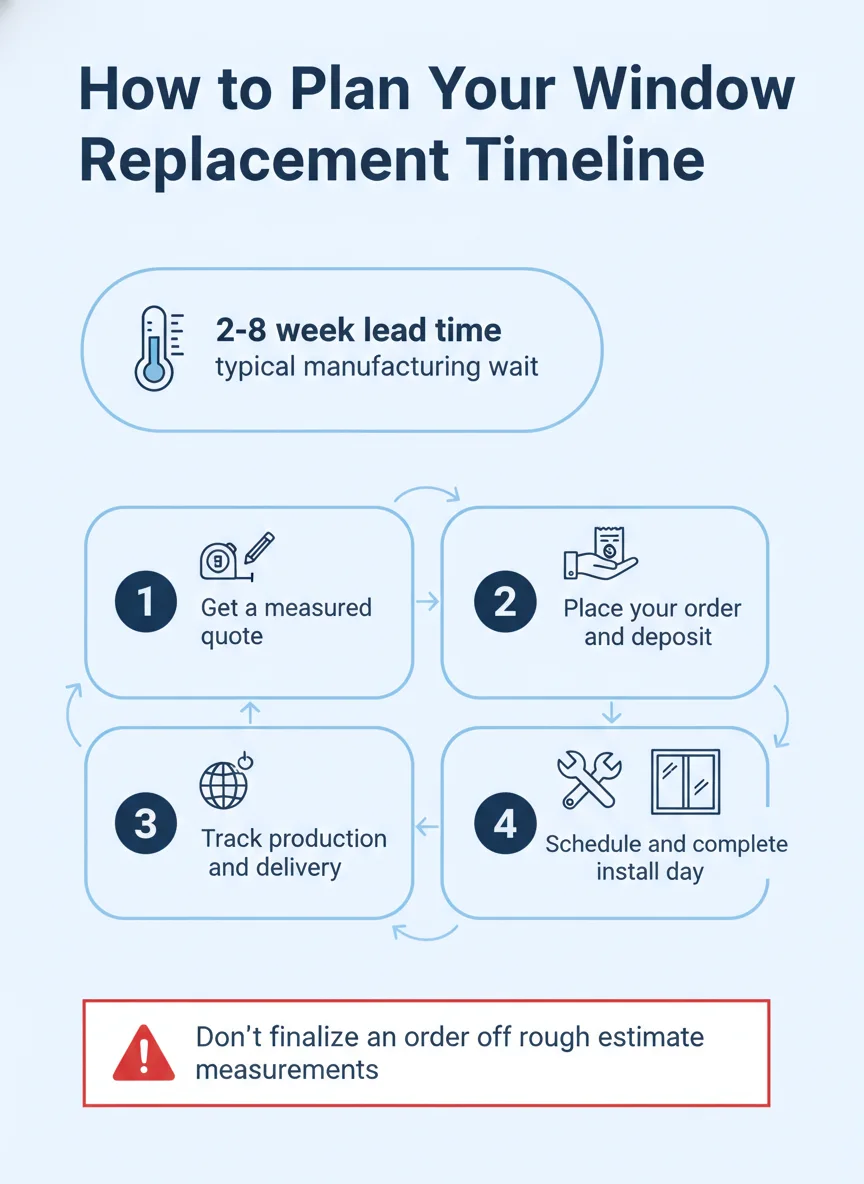
Here's the general sequence most window replacement projects follow in the Denver Metro, from the first phone call through the day the crew leaves your property.
- Request a quote: An installer measures your existing openings and talks through styles, so the order that gets placed matches your home exactly.
- Finalize the order: You approve the quote and sign off on sizes, styles, and glass options before the order goes to the manufacturer.
- Manufacturing begins: The factory builds your windows to spec, a process that can take anywhere from a couple weeks to a couple months depending on complexity and season.
- Windows ship and are inspected: Once built, windows ship to the installer, who checks each unit for damage before confirming your install date.
- Install day is scheduled: You get a date on the calendar, often with some flexibility built in in case of weather or last-minute adjustments.
- Installation happens: The crew removes old windows, sets and seals new ones, and cleans up, usually completing several windows in a single day.
- Final walkthrough: You check the finished windows with the crew before they leave, confirming everything opens, locks, and seals the way it should.
What Can Push Your Timeline Longer Than Expected?
Order changes after submission
Changing a size, style, or glass option after the order is already in production almost always restarts the manufacturing clock for that unit. This is the single most common cause of a timeline running longer than the homeowner expected, so it pays to be certain about your choices before signing off.
If you're on the fence about a decision like grid pattern or glass tint, it's worth taking an extra day to decide before the order is placed rather than changing it afterward. A short pause up front is almost always shorter than the delay caused by a mid-production change.
Permitting and HOA approval
Some homes in the Denver Metro sit in neighborhoods with architectural review requirements, particularly for exterior changes like window style or color. If your property falls under an HOA, factor in time for that approval process separately from the manufacturing wait, since the two can run at the same time or back to back depending on your HOA's process.
Checking with your HOA before you finalize your order can save a round of back-and-forth later. It's a small step that keeps your overall project moving instead of stalling out waiting on paperwork that could have been started weeks earlier.
What Can a Homeowner Handle, and What Needs a Pro?
There isn't much of the manufacturing or shipping stage a homeowner can speed up directly, since that's governed by the factory's production schedule. What you can control is how quickly and accurately you move through the decision-making stages on your end, picking styles, confirming measurements, and approving the order without delay.
Install day itself is a job for a licensed, experienced crew. Removing an old window without damaging the surrounding framing, setting a new unit level and square, and sealing it properly against the weather all take specific technique, and a mistake here can cause drafts or leaks that are expensive to fix later. For more on what install day looks like from start to finish, see How Long Does Window Replacement Take, Start to Finish?
Clearing furniture, curtains, and window treatments away from each opening before the crew arrives is something any homeowner can do, and it genuinely helps install day move faster. It's a simple way to contribute to your own timeline without needing any special skill or tool.
Planning Your Timeline Around Real Life
If you're replacing windows ahead of a specific date, whether that's selling a home, hosting an event, or just wanting them in before winter settles into the Denver Metro, work backward from that date using the manufacturing wait as your starting point, not the install day. Getting a quote and placing your order early gives the whole project the best shot at landing on schedule.
Homeowners in Englewood and across the metro who plan their order a few weeks ahead of their target date tend to have the smoothest experience, since it leaves room for a specialty shape, an HOA review, or a busy season without blowing past the date they wanted. Precise Windows LLC can walk you through a realistic timeline for your specific order once your home has been measured.
Frequently asked questions
How long does it take to get windows replaced in Colorado?
Most homeowners in the Denver Metro wait a few weeks for their windows to be built before install day even gets scheduled. The build time depends on the manufacturer, the style, and how many windows are on the order, and install day itself usually wraps up much faster than the wait beforehand.
Why does it take weeks to get windows after I order them?
Replacement windows are made to the exact measurements of your openings, not pulled off a shelf, so each unit goes into a production queue at the factory. Custom shapes, specialty glass, or a large order of many different sizes can add time to that queue.
Can I speed up how long it takes to get my windows replaced?
The biggest lever you control is getting accurate measurements and a finalized order submitted quickly, since any changes after the order is placed restart the clock. Choosing standard sizes and common styles over custom shapes also tends to move faster through production.
Does the time of year affect window replacement timelines?
Yes, manufacturers and installers both tend to run busier in late spring through fall, which can stretch lead times during peak season. Winter and early spring often have shorter waits simply because fewer homeowners are ordering at once.
What happens between placing my order and install day?
Your windows move through manufacturing and then ship to the installer, who inspects them for damage before scheduling your crew. That gap is normal and is a good time to prep the areas around your windows for the actual install.